How to Eat in Shenzhen Without Speaking Chinese
QR code menus, Google Translate on menus, delivery apps, and the safe bets that work from day one — a foreigner's honest guide to eating in Shenzhen.
How this guide stays current
This guide is re-checked roughly every month for policy changes, app flow changes, pricing, and closures. The direct-answer block only changes after the facts are checked again.
How does ordering actually work here?
Forget everything you know about restaurants. There's no waiter coming to take your order. There's no laminated menu. In most Shenzhen restaurants now, you sit down, scan a QR code on the table with WeChat or Alipay, and a mini-program opens with the full menu. You pick your items, submit, pay — all on your phone. Food shows up.
The whole system is fast, efficient, and assumes you read Chinese.
Which you don't.
That's what this guide is for. You have four real options for getting food into your body here, and they all work — they just work differently depending on how much technology you're willing to wrestle with.
The four ways to order food
QR code ordering (how most restaurants work now)
This is the default. You'll see a small QR code sticker on the table, sometimes on a stand, sometimes printed directly on the surface. Here's how to survive it:
- Scan the QR with WeChat or Alipay (not your regular camera app — it needs to open the mini-program)
- Turn your VPN off first. Chinese mini-programs detect VPN connections and will either fail to load or throw errors. Turn it off, scan, order, pay, then turn your VPN back on.
- Use Google Translate camera mode on the mini-program screen. Open Google Translate on a second phone if you have one, or switch between apps — point the camera at each menu category and it'll overlay English on the Chinese text. Not perfect, but it gets you 80% there.
- Tap items, adjust quantity, submit. Most mini-programs have a cart at the bottom. Hit the big button to submit your order.
- Pay immediately — the order goes through to the kitchen when payment clears.
Some mini-programs ask for a phone number during checkout. If you don't have a Chinese number, try your foreign number (sometimes it works), use the hotel WiFi phone number if they gave you one, or just leave and find a place that doesn't require it. Most don't.
(One thing nobody tells you: the mini-program sometimes picks a default table number, and if you don't correct it, your food goes to someone else's table. Check the table number before you submit.)
Google Translate camera — your best friend
This deserves its own section because you'll use it constantly.
Open Google Translate → tap the camera icon → point at a menu, sign, or mini-program screen. It overlays English directly on the Chinese text in real time. It's not always accurate — "spicy chicken" might show up as "hot chicken fragrant" — but you'll get the idea.
Before you cross the border: download the Chinese language pack for offline use. Google is blocked in mainland China, so without the offline pack, you'd need your VPN running to use it — and your VPN needs to be off for the QR ordering system. Having the offline pack means you can translate without internet.
(Apple Translate works too if you're all-Apple, but Google's camera mode is faster for menus.)
Point at someone else's table
Zero technology required. This is underrated.
Walk into a restaurant. Look at what other tables are eating. See something that looks good? Point at it, smile at the waiter, hold up one finger. You just ordered.
This works surprisingly well in casual places — noodle shops, dumpling joints, hot pot restaurants. The staff won't find it weird. Locals do this too when they're at a new spot. You might end up with something you didn't expect, but that's half the fun of eating here.
Delivery apps (Meituan and Ele.me)
You don't need to download separate apps or have a Chinese phone number. Both 美团外卖 (Meituan) and 饿了么 (Ele.me) are accessible as mini-programs inside Alipay.
How to order:
- Open Alipay → search 美团外卖 or 饿了么
- Allow location access
- Browse restaurants — most list photos of dishes, which helps when you can't read the names
- Use Google Translate camera on the menu if needed
- Add items to your cart
- Enter your delivery address in Chinese (this is the hard part — ask your hotel reception to type it into your phone before your first order)
- Pay with Alipay → food arrives in 20–40 minutes
Delivery costs are shockingly low — usually ¥3–8 for the delivery fee, and meals themselves run ¥15–40. No tipping, ever.
One catch: the delivery rider will call you when they arrive. If you don't speak Chinese and can't pick up the call, just head to the lobby. They'll find you. You can also add 放门口 ("leave at door") in the order notes, which tells the rider to leave it outside your room — useful if your hotel allows it.
What to eat your first three days
You're jet-lagged, overwhelmed, and the QR code thing is still intimidating. These are your safe bets — easy to find, easy to order, and hard to get wrong.
包子 (bāozi) — steamed buns. They're everywhere, ¥2–5 each, and the vendor usually has a glass case so you can just point. Pork is the most common filling. Vegetable ones (菜包) exist but often still have pork mixed in — ask 有肉吗 ("does it have meat?") or accept the mystery.
拉面 (lāmiàn) — hand-pulled noodles. Lanzhou-style noodle shops are on every block. Walk in, point at the picture on the wall, and say 不辣 (bú là, "not spicy") unless you can handle it. A bowl runs ¥15–25.
煎饼 (jiānbǐng) — the breakfast crepe. Usually from a cart on the sidewalk in the morning. The vendor cracks an egg on a griddle, spreads batter, adds crunchy wonton skin, sauce, and scallions. ¥8–12. Just watch the person before you to see the ordering rhythm.
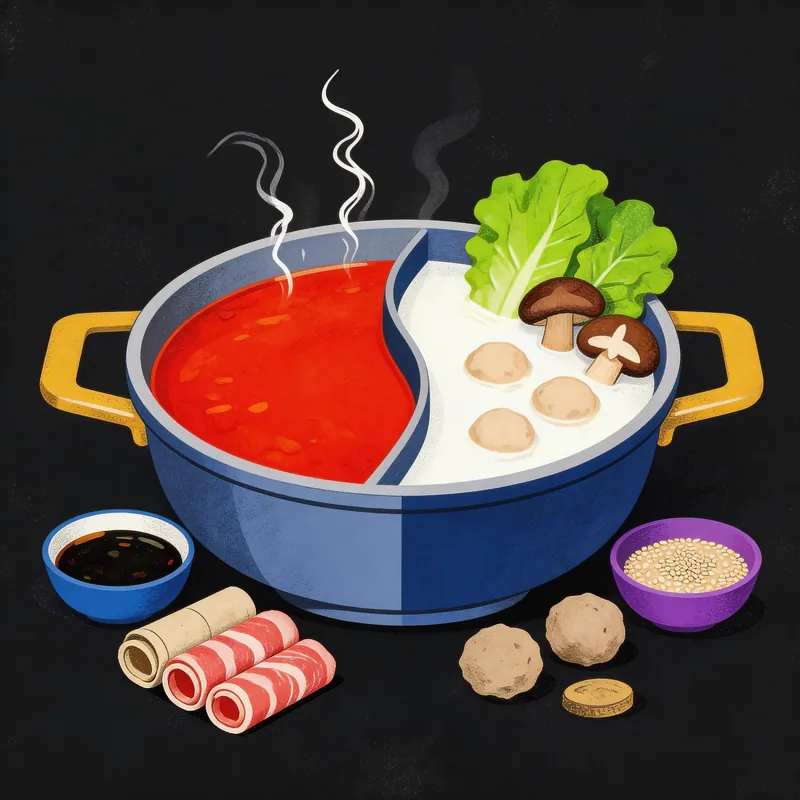
Hot pot. This is the easiest restaurant experience for a foreigner. You pick a broth (mushroom if you're nervous, 麻辣 if you're brave), then grab raw ingredients from a counter or fridge — meats, vegetables, tofu, noodles. Everything is visual. Cook it yourself at the table. Perfect first-night meal because it's social and you can't really mess it up.
Luckin Coffee (瑞幸). It's on every block, literally. Cheaper than Starbucks, order through their app or the in-store mini-program. The menu has pictures. A latte is ¥12–18. You'll end up here more than you expect.
Convenience stores. 7-Eleven and FamilyMart have hot food, onigiri, sandwiches, and drinks — all with photos on the packaging. Scan, pay, eat. No Chinese required.
肠粉 (chángfěn) — rice noodle rolls. Shenzhen is Guangdong, and this is the local breakfast. Silky rice noodle sheets rolled around shrimp, pork, or vegetables, doused in soy sauce. Usually ¥8–15 from small neighborhood shops. Look for the steamer trays stacked near the front.
Dietary restrictions — the honest version
This is where things get complicated. Shenzhen restaurants are not generally set up to accommodate Western dietary restrictions, and pretending otherwise doesn't help you.
Vegetarian/vegan: The word 素食 (sùshí, "plain food") technically means vegetarian, but in practice, many "vegetable" dishes are cooked in lard, finished with oyster sauce, or contain chicken stock. If you're strict about it, look for Buddhist vegetarian restaurants — they're labeled 素食馆 (sùshí guǎn) and they actually understand the concept. There are a handful in every district. Outside of those, you're gambling.
Halal (清真): Look for Arabic script on the restaurant sign — it's more common than you'd expect in Shenzhen due to the Hui Muslim community. These restaurants are reliably halal and usually serve excellent lamb and beef noodles.
Food allergies: This is the one to take seriously. Staff at casual restaurants may not understand the severity of an allergy — the concept of "trace amounts can kill me" doesn't always translate. Before you leave your hotel each morning, have this ready on your phone:
| Allergy | Chinese | Pronunciation |
|---|---|---|
| Peanut allergy | 花生过敏 | huāshēng guòmǐn |
| Shellfish allergy | 海鲜过敏 | hǎixiān guòmǐn |
| Dairy allergy | 乳制品过敏 | rǔzhìpǐn guòmǐn |
| Egg allergy | 鸡蛋过敏 | jīdàn guòmǐn |
| Gluten allergy | 麸质过敏 | fūzhì guòmǐn |
Screenshot that table. Show it to staff every time. Be aware that peanut oil and oyster sauce are default ingredients in a huge number of dishes — you need to flag this before ordering, not after. For severe allergies, stick to hotel restaurants or upscale places where staff have been trained on this.
Street food — what's safe and what to skip
The short answer: street food in Shenzhen is generally safe if you follow local behavior.
Safe signals:
- Locals are queuing for it — high turnover means fresh food
- It's cooked to order in front of you — you watched it go on the fire
- The vendor is busy — a good sign, not a bad one
Skip signals:
- Food sitting out at room temperature with no cover and no customers
- Pre-made items that look like they've been there a while
- Fruit that's already cut and sitting in the open (peel your own instead)
Reliable street food picks:
- 烤串 (kǎochuàn) — grilled skewers. Lamb, chicken, vegetables. Cooked over charcoal right in front of you. Point at what you want.
- 烤红薯 (kǎo hóngshǔ) — roasted sweet potatoes. From carts with a big barrel oven. Sold by weight, usually ¥5–10.
- 糖葫芦 (tánghúlu) — candied fruit on a stick. Hawthorn berries or strawberries dipped in hard sugar. More of a snack than a meal.
- 包子 from any busy cart — if there's a line, get in it.
Drink bottled water. Check the seal is intact. Tap water is not safe for drinking anywhere in China. This isn't a Shenzhen thing — it's a China thing.
Delivery to your hotel room — step by step
This is genuinely useful on your first night when you're tired and don't want to navigate a restaurant yet.
- Open Alipay
- Search 美团外卖 in the search bar
- Allow location access — it'll show restaurants near you
- Browse. Photos are your friend. Tap into a restaurant, look at the dish photos.
- Use Google Translate camera if you need to understand the menu items
- Add items to cart
- Go to checkout — this is where you need your address in Chinese
- Before your first order: go to hotel reception and ask them to type your hotel name, street address, and room number into your phone's notes app. Copy-paste this into the delivery address field. Do this once and save it.
- Pay with Alipay
- Wait 20–40 minutes
When the rider arrives, they'll call you. If you can't communicate by phone, go to the lobby. You can also add 放门口 in the order notes — it means "leave at door."
Useful food phrases
Keep these on your phone. You'll use them daily.
| Chinese | Pronunciation | When to use it |
|---|---|---|
| 不要辣 | bú yào là | No spicy — say this BEFORE ordering |
| 买单 | mǎi dān | Check please |
| 这个 | zhè ge | This one (while pointing) |
| 多少钱 | duō shao qián | How much? |
| 打包 | dǎ bāo | Takeaway / to go |
| 素的 | sù de | Vegetarian (but verify — see above) |
| 好吃 | hǎo chī | Delicious — say this and you'll make the cook's day |
| 再来一个 | zài lái yī gè | One more of this |
| 有肉吗 | yǒu ròu ma | Does this have meat? |
| 不要香菜 | bú yào xiāngcài | No cilantro — you'll want this one, trust me |
Related guides
Once food is sorted, the other daily blockers are usually payment and navigation:
- How to pay in Shenzhen — because the QR code ordering system only works if Alipay is set up first
- Essential apps for Shenzhen — maps, translation, and the other apps you will open between meals
- Arrival checklist — if you have not been to Shenzhen before, the checklist sequences everything so nothing gets missed
Change Log & Review CadenceExpand
Facts reviewed
Mar 13, 2026
Content updated
Mar 13, 2026
First published
Mar 13, 2026
Next review target
Apr 12, 2026