Shenzhen Tech Tour: Robot Taxis, Drone Delivery, DJI & the Future You Can Walk Into
The self-guided Shenzhen tech tour that actually works for foreigners. DJI flagship, Bambu Lab, robot taxis, drone coffee delivery, Huaqiangbei — what's open, what's hype, what needs a local friend.
How this guide stays current
This guide is re-checked quarterly unless an important rule or operational change lands earlier. The direct-answer block only changes after the facts are checked again.
Do first
Set up payments before you go
Alipay is required for drone delivery, robot taxis, and most Huaqiangbei vendors. Do this before the tech tour.
Open now →Jump to a section
12 stops
The pitch (and the reality check)
Shenzhen has this reputation as "the city of the future" — and for once, the hype is mostly earned. Robot taxis drive themselves through Nanshan traffic. Drones drop coffee into park lockers. The world's largest DJI store lets you fly drones indoors. A Bambu Lab showroom prints objects while you watch. Huaqiangbei makes Akihabara look like a RadioShack.
But here's what the breathless tech blogs skip: not everything is accessible to foreigners. Some experiences need a Chinese phone number. Some need a local friend. And some — like the Tencent and BYD headquarters tours that every listicle mentions — aren't open to individual visitors at all.
This guide sorts the signal from the noise. Every spot is categorized by how easy it actually is for a foreigner to walk in, and the one-day itinerary at the bottom puts the best ones in geographic order so you're not zigzagging across a city that's 80km wide.
(If you're the kind of person who came to Shenzhen specifically for this stuff — you're going to have a very good time.)
The Nanshan tech corridor — your first stop
Most of the headline tech experiences cluster in Nanshan district, specifically along the coastline between Shenzhen Bay and OCT. You can hit DJI, Bambu Lab, INNO100, and Xiaomi in a single afternoon walk.
DJI Flagship Store — OCT Harbour
The world's largest DJI store. 4,000 square meters across two floors in the OCT Harbour complex.
This isn't a retail store with products on shelves — it's a tech playground. Indoor flying cages where you pilot Mavic drones. An FPV racing course with goggles. Hands-on stations for every product line — Osmo cameras, Ronin stabilizers, the agricultural drones, the new delivery drones. The RoboMaster robots are genuinely fun even if you're not a drone person.
Practical details:
- Location: OCT Harbour, Nanshan (深圳市南山区欢乐海岸)
- Metro: Line 9, Shenzhen Bay Park station, Exit E — then a 10-minute walk
- Hours: Mon–Thu 10:00–22:00, Fri–Sun 10:00–22:30
- Cost: Free entry. Products at retail price (slightly cheaper than overseas for some models)
- Foreigner-friendly: Completely. English signage, staff who speak some English, no booking needed. Walk in, fly drones, leave
(The second floor has the professional cinema gear and agricultural drones — most visitors skip it, but if you're into production equipment, it's worth the stairs. The RoboMaster arena on the first floor gets busy after 4pm on weekends — go earlier.)
Bambu Lab Experience Store — Shenzhen Bay MixC
Bambu Lab's physical showroom, opened in the MixC Phase 2 shopping mall. 244 square meters of 3D printing running live.
They've got every printer in the lineup running simultaneously — the A1 Mini, the X1 Carbon, the multi-color AMS system. You can watch prints happen in real time, handle finished objects, and talk to staff about settings. If you're already a Bambu Lab user, this is pilgrimage territory. If you're not, it's still genuinely impressive to see these machines work at speed.
Practical details:
- Location: Shenzhen Bay MixC Phase 2, B1 level, unit BB131-133 (深圳湾万象城二期)
- Metro: Line 2/11, Houhai station — the mall is a 5-minute walk
- Hours: 10:00–22:00 (22:30 on weekends)
- Cost: Free
- Phone: 180-2545-2677
- Foreigner-friendly: Yes. Small store, staff may not speak much English, but the printers speak for themselves
(The MixC complex itself has a massive Xiaomi store, good food court, and the Shenzhen Bay waterfront park is right outside. Stack these together.)
INNO100 — Kickstarter & Indiegogo products, in person
This one surprises people. INNO100 is an authorized Kickstarter/Indiegogo retail space — crowd-funded products that you'd normally only see on campaign pages are here on shelves, working, touchable.
Located in the Shenzhen Bay Cultural Square complex (opened November 2025). The selection rotates, but expect smart home gadgets, portable tech, creative tools, and the kind of weird-but-clever hardware that does well on crowdfunding. They stock things you literally cannot buy in normal retail channels yet.
Practical details:
- Location: Shenzhen Bay Cultural Square, Nanshan (深圳湾文化广场)
- Metro: Close to Houhai station (same area as MixC)
- Cost: Free entry. Products available for purchase
- Foreigner-friendly: Yes. English product descriptions on most items. Staff speak limited English but the products are self-explanatory
(The Cultural Square building itself is architecturally interesting — worth a lap around the outside even if the product selection doesn't grab you.)
Xiaomi — the world's largest Mi Home
Xiaomi opened their new international headquarters in Nanshan in mid-2025, and the ground floor is the world's largest Mi Home store. Everything in the Xiaomi ecosystem — phones, tablets, robot vacuums, electric scooters, smart home gear, the SU7 car (yes, the car) — in one massive space.
There's also a flagship Mi Home in the MixC World mall if you want the slightly more curated experience.
Practical details:
- Location: Xiaomi International HQ, Nanshan / also MixC World, Nanshan
- Cost: Free entry
- Foreigner-friendly: Very. Xiaomi has always been good at English labeling. The HQ store is designed for international visitors
(The SU7 display is worth seeing even if you're not buying a car. Xiaomi's hardware ecosystem is genuinely impressive when you see all of it in one room — the integration between devices is the real flex, not any single product.)
Robot taxis — the one everyone asks about
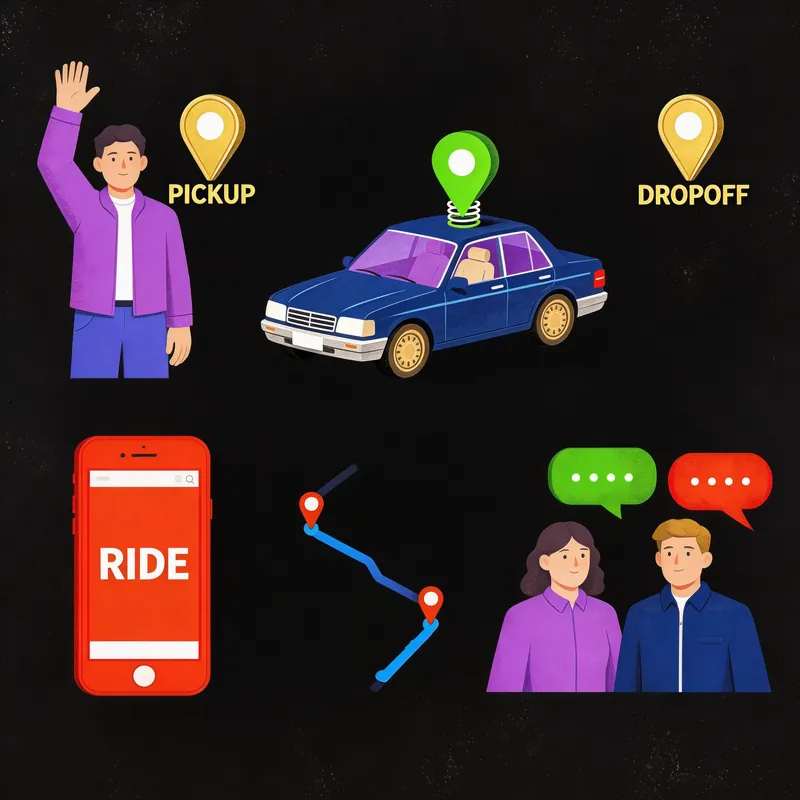
Yes, self-driving taxis are real and operating in Shenzhen. Two services run in Nanshan:
PonyPilot+ (by Pony.ai) — the more common one. Lexus RX450h vehicles with a safety driver in the front seat. Fully autonomous driving — the human doesn't touch the wheel unless something goes wrong (which, in Shenzhen traffic, is impressively rare). You set pickup/dropoff in the app, the car arrives, you ride.
Baidu Apollo Go — similar concept, uses Hyundai IONIQ 5 vehicles. Slightly smaller coverage area.
The foreigner problem
Here's the catch: both services require a Chinese phone number to register. The apps need SMS verification. A foreign number won't work.
If you have a local SIM (which you should — see our eSIM guide): download PonyPilot+ from the Chinese App Store or scan the QR code in any Pony.ai vehicle you spot. Registration takes 5 minutes. Rides cost ¥10–30 depending on distance.
If you don't have a Chinese number: you need a local friend to book the ride for you. They can add you as a passenger.
What the ride is actually like
The car drives... normally. That's what makes it uncanny. It handles lane changes, traffic lights, pedestrians cutting across six lanes, e-bikes doing e-bike things. The steering wheel turns by itself. The screen shows a real-time 3D map of everything the car sees — other vehicles, cyclists, pedestrians, traffic cones.
The safety driver sits there looking bored, which is somehow the most impressive part.
Coverage area: Primarily Nanshan district (Houhai, Shenzhen Bay, parts of Qianhai). Routes around Talent Park and the tech corridor are the most scenic.
(The first ride genuinely feels like time travel. By the third ride, it feels like a slightly boring taxi. That speed of normalization is the real story of Shenzhen tech.)

Drone delivery — order coffee from the sky
Meituan (美团) runs commercial drone delivery across multiple Shenzhen parks and neighborhoods. You order milk tea or coffee on the app, select drone delivery, and 4–10 minutes later a drone lands on a pickup station and deposits your order in a locker.
How to actually do it
- Open Meituan (or Ele.me — they're expanding drone delivery too)
- Search for restaurants near a drone-eligible park
- Look for the drone delivery option at checkout (小飞机配送 or similar icon)
- Pay (works with foreign-linked Alipay or WeChat Pay)
- Walk to the designated drone pickup station in the park
- Enter the code from your order to open the locker
Drone-eligible parks (as of early 2026): Lianhuashan Park (莲花山), Talent Park (人才公园), Shenzhen Bay Park (深圳湾公园), OCT area parks, parts of Futian CBD.
Cost: The drone delivery fee is usually ¥3–5 on top of the order. Total for a coffee is around ¥20–30.
What it's actually like
The drone comes in fast, slows precisely over the landing pad, lowers a box on a cable, and flies away. The whole thing takes maybe 15 seconds at the drop point. It's absurdly efficient and genuinely fun to watch — especially the first time.
The pickup stations look like oversized Amazon lockers with a landing pad on top. They're not hidden; they're in open park areas where you can watch the drones come and go.
(The best move: order a coffee drone delivery to Talent Park, sit on the waterfront, and watch both your drone and the other drones operating around you. On a busy afternoon, you'll see 3–4 drones in the air simultaneously. Pair this with a walk to the Bambu Lab store and INNO100, which are all in the same Shenzhen Bay area.)

Huaqiangbei — the electronics mothership
If you've heard of one thing in Shenzhen, it's probably Huaqiangbei (华强北). The world's largest electronics market district. Multiple multi-story buildings stuffed with thousands of vendors selling everything from iPhone screens to LED strips to custom PCBs to drones to components you didn't know existed.
The main buildings
SEG Plaza (赛格广场) — the tall one. The lower floors are mostly phone repair parts, accessories, and finished electronics. Higher floors get into components and B2B territory.
Huaqiang Electronic World (华强电子世界) — four floors of components, dev boards, tools, and the kind of granular electronics that hardware engineers go crazy for. This is where the serious makers shop.
Mingtong Digital City (明通数码城) — phones, tablets, phone cases, and accessories at wholesale prices. The phone case selection alone is staggering.
The foreigner experience
Huaqiangbei can be overwhelming. Here's how to handle it:
- Go on a weekday morning — weekends are packed with domestic buyers and tour groups
- Building-hop, don't try to cover everything — pick SEG + one other building, that's plenty for a visit
- Bargaining is expected for multi-unit purchases but not really for single items at listed prices
- The food court in the basement of SEG is decent and cheap — good for a break
- 7,000+ overseas buyers come through daily, so vendors in the main buildings are used to foreigners. Many speak basic trade English ("How many pieces? What price?")
- Take Line 2 or Line 7 to Huaqiangbei station — it drops you right in the middle of everything
(The vibe has shifted over the years. It's less "counterfeit iPhone market" and more "global hardware supply chain nerve center." The vendors who are still here are the ones doing real business — exports, prototyping, small-batch manufacturing. The tourist-trap stalls have mostly moved online.)
Practical details:
- Location: Huaqiangbei Road area, Futian district
- Metro: Line 2/7, Huaqiangbei station
- Hours: Most buildings open 10:00–18:00 (some stalls close by 17:00)
- Cost: Free to browse. Bring cash for small purchases — not every tiny stall takes mobile pay
Robot dog stores — yes, this is a category now
Shenzhen has retail stores where you can interact with and buy robot dogs. This sentence would have sounded insane five years ago.
Robot 6S Store in Galaxy World CoCo Park (Longgang district) — the most visitor-friendly one. Multiple brands on display, including Unitree Go2 and other Chinese-made quadrupeds. You can control them, watch demos, and buy units starting around ¥9,999 for consumer models. There's also a ¥68 entry experience where you play with the robots for a session.
EngineAI has a showroom in Upper Hills (Futian) — they make humanoid robots and robot dogs. More B2B focused but visitors are welcome.
Practical details:
- Robot 6S Store: Galaxy World CoCo Park, Longgang — Metro Line 3, Longcheng station
- EngineAI: Upper Hills (万象天地 area), Futian — Metro Line 1/7
- Cost: Free to browse. ¥68 for the interactive robot experience at Robot 6S Store
- Foreigner-friendly: The robots don't care what language you speak
(Longgang is far from the Nanshan tech cluster — about 45 minutes by metro. Only go if robot dogs are specifically your thing. If you just want to see one, the DJI store sometimes has RoboMaster robots on display.)
Shenzhen Science & Technology Museum — the new one
Not the old science museum downtown. This is the massive new building in Guangming district, designed by Zaha Hadid Architects, opened May 2025. The building itself is the first exhibit — a flowing white structure that looks like it landed from another planet.
950+ interactive exhibits across multiple themed halls. Heavy on AI, space tech, materials science, and biotech. The presentation quality is high — this isn't a dusty museum with plaques. Think more like a cross between TeamLab and the Exploratorium.
Practical details:
- Location: Guangming district (光明区)
- Metro: Line 6, Guangming Da Jie station (then a short walk or bus)
- Hours: Closed Mondays. Tue–Sun 10:00–17:00 (last entry 16:00)
- Cost: ¥50 (book online via WeChat official account — this is the tricky part for foreigners)
- Time needed: 3–4 hours minimum to do it justice
- Foreigner-friendly: Mostly. Booking requires WeChat, which you should already have. Exhibits have some English signage but it's inconsistent — the interactive stuff is visual enough that language doesn't matter much
(The trip to Guangming is 40–60 minutes from central Shenzhen. Combine it with a visit to Guangming Farm if you want a full day out there — the contrast between bleeding-edge science museum and pastoral farmland is very Shenzhen.)

Futian light show — the free one
Every Friday and Saturday evening (plus holidays), the buildings around Futian Civic Center put on a coordinated LED light show. The facades of 40+ skyscrapers light up in synchronized patterns — animations, colors, and sometimes thematic displays for festivals or events.
It's free, it's impressive, and it requires zero planning.
Practical details:
- Location: Futian Civic Center area (市民中心)
- Metro: Line 2/4, Civic Center station
- Showtimes:
- Winter (Oct–Apr): 19:00, 20:00, 21:00
- Summer (May–Sep): 19:30, 20:30, 21:30
- Each show runs ~15 minutes
- Best viewing: The plaza in front of the Civic Center, or the elevated walkway near the Ping An Finance Centre
- Cost: Free
(This is the best thing to stack at the end of a Huaqiangbei visit — Civic Center is just two metro stops from Huaqiangbei station. Hit the electronics market in the afternoon, grab dinner in Futian, and catch the light show.)
What you can't visit (despite what the internet says)
Every "Shenzhen tech tour" article mentions these, so let's be honest about what's actually accessible:
Tencent Headquarters (Seafront Towers) — Not open to individual visitors. Group tours can be arranged through business connections or organized tour operators, but you can't walk in. The building is impressive from the outside — the two connected towers with the sky bridge are an iconic Shenzhen silhouette. Take a photo from Shenzhen Bay Park and move on.
BYD Headquarters & Factory — Same deal. Business delegations and organized groups only. BYD does have some showrooms in malls (try MixC) where you can see the cars, but the factory floor tour that bloggers mention requires corporate-level arrangements.
Huawei Ox Horn Campus (Songshan Lake, Dongguan) — This is technically not even in Shenzhen. It's in Dongguan, about 45 minutes away. And no, you can't visit. The campus is gorgeous but closed to the public.
What you CAN do instead: Visit the DJI flagship (genuinely open), Xiaomi HQ store (genuinely open), and the Bambu Lab showroom (genuinely open). These give you the "Chinese tech HQ experience" without the corporate access barriers.
One-day tech itinerary (the efficient version)
This route keeps you in a geographic line so you're not backtracking across the city.
Morning — Nanshan tech corridor (4 hours)
- Start at DJI Flagship (OCT Harbour) — arrive at 10am opening, spend 60–90 minutes
- Metro to Houhai → walk to Bambu Lab at MixC Phase 2 — 30 minutes
- Walk to INNO100 at Shenzhen Bay Cultural Square — 30 minutes
- Xiaomi Mi Home at MixC World or HQ store — 30 minutes
- Lunch in MixC food court or Shenzhen Bay area restaurants
Afternoon — Futian electronics (3 hours) 6. Metro to Huaqiangbei → Huaqiangbei (SEG Plaza + one other building) — 2 hours 7. Walk or metro to Civic Center area → early dinner in Futian
Evening — light show (1 hour) 8. Futian Light Show at Civic Center — catch the first showtime (19:00 winter / 19:30 summer)
Optional add-ons:
- Robot taxi ride in Nanshan (if you have a Chinese phone number) — slot it between DJI and Bambu Lab
- Drone delivery to Talent Park — order while walking between Bambu Lab and INNO100
- Science Museum in Guangming — this needs a separate half-day trip
Metro lines you'll use: Line 9 (DJI), Line 2/11 (Houhai/MixC), Line 2/7 (Huaqiangbei), Line 2/4 (Civic Center). Get a Shenzhen metro card or use Alipay transit.
The practical stuff nobody mentions
Language: Outside of DJI and Xiaomi, expect minimal English. Huaqiangbei vendors speak trade English for quantities and prices, but that's it. Keep your translation app ready — our essential apps guide has the setup.
Internet: You need a VPN for Google Maps, Instagram stories of your drone delivery, and basically everything else. Have it installed before you arrive. Full VPN setup.
Payments: Most places take Alipay and WeChat Pay linked to foreign cards. Huaqiangbei's smaller stalls occasionally need cash. Payment setup guide.
Photography: Nobody cares if you take photos in public spaces, stores, or Huaqiangbei (vendors might even pose for you). Don't photograph security checkpoints, police, or military areas. Don't fly your newly purchased DJI drone without checking local no-fly zones — most of central Shenzhen is restricted airspace.
Best days to go: Weekdays are significantly better for Huaqiangbei and DJI (fewer crowds). The light show only runs Friday–Sunday and holidays. So ideally: do the tech corridor + Huaqiangbei on a weekday, and catch the light show on Friday evening.
Related guides
- Payment setup — you'll need Alipay working before most of this itinerary
- Essential apps — Meituan (for drone delivery), translation apps, and metro payment
- VPN guide — the Great Firewall kills Google Maps and Instagram at the border
- Culture guide — what to expect beyond the tech bubble (crowds, staring, toilets)
- eSIM for China — get a Chinese number for robot taxi registration
- How to eat in Shenzhen — fuel for your tech marathon
Change Log & Review CadenceExpand
Facts reviewed
Mar 15, 2026
Content updated
Mar 15, 2026
First published
Mar 15, 2026
Next review target
Jun 13, 2026