Chaoshan Beef Hotpot in Shenzhen: The Freshest Beef You'll Ever Eat (2026)
Beef slaughtered that morning, hand-sliced at your table, flash-cooked for exact seconds per cut. Chaoshan hotpot at 八合里 is Shenzhen's theatrical meal.
The CEO of NVIDIA eats here for 100 RMB
When Jensen Huang — the man behind the company that powers most of the world's AI — visited Shenzhen, he didn't book a private room at some Futian hotel restaurant. He went to 八合里海记牛肉店, a Chaoshan beef hotpot chain where the average bill is about 100 RMB per person. The meal went viral on Douyin and Xiaohongshu. The restaurant now has a 黄仁勋同款套餐 (Jensen Huang set meal) on the menu. You can literally order what the NVIDIA guy ordered.
But that's the hook, not the point. The point is why someone with a net worth north of $100 billion chose this over every other restaurant in a city of 18 million people. The answer is the same reason locals queue for 45 minutes on a Tuesday night: the beef is unlike anything you've had before, and the whole experience is built around proving it to you.
This is not a guide about celebrity sightings. It's about the single most impressive meal you can eat in Shenzhen as a foreigner — one that requires zero Chinese, costs less than two cocktails, and will permanently rewire what you think beef should taste like.
What makes Chaoshan beef hotpot different from everything else
If you've had Sichuan hotpot — the kind with the angry red chili oil and the numb-your-face peppercorns — forget all of that. Chaoshan beef hotpot is the opposite philosophy. The broth is clear. The seasoning is minimal. The entire experience is an argument that the beef itself is the flavor.
Here's what's going on:
The beef arrives at the restaurant that morning. Not yesterday. Not frozen from a warehouse. The cattle are slaughtered before dawn, and the meat reaches the restaurant's cutting station within hours. This is the non-negotiable rule of Chaoshan beef hotpot. If the restaurant can't source morning-kill beef, it doesn't open that day. Some shops actually close early when the day's beef runs out — and that's considered a sign of quality, not a management problem.
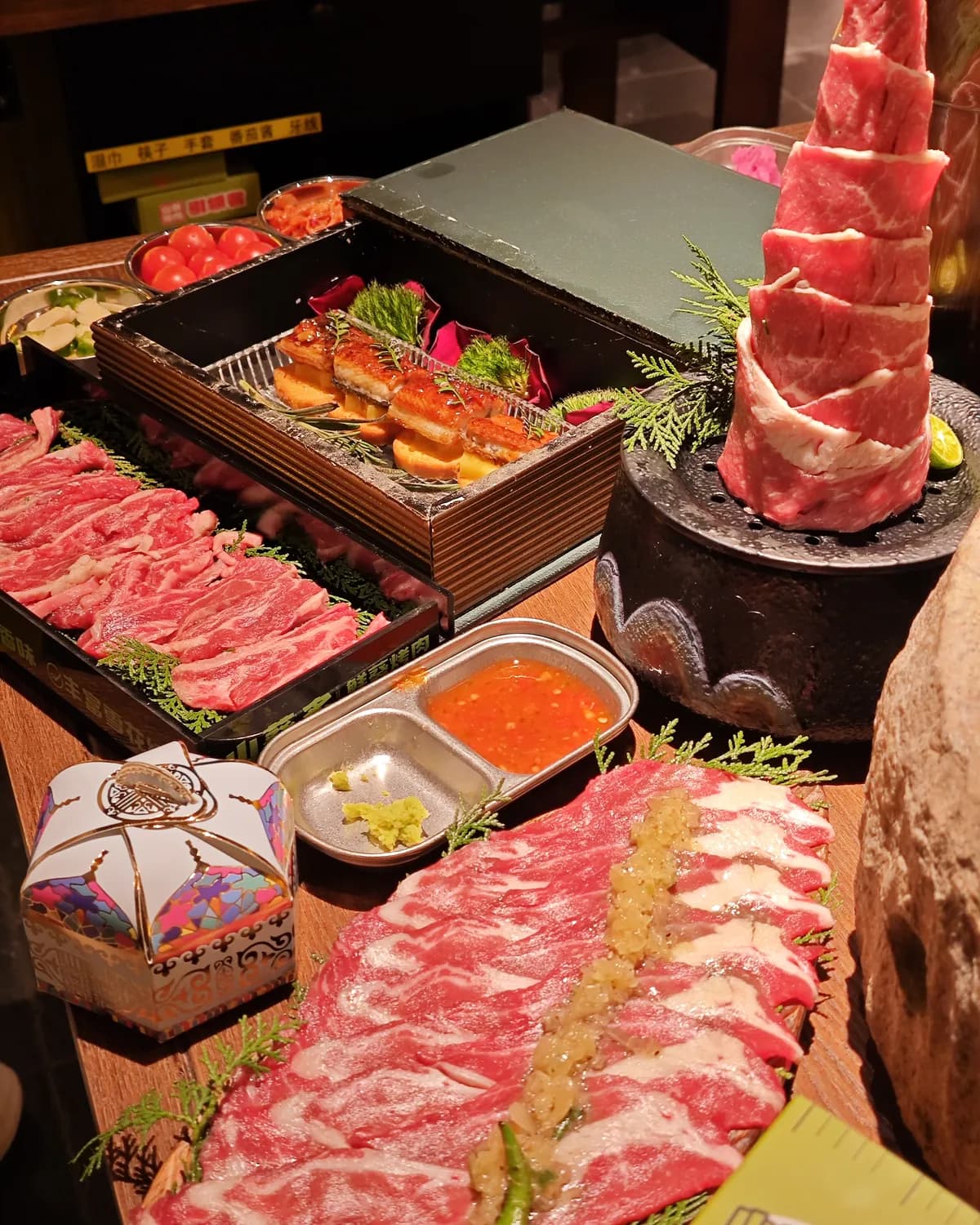
A master butcher hand-slices at the restaurant. You'll see the cutting station near the entrance or behind glass — a guy with a cleaver and a cutting board the size of a desk, breaking down whole sides of beef into the specific cuts that go on the menu. This isn't a kitchen prep step hidden from view. It's performance, and it's part of the pitch: look at how fresh this is.
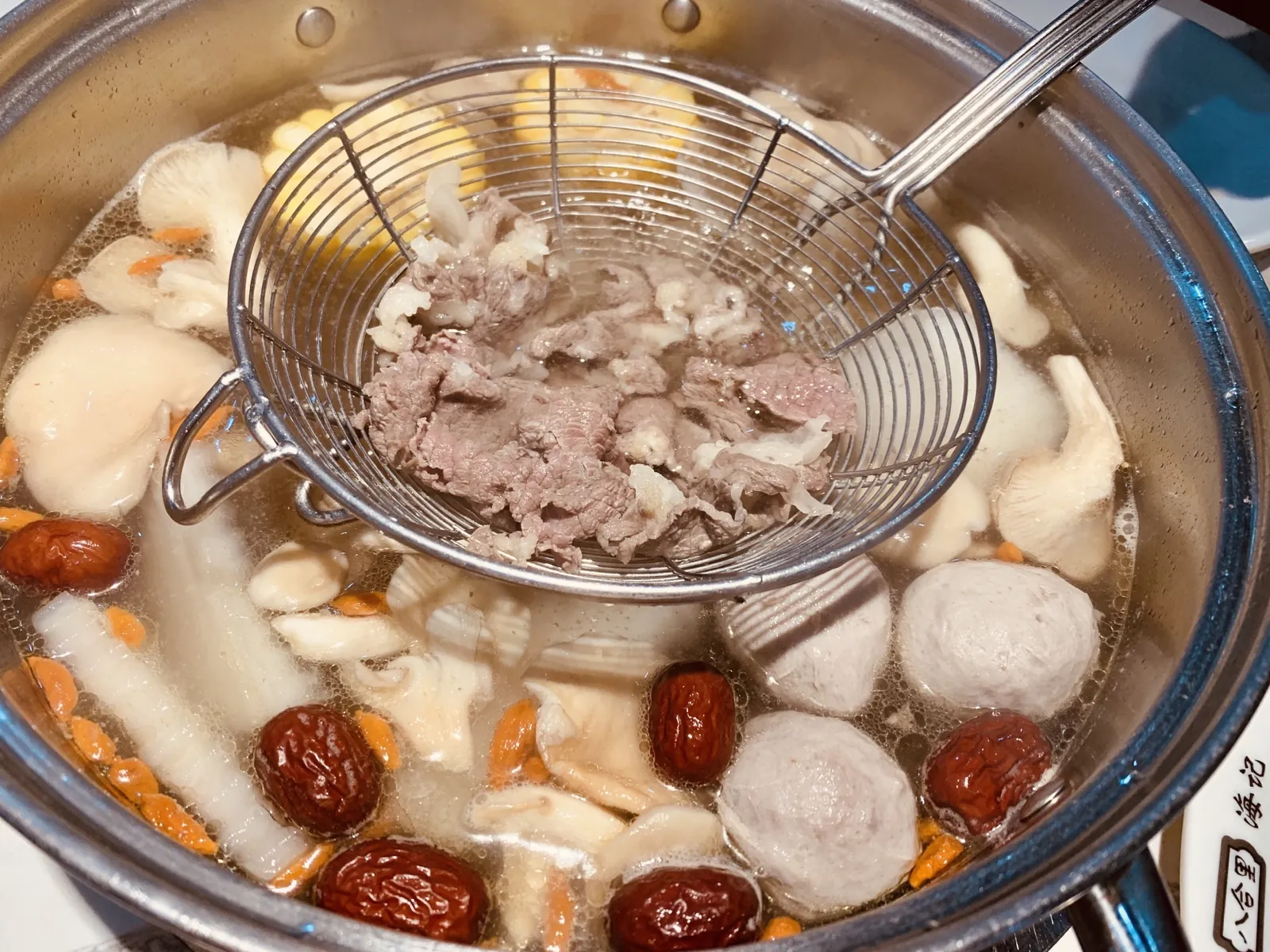
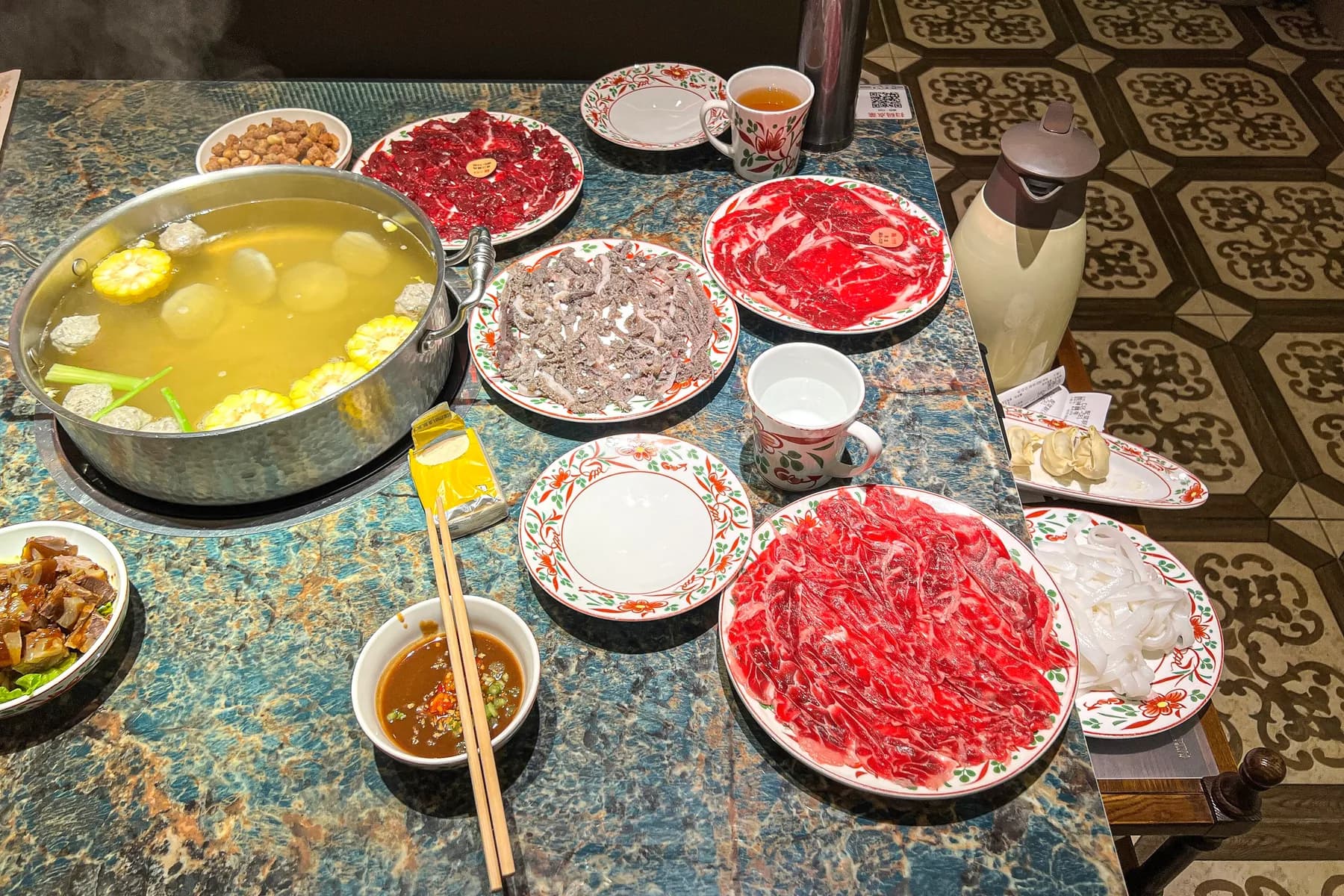
The broth is clear bone broth, nothing else. Beef bones, radish, maybe some corn. That's it. No chili, no heavy spices, no flavor bomb paste. The broth is there to cook the beef and to drink as a soup at the end. If the broth turns cloudy or greasy during your meal, something went wrong. At a good Chaoshan hotpot place, the broth stays clear from first slice to last.
Every cut has a specific cooking time. This isn't "throw it in and wait." You'll get a plate of paper-thin sliced beef, and the staff will tell you — or physically show you — how many seconds each cut needs. Eight seconds. Twelve seconds. Fifteen seconds. You use chopsticks to swish the slice in the boiling broth, count, and pull it out. Overcook it by even five seconds and you've ruined the texture. This is the theatrical part that makes foreigners sit up straight at the table.
The Chaoshan region (潮汕) sits on the eastern coast of Guangdong province. It's historically a beef culture area — unusual for southern China, which runs on pork and fish. The beef hotpot tradition there goes back generations, and Shenzhen, being the biggest city in Guangdong, became the place where the style went commercial and slightly competitive. There are hundreds of Chaoshan beef hotpot restaurants in Shenzhen now. But 八合里 is the one everyone knows.
The cuts — what to order and how long to cook each one
This is the part that looks intimidating on paper but is actually simple at the table, because the staff will walk you through the first round. Still, knowing the cuts beforehand means you can order with purpose instead of just pointing at whatever the table next to you got.
吊龙 (diàolóng) — hanging loin
The signature cut. This is the one everyone starts with and the one the restaurant judges you by. Thin slices with delicate marbling, a slight pink when raw. Cook time: 8-10 seconds. Swish it in the broth, watch the color change from pink to just barely gray-brown, and pull it out. The texture should be silky, almost melting. If it's chewy, you left it too long.
This is usually the cut in the Jensen Huang set meal.
五花趾 (wǔhuāzhǐ) — brisket tip
More marbled than 吊龙, with visible fat lines running through the slice. This one has more chew — in a good way. Cook time: 12-15 seconds. The fat renders slightly in the broth, which is why this cut adds richness to the whole pot. Some people consider this the real star cut, not the 吊龙.
匙仁 (chírén) — spoon meat
Named because it comes from the shoulder area near the scapula — shaped vaguely like a spoon, supposedly. Very tender, slightly fatty, almost creamy when cooked right. Cook time: 6-8 seconds. This is the shortest timer on the table and the easiest to overcook. The staff will usually handle this one for you the first time to demonstrate how fast it goes.
脖仁 (bórén) — neck meat
Lean, dense, with a distinctive springy texture that's completely different from the other cuts. This is the bouncy one — not rubbery, but with a firm springback when you bite into it. Cook time: 8-10 seconds. Neck meat has less fat, so it's a good palate cleanser between the richer cuts.
胸口朥 (xiōngkǒu láo) — breast fat cap / brisket plate
Cook time: 15-20 seconds. This is the polarizing one. It's white, it looks like pure fat, and first-timers refuse to order it. If your local dining companion insists — and they will — try it. The texture is a cartilage-like crunch that has no equivalent in Western cuisine. It either becomes your favorite cut or the thing you never order again. There is no middle ground.
牛肉丸 (niúròu wán) — hand-pounded beef balls
These are dense, bouncy, and nothing like the spongy beef balls you get at a generic hotpot buffet. The staff at 八合里 will sometimes throw a beef ball against the table to prove it bounces. This is not a gimmick — the bounce is a quality signal. Chaoshan beef balls are hand-pounded, not machine-ground, and the density that makes them bounce is what gives them their signature snap when you bite through. Cook time: 3-5 minutes. Drop them in the broth and wait — they float to the surface when done. These take care of themselves while you work on the sliced cuts.
牛筋丸 (niújīn wán) — beef tendon balls
Similar to 牛肉丸 but with bits of tendon mixed in, giving them a chewier, more textured bite. Cook time: 3-5 minutes, same as the plain beef balls. Good as a contrast to the soft, silky sliced cuts.
The order of operations
Start with 吊龙 and 五花趾 — these are the two that define the meal. Add 匙仁 or 脖仁 as your third plate depending on whether you prefer tender-fatty or lean-bouncy. Drop the beef balls in the broth first since they take the longest. The staff will usually suggest this sequence anyway, but it helps to know it.
The dipping sauce — simpler than you think
沙茶酱 (shāchá jiàng) — satay sauce
This is the one. The traditional, the canonical, the only dipping sauce that Chaoshan purists recognize. It's a peanut-based paste blended with dried shrimp, garlic, and spices — savory, slightly sweet, with a toasty depth that complements the clean beef flavor without competing with it.
The restaurant will put a small dish of 沙茶酱 at your place setting before the broth even arrives. That's the signal: this is what you use.
Additions (if you want them)
Some diners add a ring of minced fresh garlic around the edge of the sauce dish. Others add sliced fresh chili. Some tear in Chinese celery leaves. These are all acceptable — the restaurant will have a small condiment station where you can build your own version.
(Purists use only 沙茶酱 with nothing added, and they'll notice if you pile on the garlic. You're a foreigner though, so the rules are relaxed. Do what tastes good.)
One thing to avoid: don't reach for soy sauce or vinegar. This isn't Sichuan hotpot. The dipping sauce exists to complement the beef, not mask it. If you need soy sauce, the beef probably isn't fresh enough — and at a good Chaoshan place, that shouldn't be the case.
Where to eat Chaoshan beef hotpot in Shenzhen
八合里海记牛肉店 (Bālǐ Hǎijì Niúròu Diàn)
The one everyone knows. The Jensen Huang spot. Multiple locations across Shenzhen, all running the same morning-kill supply chain and the same master-butcher-at-the-entrance setup. This is the default recommendation because it's consistent, it's famous enough that the staff are used to foreigners, and the quality is verified daily by about ten thousand Dianping reviews.
Futian location (most convenient for visitors):
- Hours: 11:30 AM - 2:30 AM (yes, two-thirty in the morning)
- Price: 80-120 RMB per person for a proper meal with multiple cuts and sides
- Payment: Alipay and WeChat Pay. If you haven't set up mobile payment yet, read the Alipay setup guide before you come — some locations don't take foreign cards.
- The Jensen Huang set meal (黄仁勋同款套餐): Just ask for it. It typically includes 吊龙, 五花趾, beef balls, and a few sides. It's a real menu item, not a joke, and the staff won't find the request weird — they get it twenty times a night.
- Weekend queues: 30-60 minutes for dinner on Friday and Saturday. Use the Dianping app's 排队取号 (remote queue) feature to grab a number before you arrive. The eating guide has the basics on navigating food apps, or you can ask your hotel reception to help you pull a queue number.
Other 八合里 locations: There are branches in Nanshan, Luohu, and Bao'an. The Futian one is the most cited, but they're all running the same supply chain. Pick whichever is closest to where you're staying.
If 八合里 has a massive queue
陈记顺和 (Chénjì Shùnhé): Another well-known Chaoshan beef hotpot chain with high Dianping scores. Same concept — morning-kill beef, master butcher on-site, clear broth. Slightly less famous than 八合里, which sometimes means shorter waits. Multiple locations in Futian and Nanshan.
潮牛壹号 (Cháoniú Yīhào): A newer chain that's been gaining ground. The interior is more modern than 八合里's stripped-down look, and the plating is slightly more refined. Prices are about 10-20% higher but the beef quality is comparable. Good option if you want a slightly less canteen-style atmosphere.
Both of these follow the same Chaoshan hotpot rules: morning beef, hand-sliced, clear broth, specific cooking times. The core experience is the same.
How to order like you've done this before
Here's the sequence that works for two people without overordering:
Step 1: The broth arrives. It's already simmering. Don't add anything to it yet — the broth is ready. Some restaurants bring a pot of 牛骨汤 (beef bone broth) and a pot of 牛骨萝卜汤 (beef bone and radish broth). Pick either. They're both clear.
Step 2: Drop the beef balls in first. They need 3-5 minutes, so get them going while you work on the sliced cuts.
Step 3: Start with 吊龙 (hanging loin). This is the lightest, most delicate cut. The staff will often demonstrate the swishing technique on your first plate — watch them, copy the rhythm, and you're set for the rest of the meal. Eight to ten seconds. Don't look at your phone.
Step 4: Move to 五花趾 (brisket tip). The step up in richness. Twelve to fifteen seconds. You'll notice the broth starting to pick up a subtle beefy depth from the fat in this cut.
Step 5: Add your third cut — 匙仁 or 脖仁. Dealer's choice. Tender-fatty or lean-bouncy.
Step 6: Vegetables and tofu. Once you've had your fill of beef rounds, add 生菜 (lettuce), 豆腐 (tofu), 玉米 (corn), or 金针菇 (enoki mushrooms) to the broth. These soak up the now-deeply-flavored beef broth and round out the meal.
Step 7: Finish with noodles. Order 粿条 (guǒtiáo, Chaoshan-style flat rice noodles) or regular 面条 (miàntiáo) and cook them in the remaining broth. This is the final course, and it's surprisingly good — the broth has been building flavor with every cut of beef you've cooked in it.
How much to order for two people
- 2-3 plates of sliced beef (one 吊龙, one 五花趾, one more of your choice)
- 1 plate of beef balls or tendon balls
- 1-2 vegetable dishes
- 1 order of noodles to finish
That's it. Total should run 160-240 RMB for two people. Resist the urge to order five types of meat up front — you can always add more, but overordering at the beginning means the later plates sit out while you're still cooking the earlier ones. The whole point of morning-kill beef is freshness, and that clock is ticking once the slices hit the plate.
Practical tips for getting in and out
Best time to go: Weekday lunch. The queues are shortest between 11:30 AM and 1:00 PM on Monday through Thursday. You'll often walk straight in.
Worst time to go: Weekend dinner, especially Friday and Saturday after 6:00 PM. At 八合里, you're looking at 30-60 minutes of waiting. The late-night crowd (after 10 PM) is actually lighter — the place is open until 2:30 AM, and some of the best meals happen when the dinner rush has cleared.
The Dianping queue trick: Download Dianping (大众点评) — it's the Chinese Yelp, but with a remote queuing feature. Search for the restaurant, tap 排队取号 ("take a queue number"), and you'll get a virtual ticket. Show up when your number is close. This saves you from standing in a hot hallway scrolling your phone for 40 minutes. The eating guide covers basic food app navigation if you need help getting set up.
Payment: Alipay or WeChat Pay. No exceptions at most locations. If you haven't set up mobile payment yet, do that before you walk in.
Language: Almost zero English at the counter or from staff, but it doesn't matter much. The menu has photos. The cuts are labeled in Chinese with pictures. The staff will physically demonstrate the cooking technique. Point, nod, and count seconds — that's the entire communication protocol. If you want to order the Jensen Huang set meal, having 黄仁勋同款 on your phone screen to show the staff is enough.
Solo dining: Totally fine. The smallest pot serves one person. You'll see solo diners at lunch regularly — this is a quick, practical meal in Shenzhen, not just a group occasion. Order one or two cuts plus beef balls and you're in and out in 45 minutes.
What to drink: The default is herbal tea (凉茶, liángchá) from the fridge — slightly bitter, cuts through the richness of the later cuts. Sugarcane juice (甘蔗汁, gānzhe zhī) is the sweeter alternative. Some tables order boxed milk tea. Skip beer during the meal — the subtle beef flavors get lost. Save the beer for after.
Air conditioning note: Most 八合里 locations are simple, canteen-style spaces. You'll be sitting next to a boiling pot of broth. It gets warm. Don't wear your nicest shirt — you'll leave smelling faintly of beef broth. (This is true of all hotpot in China, not just Chaoshan style.)
Why this meal matters beyond the food
Chaoshan beef hotpot is one of those Shenzhen experiences that recalibrates your standards. You walk in thinking you know what beef tastes like. You've had wagyu, dry-aged steaks, Brazilian churrascaria, whatever your home country's peak beef experience is. And then a plate of 吊龙 arrives, you swish it for eight seconds in clear broth, dip it in satay sauce, and something shifts. The beef tastes like beef in a way that suggests everything else you've been eating has been a processed approximation.
Part of it is the freshness — slaughtered that morning, never frozen. Part of it is the minimal cooking — eight seconds in hot broth preserves flavors that a grill or pan destroys. Part of it is the clear broth concept, which strips away every other variable so the beef has nowhere to hide.
And part of it is just watching the butcher work. The knife skills are real. The slices are translucent. The fact that this costs 100 RMB instead of 1,000 RMB is what makes Shenzhen feel like a different planet from the cities most foreigners are used to.
Jensen Huang figured this out. Now you know too.
Related guides
Once you've got the hotpot situation handled, these cover the other things you'll need between meals:
- What to eat in Shenzhen — the complete guide — QR code ordering, delivery apps, street food, and how to handle dietary restrictions
- How to pay in Shenzhen — set up Alipay before you walk into any restaurant, because QR code payment is the only option at most places
- What actually surprises foreigners about Shenzhen — the noise, the crowds, the eating etiquette, and the stuff nobody warns you about
Change Log & Review CadenceExpand
Facts reviewed
Apr 10, 2026
Content updated
Apr 10, 2026
First published
Apr 10, 2026
Next review target
Jul 9, 2026