
Last verified Apr 10, 2026 · 19 min read
Direct answer
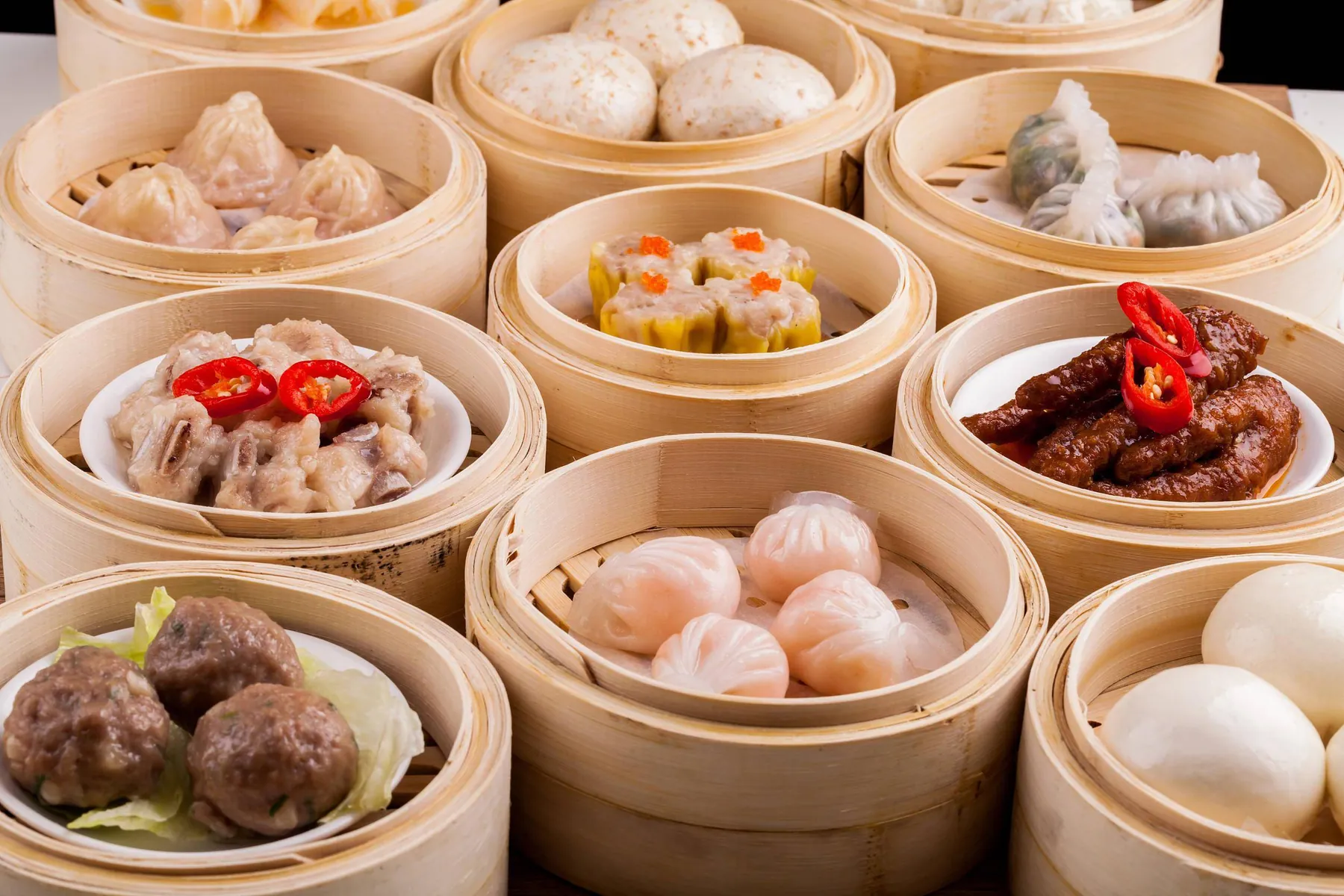
The best dim sum in Shenzhen depends on your budget: 40 RMB budget spots up to 350 RMB at Black Pearl award winner Yuejing. Order the four heavenly kings first (har gow, char siu bao, phoenix claws, cheung fun), and tap two fingers on the table when someone pours your tea.
- Best dim sum: 悦景酒家 (Yuejing) — Black Pearl award winner, 250-350 RMB per person, the quality ceiling. 蘩楼 (Fanlou) near Luohu is most popular with Hong Kong visitors.
- Everyday pick: 点都德 (Diandude) has multiple locations. Check the chosen branch’s current menu and any time-limited offers; do not assume an early-bird discount applies.
- What to order: The 四大天王 (four heavenly kings): har gow 虾饺 (shrimp dumplings), char siu bao 叉烧包 (BBQ pork buns), phoenix claws 凤爪 (chicken feet), cheung fun 肠粉 (rice noodle rolls).
- Finger tapping: Tap two fingers on the table when someone pours tea for you — this is the proper dim sum etiquette, rooted in a Qianlong Emperor legend.
This is not breakfast
Before I tell you where to find the best dim sum in Shenzhen, let me get the framing right.
Locals call it 早茶 (zǎochá), and if you grew up around Cantonese food you probably call it yum cha. 早茶 literally translates to "morning tea," and that's the worst possible translation for what actually happens. Breakfast is something you rush through before work. 早茶 is a two-hour social ritual involving tea, small plates, arguments about who's paying the bill, and the Cantonese art of doing absolutely nothing in particular while appearing very busy.
In Shenzhen — a city shaped by arrivals from across China — dim sum is one of the few rituals that still anchors Cantonese culture. The tech workers from Hunan eat it. The factory managers from Anhui eat it. The finance people from Hong Kong cross the border specifically for it. Dim sum is the one table everyone in this city can sit at, and the fact that you're reading this means you're about to sit down too.
Here's the thing nobody tells foreigners: you don't need to know the names of the dishes. You don't need to speak Cantonese. You don't even need to understand the menu. But you do need to understand the system — how it works, what the unwritten rules are, and where to go based on whether you want a 40 RMB weekday lunch or a 300 RMB weekend spectacle.
That's what this guide is for.
How dim sum in Shenzhen actually works
If you've never done yum cha, here's the full sequence from door to bill. I'm being extremely literal because every step has a detail that trips up first-timers.
Getting a table
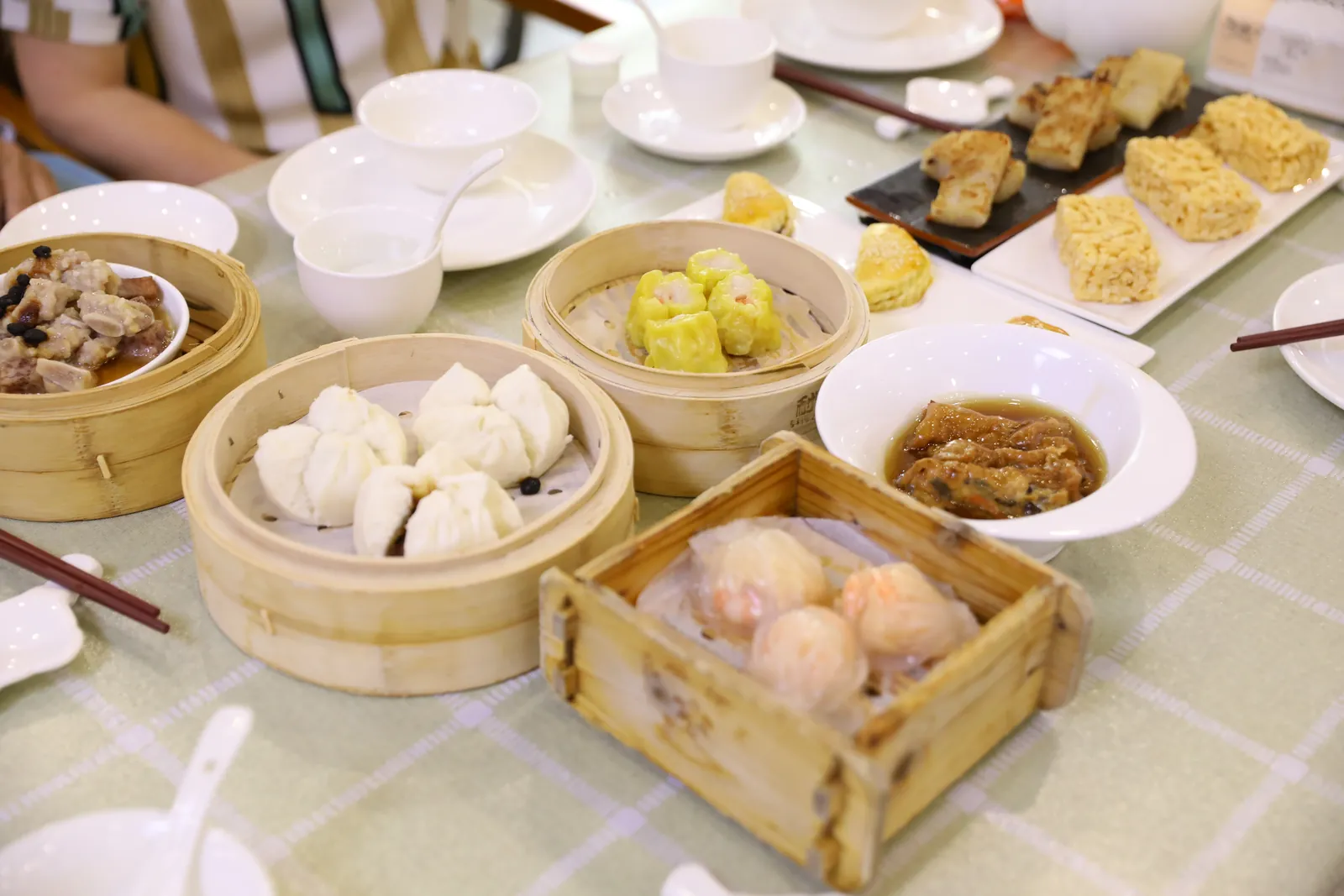
Walk in and you'll either be seated immediately (weekday mornings, off-peak) or handed a queue number. Weekend mornings at popular spots mean 30-90 minute waits. Two ways to skip the physical wait:
- Dianping remote queue (大众点评 排队取号): Open the Dianping app, find the restaurant, and hit the queue button. You'll get a number and can track your position from wherever you are. This works at most popular teahouses.
- 美味不用等 mini-program: Some restaurants use this WeChat mini-program instead of Dianping. Scan the QR code at the entrance and you'll get an SMS when your table is ready.
(You'll need Alipay or WeChat Pay set up for basically everything that follows. If you haven't done that yet, do it now.)
Choosing your tea
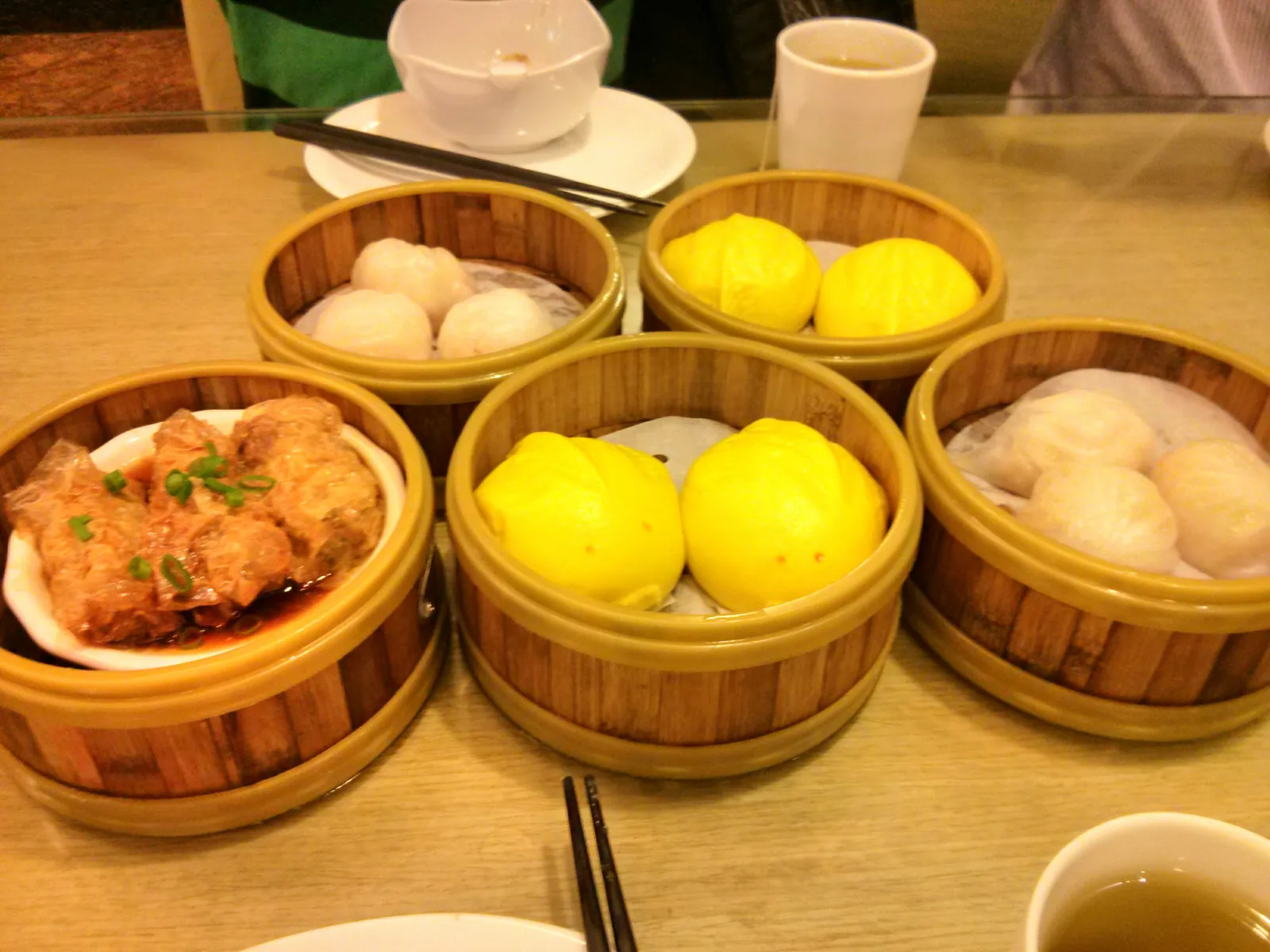

Once seated, someone will ask what tea you want. This is not a decorative step. The tea is the backbone of the meal — it's what cuts through the grease of all those steamed and fried dishes, and you'll drink 4-6 pots of it over the next two hours.
Your options and what they actually mean:
- 普洱 (pǔ'ěr) — dark, earthy, smooth. The default local choice and the safest pick for beginners. Cuts grease better than any other option.
- 铁观音 (tiěguānyīn) — oolong, slightly floral. If you find pu'er too heavy, this is the step down.
- 菊花 (júhuā) — chrysanthemum. Light, sweet-ish, zero caffeine. The choice for people who don't actually like tea.
- 龙井 (lóngjǐng) — green tea. Clean and grassy. Less common at dim sum because it doesn't pair as well with the heavier dishes.
Just say "pu'er" when they ask. You'll be fine.
Ordering the food
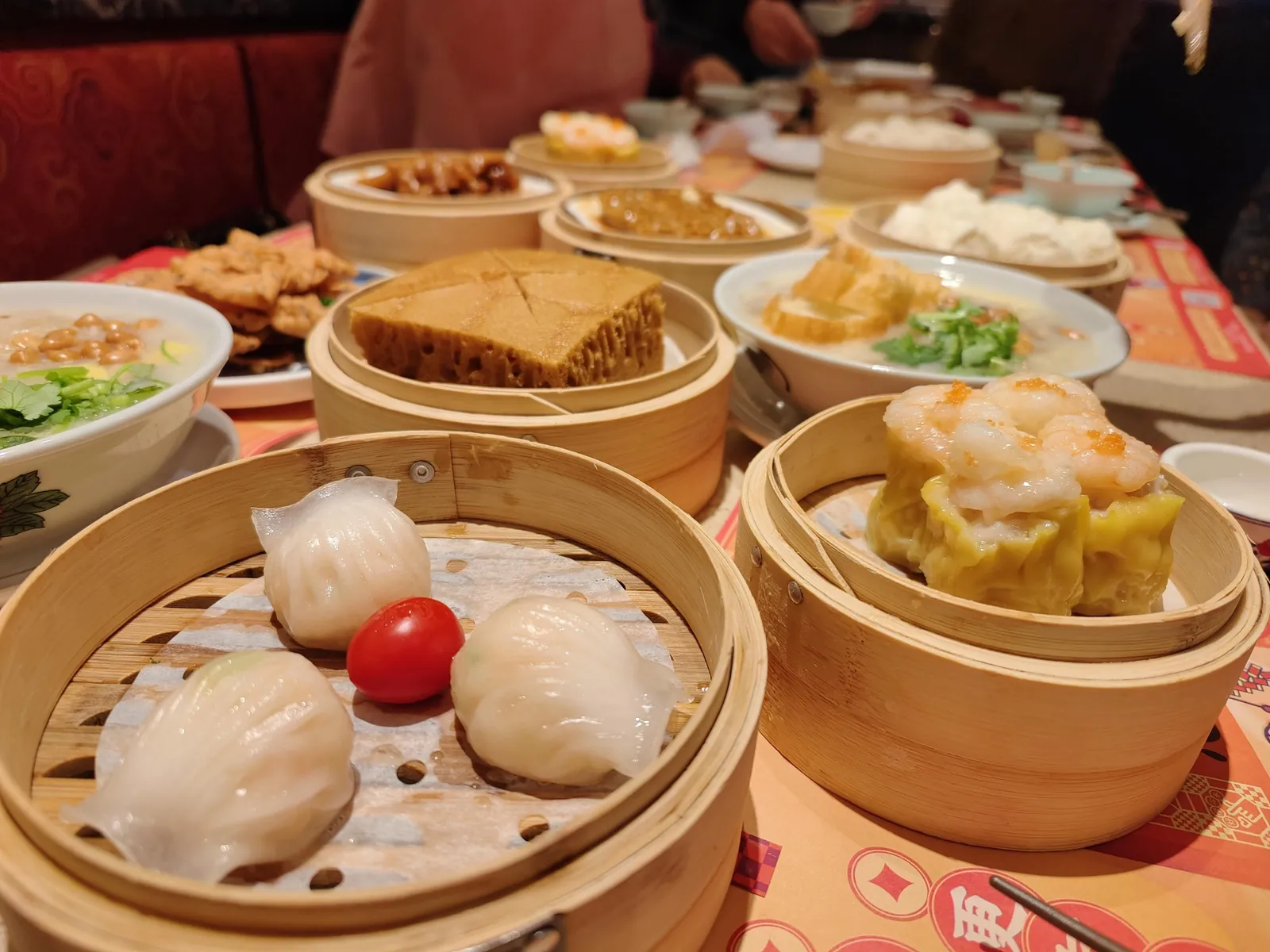
Two systems exist, and which one you get depends on the restaurant:
QR code ordering (most common now): Scan the table QR with WeChat or Alipay. A mini-program opens with photos of every dish. Tap what you want, submit, pay. Food starts arriving in 5-10 minutes. If the menu is in Chinese only, use Google Translate camera mode on the screen — same technique as regular restaurant ordering.
Cart service (traditional, some premium places): Aunties push carts through the dining room loaded with steamer baskets. You point at what looks good. They stamp your paper order card. This is the old school way and it's genuinely fun — but it's disappearing. Yuejing still does it. Most chain teahouses have gone full QR.
How the food arrives
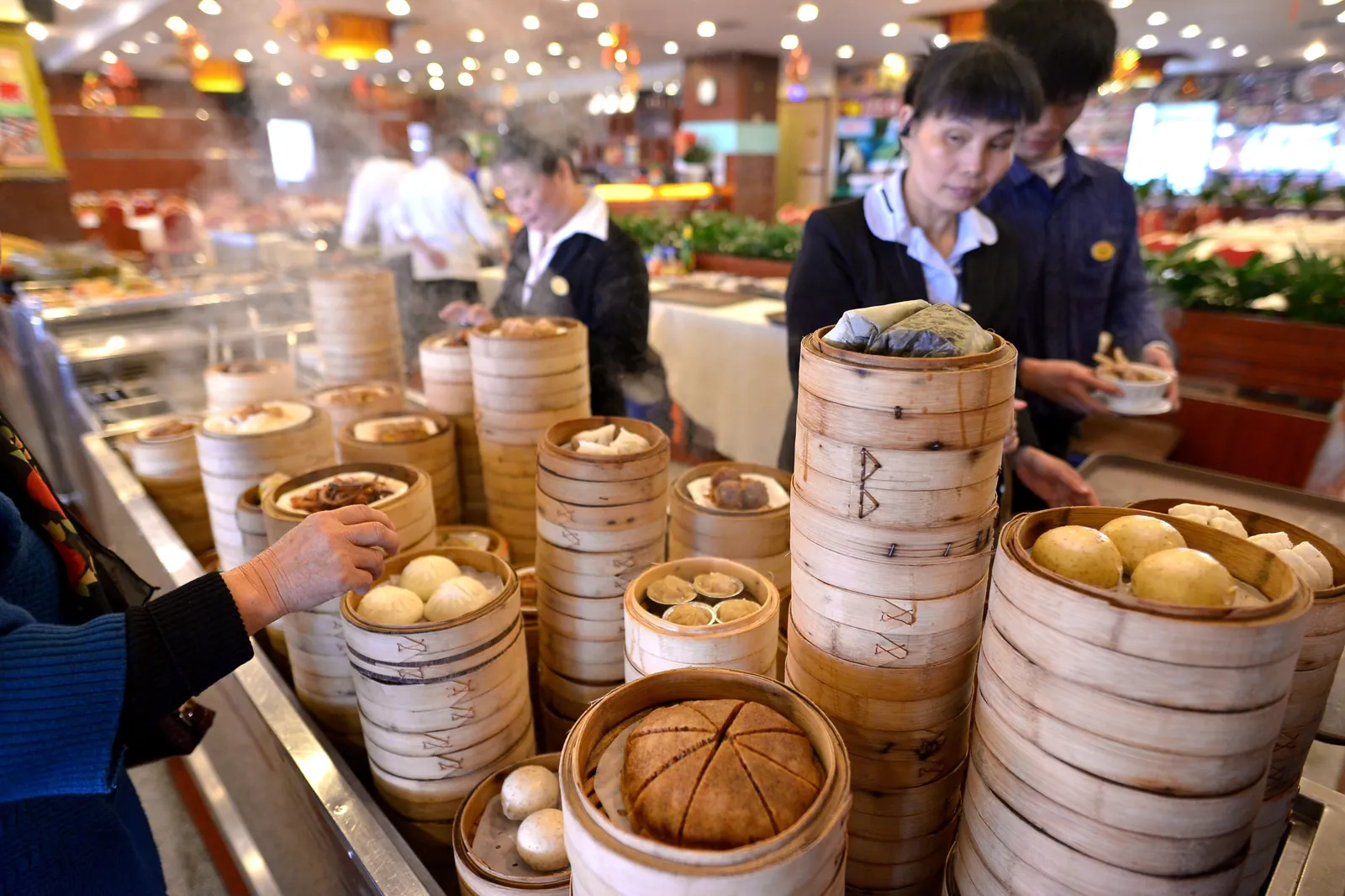
Dishes come in small steamer baskets or plates. Each basket typically has 3-4 pieces. Everything is family-style — you share across the table. Nobody gets their own plate of dumplings. The baskets accumulate on the table as you order more. At busy places, the staff will stack empties and keep count.
Pace yourself. The standard move is to order 4-5 dishes first, eat those, then order a second round based on how hungry you still are. Over-ordering on the first wave is the classic tourist mistake.
The 四大天王 — what to order first
四大天王 (sì dà tiān wáng) means "four heavenly kings." It's the shorthand locals use for the four benchmark dishes at any dim sum house. If you order nothing else, order these. They're the measuring stick — a teahouse that nails all four is a teahouse worth returning to.
Har gow (虾饺) — shrimp dumplings
.jpg)
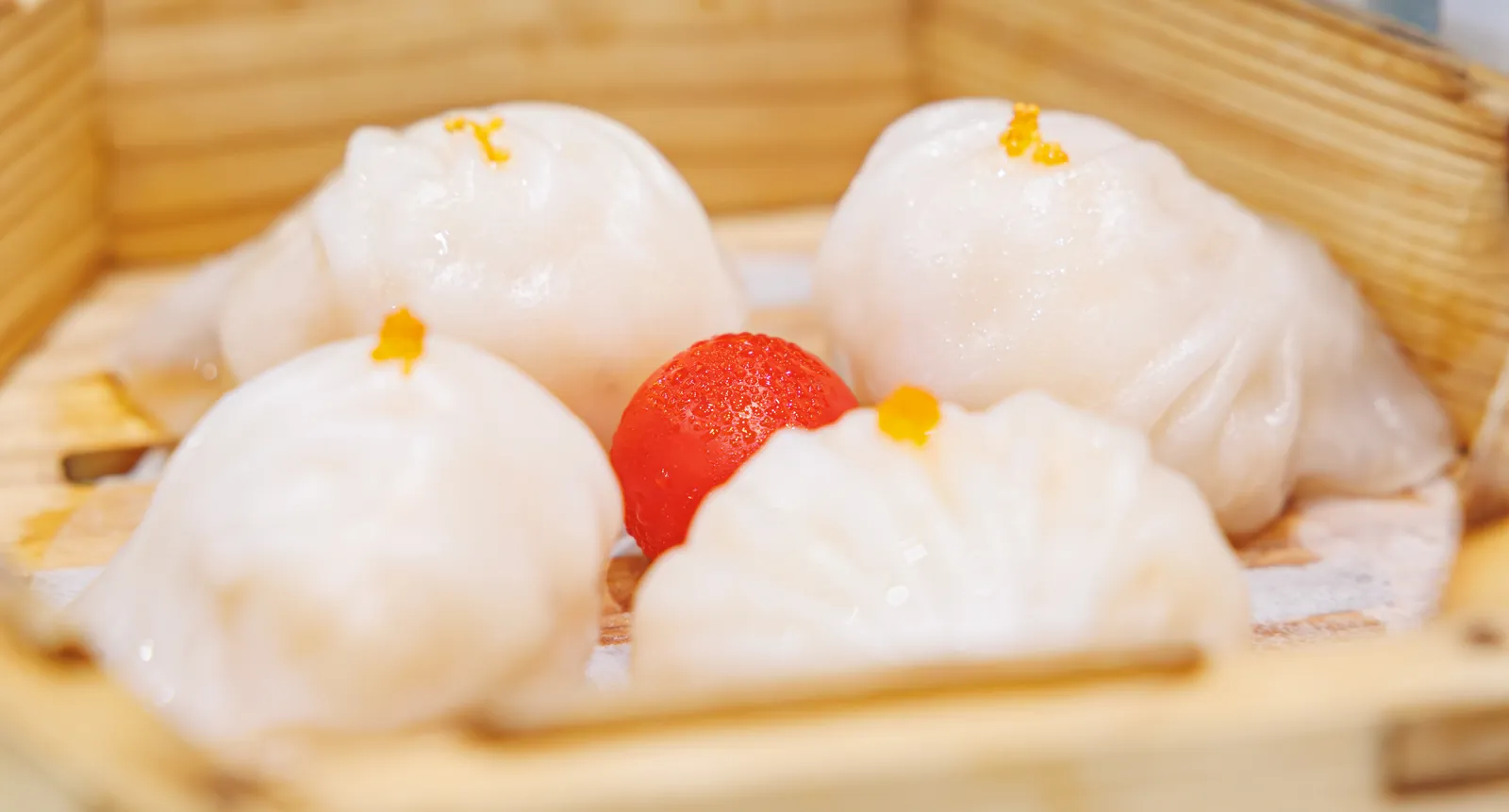
The single most important dish. A translucent wrapper made from wheat starch and tapioca, folded into pleats, hiding whole bouncy shrimp inside. The wrapper should be thin enough to see the pink shrimp through it, but strong enough not to tear when you pick it up with chopsticks.
This is the dish dim sum chefs are judged on. If the shrimp are rubbery, if the wrapper is thick and pasty, if the folds are sloppy — the kitchen is telling you something. Pay attention.
Char siu bao (叉烧包) — BBQ pork buns
Fluffy white steamed buns split open at the top, filled with diced char siu pork in a sweet-savory glaze. The bun itself should be cloud-soft — if it's dense or dry, the kitchen isn't steaming them fresh. The filling should have visible chunks of pork, not some uniform paste.
These are the most forgiving dish for cautious eaters. Sweet, soft, no weird textures, nothing challenging. Everyone likes char siu bao.
Phoenix claws (凤爪) — the adventurous one
.jpg)
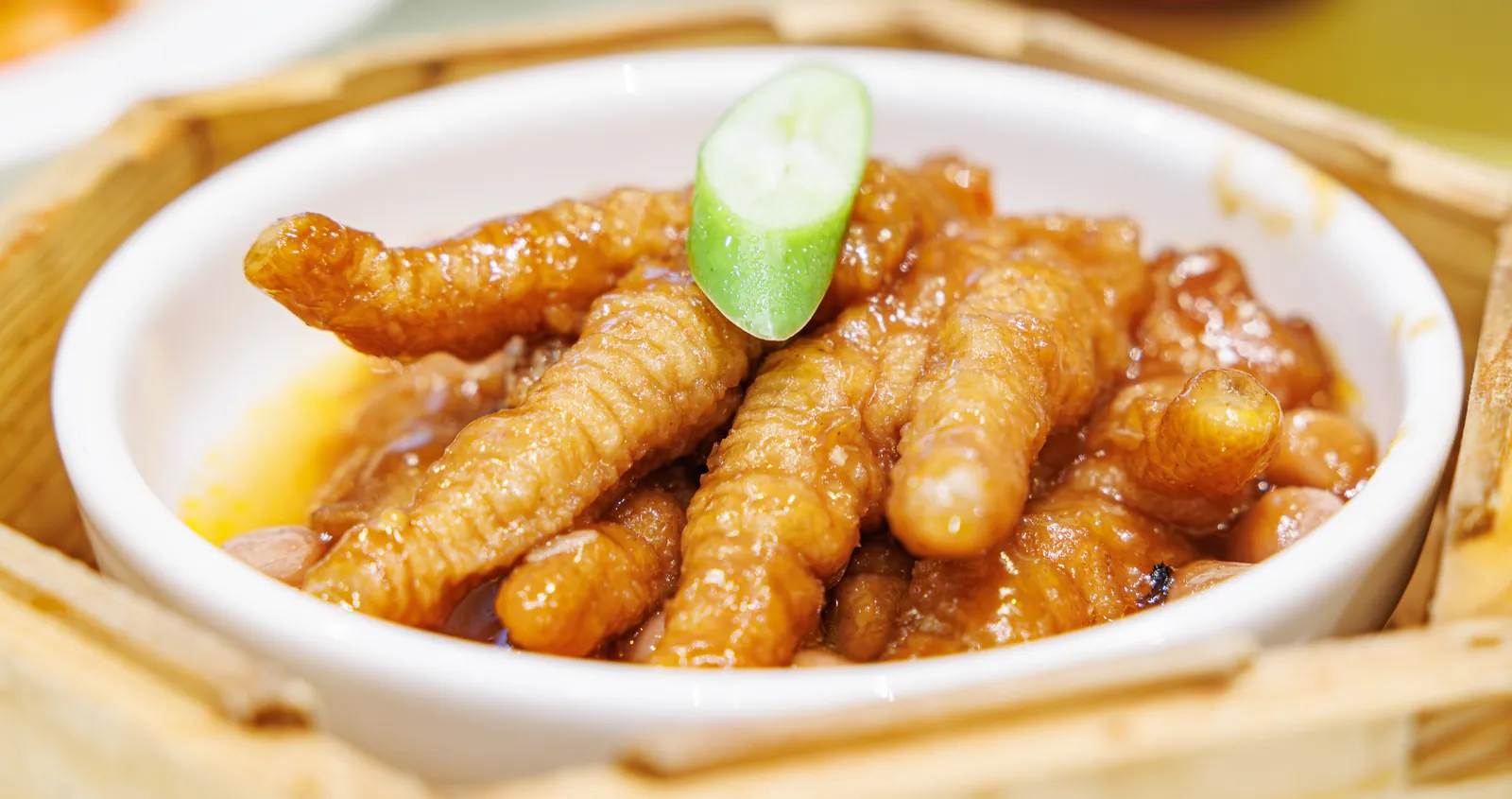
Let's get this out of the way: these are braised chicken feet. Yes, really. Yes, you should try them.
The feet are deep-fried first (which loosens the skin), then braised in a black bean and chili sauce until they're fall-apart tender. You eat them by sucking the soft skin and cartilage off the tiny bones. There's no "meat" in the traditional sense — the texture is the point. Gelatinous, savory, slightly spicy.
If you can't get past the visual, I get it. But if you're going to eat one adventurous thing at dim sum, make it this. Locals judge foreigners (kindly, but they notice) on whether you'll try the chicken feet. And honestly, once you get past the first bite, the flavor is excellent.
Cheung fun (肠粉) — rice noodle rolls
Wide, silky sheets of rice noodle wrapped around fillings — usually shrimp (虾仁肠粉), beef (牛肉肠粉), or just plain with soy sauce (斋肠粉). The texture should be slippery and delicate, almost like a savory crepe. Doused in a light sweetened soy.
This is the dish that converts people who thought they didn't like dim sum. Something about the simplicity — rice noodle, shrimp, soy sauce — just works.
Beyond the four
.jpg)
Once you've got the classics covered, branch out:
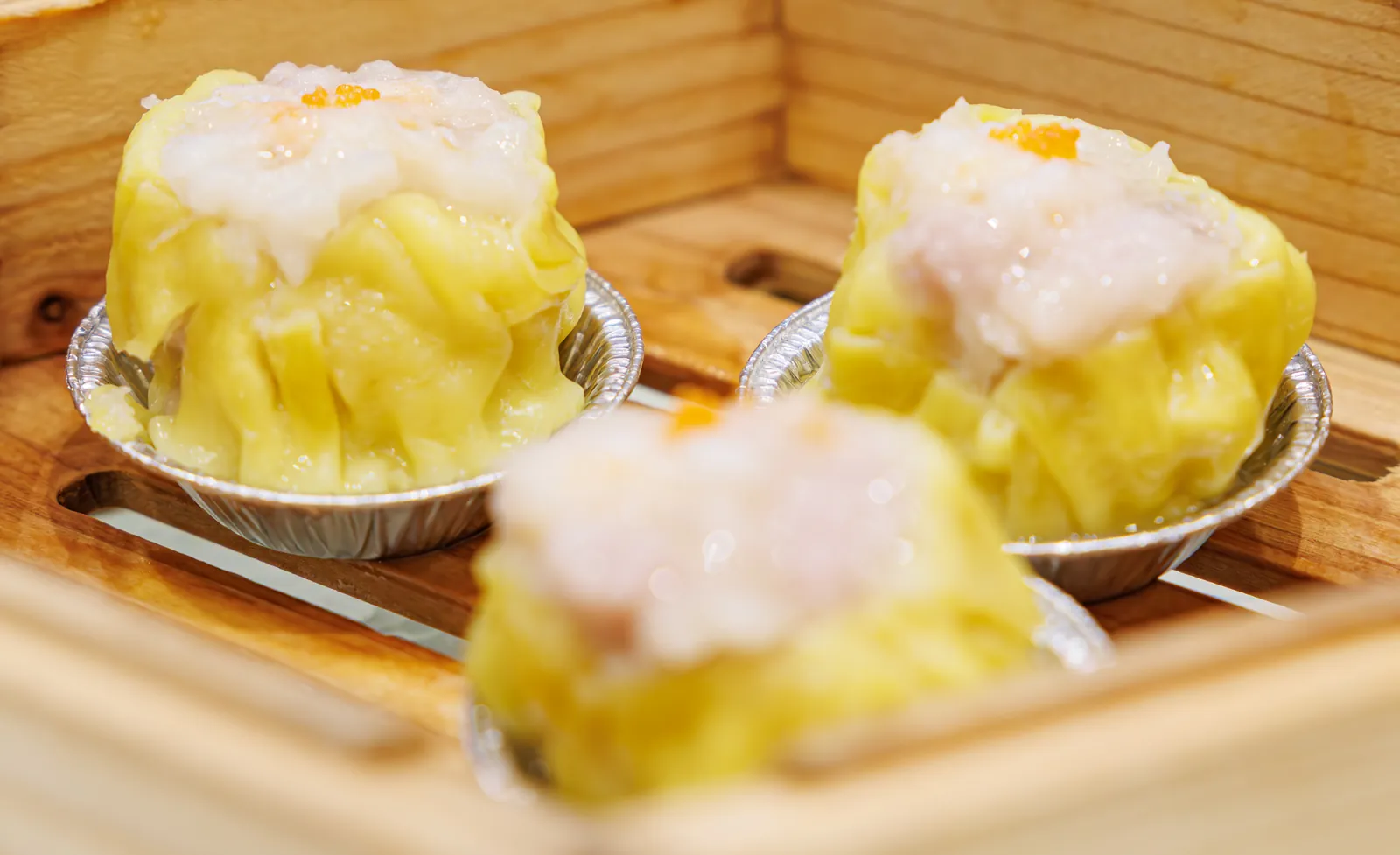
- Siu mai (烧卖) — open-topped dumplings with pork and shrimp, crowned with a dot of fish roe. The second-most-ordered item at any teahouse.
- Egg tarts (蛋挞) — flaky pastry, silky custard. The Portuguese-via-Macau version with caramelized tops is called 葡式蛋挞 and it's the better one.
- Salted egg custard buns (流沙包) — break one open and the molten custard oozes out. Dangerously good, dangerously hot. Wait 30 seconds before biting in. I'm serious.
- Turnip cake (萝卜糕) — pan-fried until crispy on the outside, soft and savory inside. The version with dried shrimp and lap cheong (腊肠) is the one you want.
- Black bean spare ribs (豉汁排骨) — steamed, small bone-in bites, intensely savory. Eat them with your hands if chopsticks fail you.
Vegetarian options
Vegetarian-friendly dishes that reliably appear at every teahouse: turnip cake (萝卜糕), plain cheung fun (斋肠), water chestnut cake (马蹄糕), and steamed buns without meat filling. Ask for 素的 (sùde, vegetarian) when ordering. The selection is narrower than the meat-heavy standards, but you won't go hungry — and the plain cheung fun with soy sauce is honestly one of the best dishes on the table regardless.
The best dim sum in Shenzhen, by the morning you want
"Best" depends on what you want from the morning, so I've sorted these by the experience, not by some abstract score. All five serve good dim sum. Pick the one that matches your budget and how much time you have.
悦景酒家 (Yuejing) — the quality ceiling
This is as good as dim sum gets in Shenzhen. Black Pearl restaurant award winner (China's equivalent of Michelin), and the kitchen shows it. The shrimp dumplings here have a translucent wrapper so thin it's almost architectural. They're famous for arm-length fried dough sticks (油条) that two people share, and intricate dim sum creations you won't find at chain teahouses.
- Price: 250-350 RMB per person
- Queue: 1+ hour on weekends without a reservation. Use the Dianping remote queue — take the number, go for a walk, come back when it's close.
- Metro: Line 5, Huangbeilin (黄贝岭站)
- Address:
深圳市罗湖区深南东路2001号鸿昌广场裙楼2层
2F, Hongchang Plaza, 2001 Shennan East Road, Luohu
The crowd here skews older and more Cantonese. Weekend mornings feel like a social event — extended families, retired couples, the occasional business brunch. Come here when you want the full cultural experience, not a quick meal.
蘩楼 (Fanlou) — the Hong Kong visitor favorite
Every Hong Kong friend I've brought to Luohu asks for Fanlou within 20 minutes of clearing customs — it's their default first stop. Fanlou traces its origins to a Guangzhou teahouse from the late Qing Dynasty. The Shenzhen locations are modern, but the menu is traditional Cantonese, and the execution is consistent enough that it constantly tops Dianping's popularity charts for Hong Kong visitors crossing the border specifically for dim sum.
The quality sits a tier below Yuejing but the price-to-quality ratio is better for most people. Their 虾饺 and 凤爪 are both excellent.
- Price: 90-100 RMB per person
- Queue: Heavy on weekends, moderate on weekdays. Use the "美味不用等" mini-program for advance queuing.
- Metro (Luohu branch): Line 1 Guomao (国贸), Exit A
- Address:
深圳市罗湖区嘉宾路2002号
2002 Jiabin Road, Luohu
The Luohu location is walkable from the Lo Wu border crossing — a legitimate option for Hong Kong day-trippers who want dim sum within 15 minutes of clearing immigration. The staff are used to non-Mandarin speakers here more than anywhere else on this list.
点都德 (Diandude) — the reliable everyday choice
If Yuejing is the destination restaurant and Fanlou is the event, Diandude is the place you go on a random Tuesday because you want dim sum and don't want to think too hard. Multiple locations across Shenzhen, consistent quality, readable QR menus with photos, and a price point that doesn't make you calculate currency conversions.
They're known for 金沙海虾红米肠 (golden sand shrimp red rice rolls) — a crispy, slightly sweet take on cheung fun that's become a signature. Worth ordering even if you order nothing else unique here.
Small detail I appreciate: Diandude serves tea in small copper kettles. The staff brew the first pot, then you swap the leaves and rebrew yourself for the rest of the meal. It's a nice touch that makes you feel like you're doing something traditional, even in a chain restaurant.
- Price: 70-90 RMB per person
- Recommended branch (iN City Plaza): 10 minutes from Luohu border. Close enough for a post-crossing dim sum stop.
- Metro: Line 6 Kexueguan (科学馆), Exit F, 290m walk
- Address:
深圳市福田区深南中路2070号电子科技大厦1栋1层
1F, Building 1, Electronics Technology Building, 2070 Shennan Middle Road, Futian
金皇廷 (Golden Imperial Court) — the early bird hack
This is the money play. Golden Imperial Court runs a 50% discount if you settle your bill before 10:30 AM on weekdays. The food is solid mid-range Cantonese dim sum — nothing transcendent, but genuinely good, and at half price it becomes one of the best value meals in the city.
The key: arrive at 7:30-8:00 AM, order immediately, eat at a normal pace, flag the bill by 10:15. You'll walk out having eaten a proper dim sum spread for 40-50 RMB per person. On weekdays, the dining room is mostly retirees and businesspeople running the same playbook.
- Price: 80-100 RMB per person (40-50 RMB with early bird discount)
- Metro: Line 1/4 Convention Center (会展中心)
Golden Imperial Court has multiple locations — check Dianping for the branch nearest you and confirm the early bird offer is still running, as this type of deal changes periodically.
佳宁娜 (Cariana) — the 40-year HK-style institution
Cariana has been operating in Shenzhen since the mid-1980s, during the early years of the Special Economic Zone. This is old-school Hong Kong-style dim sum service — proper tablecloths, staff who've worked here for decades, and a vibe that feels more like 1995 Kowloon than 2026 Shenzhen.
Their black pepper beef tart (黑椒牛肉挞) is a signature you won't find easily elsewhere — a savory pastry shell with spiced minced beef. It's not traditional dim sum canon, but it's become a Cariana original worth trying.
- Price: ~90 RMB per person
- Metro: Line 1 Guomao (国贸), Exit C
- Address:
深圳市罗湖区嘉宾路3002号佳宁娜广场
Cariana Plaza, 3002 Jiabin Road, Luohu
The money hacks
Dim sum can be cheap or expensive depending on how strategic you are. Here's how locals keep the bill down.
Early bird discounts
This is the biggest one. Several teahouses offer 50% off for early morning diners who settle before a cutoff time:
- 金皇廷 (Golden Imperial Court): 50% off if you pay before 10:30 AM on weekdays
- 喜荟 (Xihui): Similar early bird deals, varies by location — check Dianping for current offers
The catch: you need to actually arrive early enough to order, eat, and pay within the window. Showing up at 10:00 AM and trying to speedrun dim sum defeats the entire point. Arrive at 7:30-8:00 AM and eat at a normal pace.
Dianping/Meituan coupons (团购)
Always check Dianping or Meituan for 团购 (group buy) deals before you sit down. This is a hard rule. Almost every mid-range teahouse has discounted set meals or vouchers on these platforms. Typical deal: a dim sum set for 2-3 people at 20-30% off menu price.
Buy the coupon on the app, show the code to the staff when you order. Some places let you buy at the table; others require purchase before entering. Ask at the door.
First-visit offers
On Dianping, many restaurants offer 初次到店优惠 (first-visit discounts) — small vouchers or freebies for customers checking in at a location for the first time. The discount is usually modest (5-10 RMB off), but it stacks with other deals.
Weekday vs weekend
Prices at most teahouses are the same regardless of day. But some premium spots charge a weekend surcharge on certain dishes, and portion sizes occasionally shrink on busy days (more turns per table = less generous plating). Weekday mornings are better in every way: shorter queues, calmer service, sometimes better food.
Shenzhen dim sum etiquette nobody explains to foreigners
The finger tap
When someone pours tea for you, tap two bent fingers (index and middle finger) on the table two or three times. This is a thank you gesture — the equivalent of a small bow, performed without interrupting the conversation.
The origin story, which locals love telling: the Qianlong Emperor (乾隆) was traveling through Guangdong in disguise during the Qing Dynasty. He poured tea for a servant, which was an incredible reversal of status. The servant wanted to bow in gratitude but couldn't — it would reveal the emperor's identity. So he "bowed" with two fingers instead, pressing them against the table like a person kneeling. The gesture stuck.
Whether the story is true is debatable. But the gesture is universal across southern China, and not doing it when someone pours for you reads as slightly rude. Just tap. It costs you nothing and locals will notice.
Some teahouses charge a per-person tea fee (茶位费, usually 5-15 RMB) on top of food — it'll appear on your bill even if you didn't explicitly order tea. This is standard, not a scam.
The teapot lid
When your pot runs dry, ask staff for more hot water: 加水 (jiā shuǐ). You can show the words on your phone and point to the teapot.
The first pour
At some traditional teahouses, the first pour of tea goes into a bowl, not into your cup. This is a rinse — the hot tea is used to wash the cups, chopsticks, and small plates in front of you. You'll see locals swirling tea around their bowls and pouring it into a waste water basin on the table.
Is this necessary in 2026? Hygienically, probably not. But it's a ritual that many Cantonese diners still follow, especially the older generation. If the table has a waste basin, go ahead and rinse. If not, just drink.
Timing
Arriving at 7:00-8:00 AM is the local move. You'll be seated immediately, the kitchen is sharp and fresh, and you get the best tea selection. By 10:00 AM, the queues build and the dining room gets loud with families. By 11:30, most traditional teahouses are transitioning to lunch service and the dim sum selection narrows.
Most teahouses transition from the full 早茶 dim sum menu to a narrower lunch (午茶) service around 11 AM. For the full experience, arrive before 10:30.
The sweet spot for foreigners: weekday, 8:30-9:00 AM arrival. Early enough to beat the crowd, late enough that you didn't have to wake up at 6.
Don't rush the meal. Dim sum is meant to last 1.5-2 hours. Order slowly, drink tea between courses, watch the room. If you're in and out in 45 minutes, you did it wrong.
Practical tips
Best days and times
- Weekday mornings (7-9 AM): Authentic atmosphere, minimal queues, best for early bird discounts
- Weekday mornings (9-11 AM): Still comfortable, some queues at popular spots
- Weekend mornings (before 9 AM): Bearable if you use remote queue apps
- Weekend mornings (after 10 AM): Every popular teahouse has a 30-90 minute wait. Plan accordingly.
Payment
Every teahouse on this list accepts Alipay and WeChat Pay. Most also accept UnionPay cards. Almost none accept Visa or Mastercard directly. If you haven't set up mobile payments yet, that's your real first step — not this guide.
Language
The QR code menus at Diandude and Fanlou have photos for most dishes. At Yuejing and Cariana, the menus lean more text-heavy — use Google Translate camera mode. Or just show this guide to your server and point at the Chinese dish names.
Useful phrase at the table: "买单" (mǎidān) — "check, please." That's the only Chinese you truly need.
Getting there from Hong Kong
If you're crossing specifically for dim sum (and yes, people do this regularly):
- Fanlou is 10-15 minutes on foot from Lo Wu / Luohu border
- Diandude (iN City) is one metro stop from Luohu
- Cariana is walkable from Luohu
This makes Luohu the natural dim sum district for border crossers. If you're already reading the border crossing guide, factor this into your crossing choice.
What to read next
If you're building a Shenzhen food trip, pair this with the general eating guide for QR code ordering, street food, delivery apps, and allergy communication — all the non-dim-sum eating logistics. And if you're new to Shenzhen entirely, the culture guide covers the other stuff that catches foreigners off guard beyond food.
Questions
Where is the best dim sum in Shenzhen?
悦景酒家 (Yuejing) is the quality ceiling — Black Pearl award winner, 250-350 RMB per person. 蘩楼 (Fanlou) near Luohu border is the most popular with Hong Kong visitors. 点都德 (Diandude) is the reliable everyday pick at 70-90 RMB per person.
How much does dim sum cost in Shenzhen?
Budget spots start at 40-50 RMB per person. Mid-range teahouses like Diandude run 70-90 RMB. Premium spots like Yuejing cost 250-350 RMB. Early bird discounts at some teahouses cut the bill by 50% if you settle before 10:30 AM on a weekday.
What should I order at dim sum for the first time?
Start with the four classics: har gow shrimp dumplings (虾饺), char siu bao (叉烧包), phoenix claws (凤爪), and cheung fun (肠粉). These are the 四大天王 — the four heavenly kings of Cantonese dim sum.
What is the finger tapping custom at dim sum?
When someone pours tea for you, tap two fingers on the table as a thank you. This gesture comes from a legend about the Qianlong Emperor visiting Guangdong in disguise — his servant could not bow without revealing the emperor's identity, so he tapped the table instead.
Change log and review scheduleExpand
Facts reviewed
Apr 10, 2026
Content updated
Oct 16, 2026
First published
Apr 10, 2026
Next review due
Jul 9, 2026
Did this actually work for you?