
Last verified Apr 10, 2026 · 22 min read
Direct answer
Shenzhen beach picks: Yangmeikeng for clear water and cycling, Dameisha only for an easy weekday half-day, Xichong for solitude. Skip Dameisha on weekends.
- Best beach: Yangmeikeng for coastal cycling and scenery. Cleaner water than Dameisha, dramatically fewer crowds on weekdays.
- Closest beach: Dameisha is reachable by Metro Line 8 plus a short bus. Free entry, easy to reach, but packed on weekends.
- Best for solitude: Xichong is on the Dapeng Peninsula. Check current beach access, camping rules and the return journey before planning an overnight stay.
- Best season: October to November — warm water, mild air, no crowds. Avoid June-August weekends and all national holidays.
Some links in this guide earn us a commission if you buy. See our affiliate policy.
"Shenzhen has beaches" is one of those facts that makes people pause mid-conversation. The city known for Huaqiangbei electronics markets, tech campuses, and factory towers has 260 km of coastline running along its entire eastern side. Pick the right Shenzhen beach and you get turquoise water, rocky coves, and jungle hills dropping straight into the sea.
Most visitors never see any of it, because nobody tells them it exists.
I lived in Shenzhen for years before a colleague dragged me out to Yangmeikeng on a Tuesday morning. I remember thinking: this cannot be the same city. The water was clear. The hills were green. There were maybe twenty people on the beach. I'd been going to Hong Kong for beach days when there was better coastline forty minutes from my apartment.
So here's the guide I wish someone had written for me.
Beaches in Shenzhen: the quick decision
If you only have time for one, this table should sort you out. The beaches are listed roughly in order of accessibility from downtown.
| Beach | Best for | Water quality | Crowds | Getting there | Free? |
|---|---|---|---|---|---|
| Dameisha 大梅沙 | Families, convenience | Average | Packed weekends | Metro Line 8 + bus, ~1 hr | Yes |
| Xiaomeisha 小梅沙 | Water sports, snorkeling | Better | Moderate | Bus, ~1.5 hr | Paid entry |
| Yangmeikeng 杨梅坑 | Cycling, scenery, photos | Excellent | Light on weekdays | Bus E11, ~1.5 hr | Yes |
| Xichong 西涌 | Solitude, camping | Best | Light | Bus + transfer, ~2 hr | Yes |
| Dongchong 东涌 | Quiet escape, boat taxi | Best | Very light | Bus + transfer, ~2 hr | Yes |
| Jiaochangwei 较场尾 | Beach village, guesthouses | Good | Moderate weekends | Near Dapeng Fortress | Yes |
| Guanhu 官湖 | Surfing, quiet sand | Good | Light | Bus, ~1.5 hr | Yes |
The short version: Dameisha is the easiest to reach and the most crowded. Everything on the Dapeng Peninsula takes longer to get to but rewards you with dramatically better water and fewer people. If you only have half a day, do Dameisha on a weekday. If you can spare a full day or an overnight, go to Dapeng.
Where the beaches sit (the map in words)
Do not picture Shenzhen's beaches as a neat strip beside downtown. They all sit east of the center, and the route splits once you reach Dapeng. That is why two beaches that look close in a list can be an annoying drive apart.
Central Shenzhen → Yantian coast → Dapeng Peninsula
- Yantian coast: Dameisha comes first, then Xiaomeisha farther east. These are the city-facing beaches and the only pair that makes sense for a short half-day.
- Dapeng town side: Guanhu sits on the way in; Jiaochangwei and Dapeng Fortress are together farther down the same side. Use Jiaochangwei as the overnight base, not as a launch point for a frantic seven-beach loop.
- Nan'ao side: Yangmeikeng and Judiaosha (桔钓沙) sit on this branch. Judiaosha is included here as a map pin, not a recommendation — I have not done the on-the-ground check yet.
- Southern tip: Xichong and Dongchong sit across the headland from each other. They are the farthest pair from central Shenzhen and the ones linked by the coastal hike and boat taxi.
The practical default is simple: half a day means Yantian; a full day or overnight means one Dapeng branch. Do not combine Dameisha with Xichong just because both are called Shenzhen beaches. Put the Chinese name into Amap before leaving, then use the transport guide for the metro, bus, and Didi part.
Dameisha Beach (大梅沙海滨公园)
.jpg)
Dameisha Seaside Park
深圳市盐田区大梅沙海滨公园
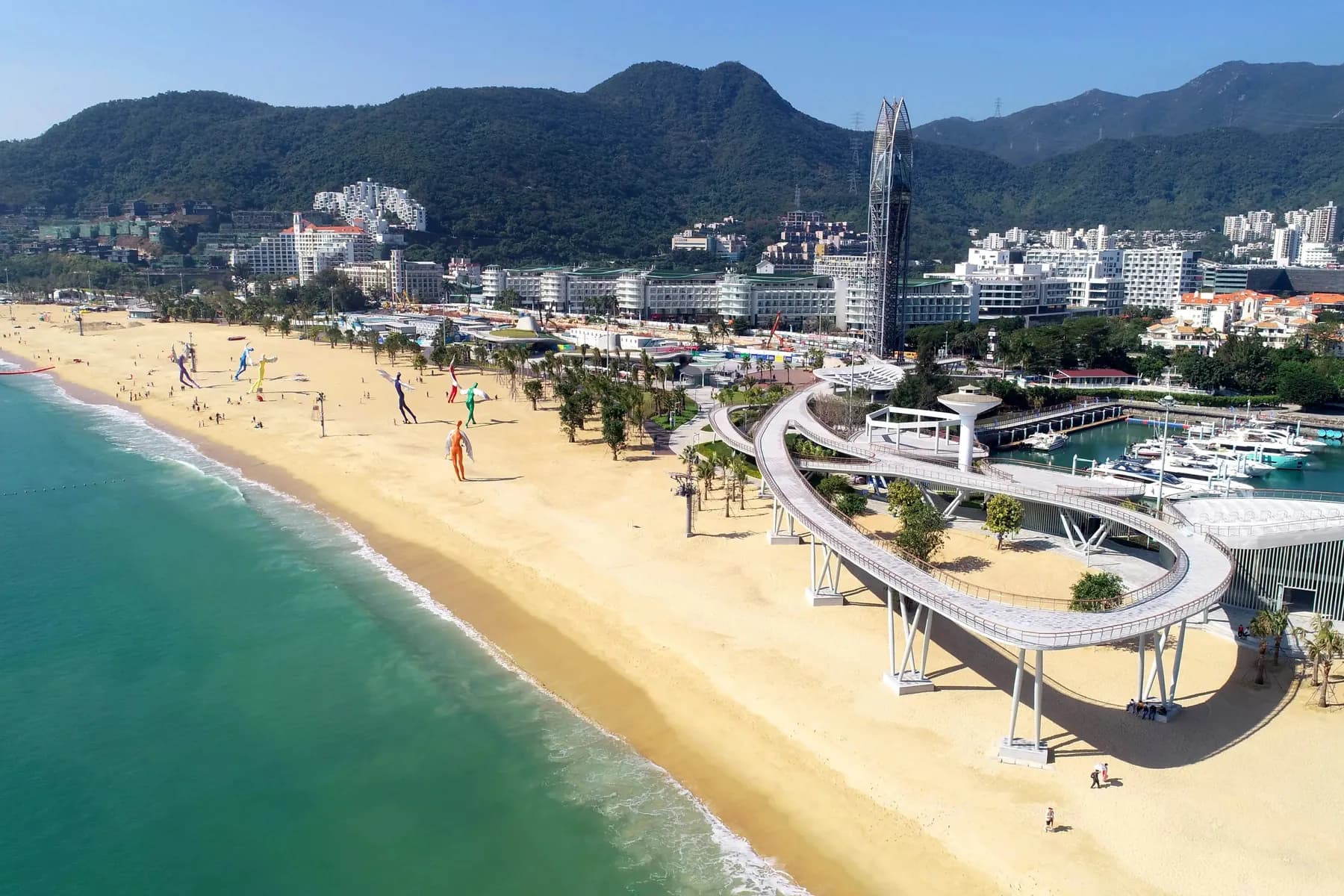
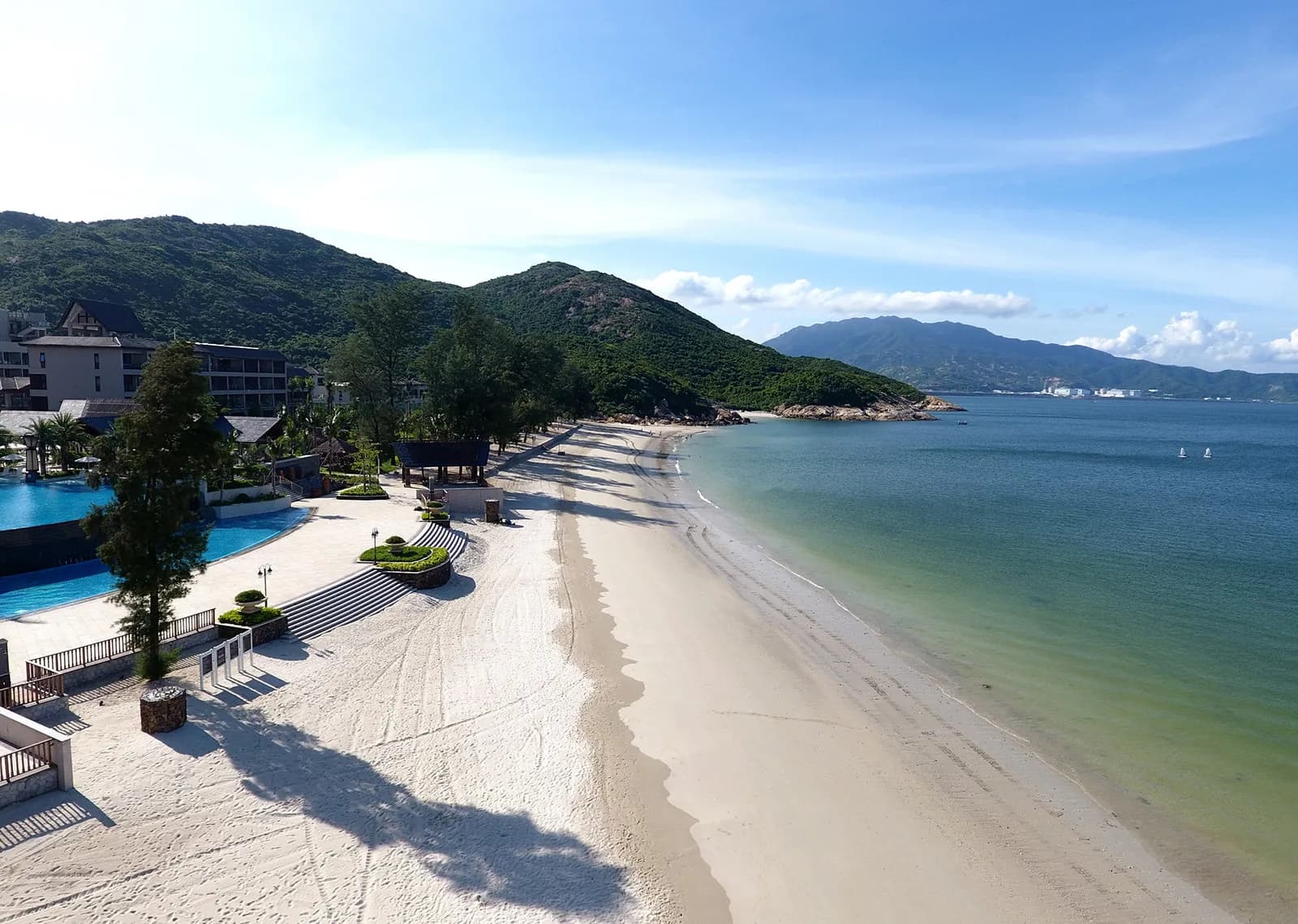
Dameisha Beach is the default Shenzhen beach — the one everyone goes to because it's free, it's public, and it's the easiest to reach from downtown. The sand is fine enough, the water is swimmable, and there's a long promenade with palm trees and the Wish Tower sculpture at the western end.
Here is the honest version: on a weekday morning, Dameisha is actually pleasant. The water is calm, there's space to lay a towel, and you can walk the boardwalk without bumping into anyone. On a Saturday in July, it's a human tsunami. For Golden Week and other public holidays, check entry restrictions before setting off. The government has had to implement a reservation system during peak periods just to cap the chaos.
Getting there
Metro Line 8 (Yantian Line) to Dameisha Station (大梅沙站), then a 10-minute walk or one bus stop to the beach entrance. The whole trip from Futian center takes about an hour door-to-door. You can also take a Didi directly — about ¥60-80 from central Futian.
The boardwalk that nobody mentions
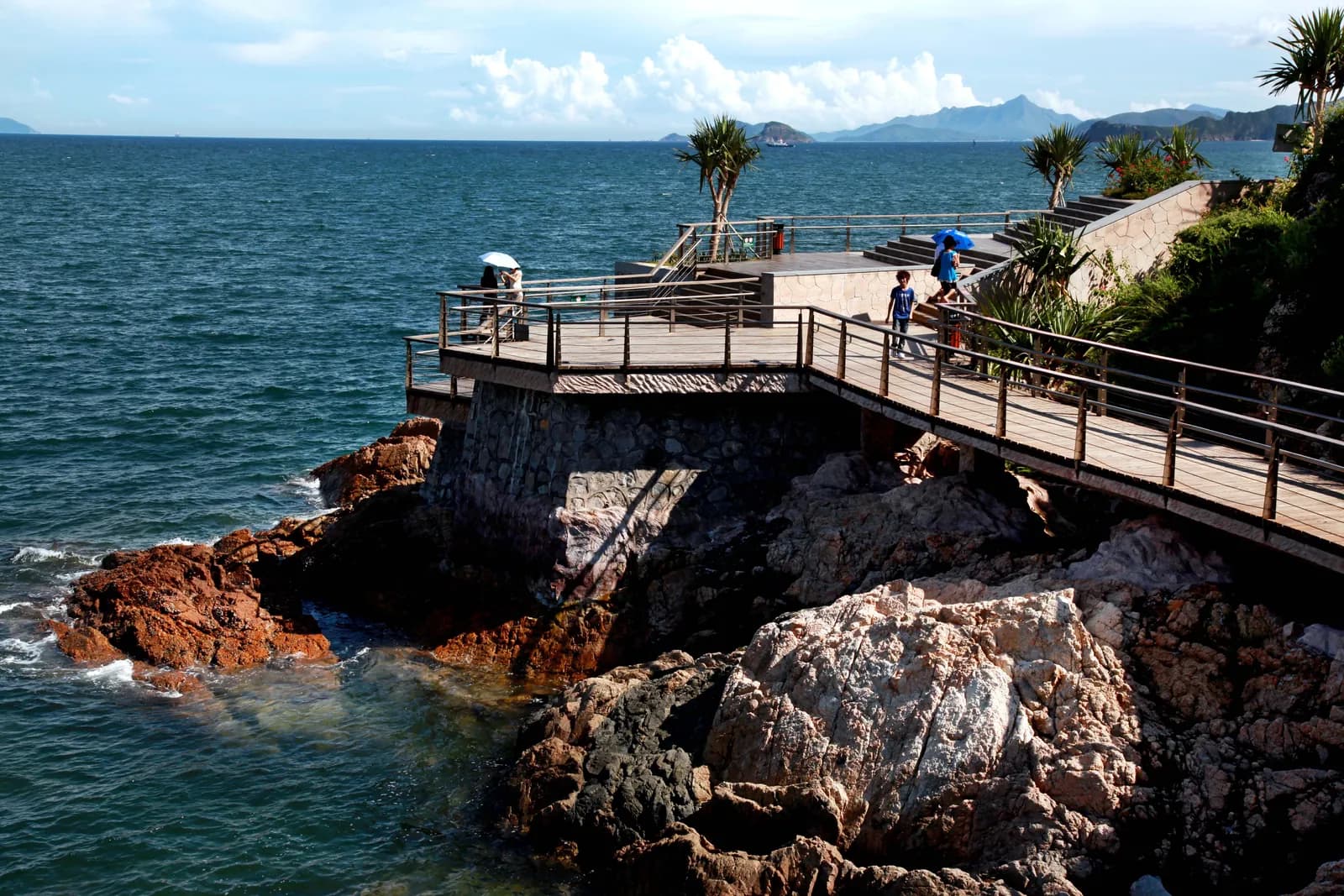
The best part of Dameisha isn't the swimming — it's the Yantian Coastal Boardwalk (盐田海滨栈道) that starts here and runs 19.5 km along the coast. This is reportedly the longest coastal boardwalk in the world, and it's spectacular. Carved into the cliffs above the sea, with viewing platforms every few hundred meters, mountains on one side and open ocean on the other. You don't need to walk the whole thing — even the first 3-4 km from Dameisha eastward gives you the best views.
Best time: Tuesday through Thursday morning, October or November. Warm enough to swim, cool enough to walk, and blissfully empty compared to weekends.
Dapeng Peninsula beaches (大鹏半岛) — the real destination
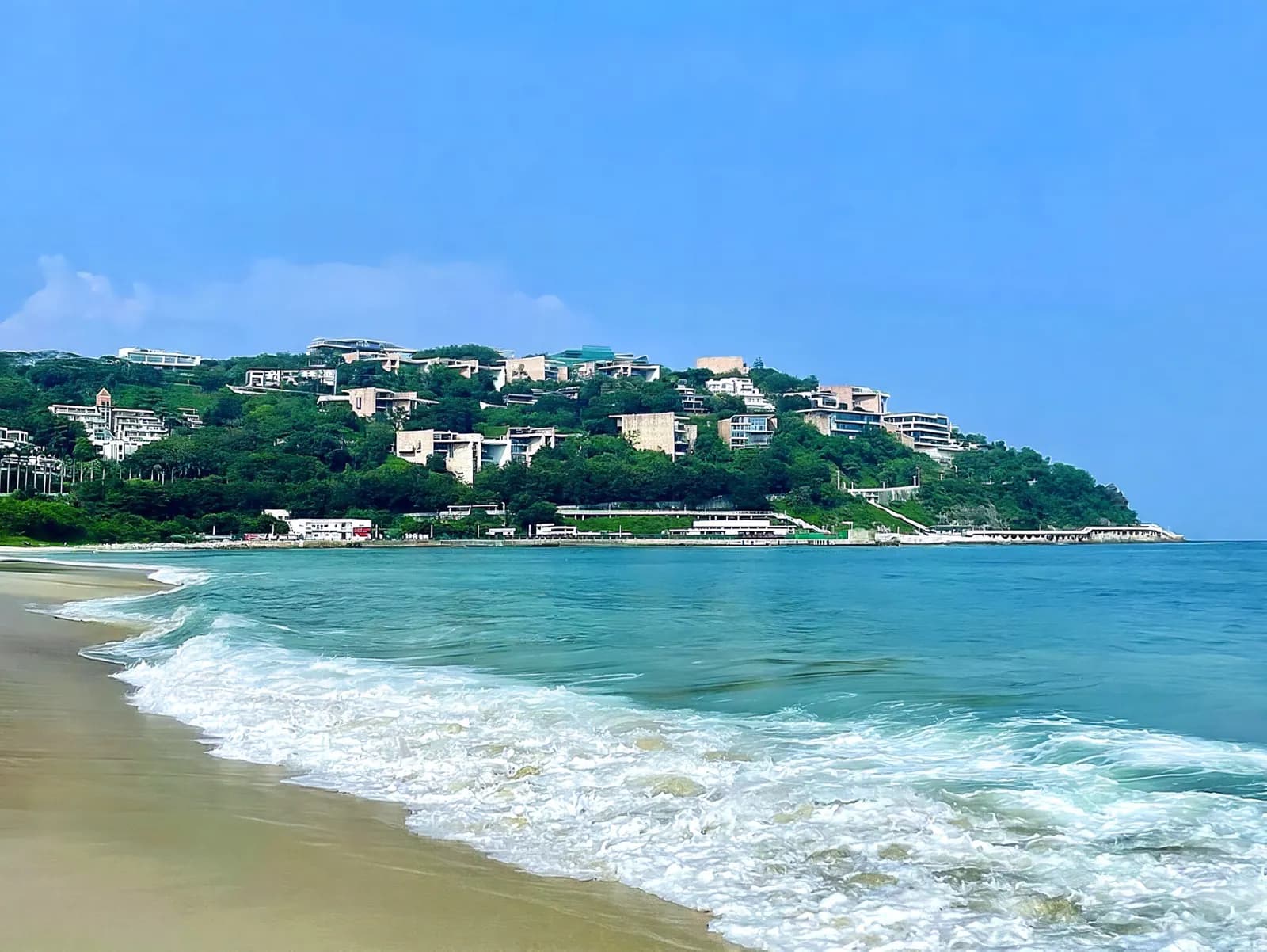
Everything changes once you get past Yantian district and onto the Dapeng Peninsula (大鹏半岛). The water gets clearer, the crowds thin out, and the landscape shifts from urban coastline to something that looks more like Southeast Asia than southern China.
The peninsula is technically part of Shenzhen, but it feels like a different world. Rocky headlands, dense vegetation, fishing villages, and water you can actually see through. The trade-off is travel time: 1 to 1.5 hours from downtown by bus, or about ¥150-200 by Didi.
If you're doing a day trip, pick one or two stops. If you're staying overnight, Jiaochangwei is the obvious base.
How to get to Dapeng
Bus E11 runs from Shenzhen North Station (深圳北站) via Yinhu Bus Station (银湖汽车站) to Dapeng Bus Station (大鹏汽车站). Check Amap for the live stop and departure time before you leave. From Dapeng Bus Station, local buses or Didi take you to individual beaches.
Alternatively, just Didi the whole way. From Futian center to Yangmeikeng is about ¥150-180 and takes 1-1.5 hours depending on traffic. On weekends, the single-lane road into the peninsula can back up badly — leave early.
Yangmeikeng (杨梅坑) — the star
.jpg)
Yangmeikeng
深圳市大鹏新区南澳街道杨梅坑
This is the one. If you only visit one beach outside the city, make it Yangmeikeng.
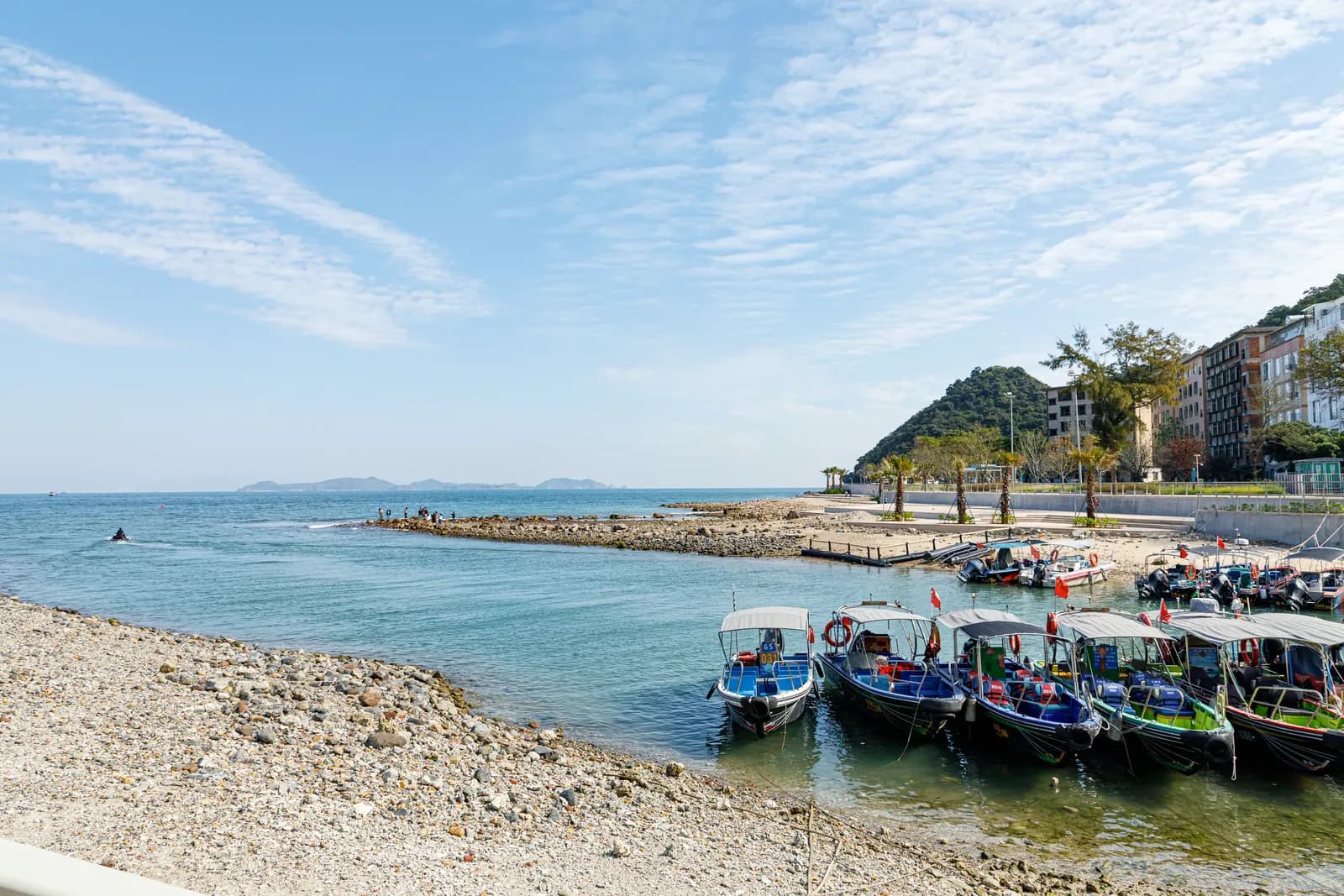
The setting is almost absurd for a city of 18 million people: a narrow coastal road winding between green mountains and crystal-clear water. The locals call it "Shenzhen's glass sea" (深圳的玻璃海) and on a good day, the nickname is accurate. You can see straight to the bottom in water that's three or four meters deep.
The coastal cycling road is the main draw. Bike rental shops line the entrance to Yangmeikeng village — standard bikes for ¥30-50, tandems for ¥50-80, electric bikes for ¥80-120 (all for a few hours). The coastal road runs about 6 km along the water before dead-ending at Luzui Mountain Villa (鹿嘴山庄). The round trip takes 2-4 hours depending on how many times you stop to take photos. You will stop a lot.
Luzui Mountain Villa (鹿嘴山庄) at the end of the road is where Stephen Chow filmed parts of The Mermaid (美人鱼). The "villa" is more of a rocky headland with dramatic coastal formations, sea caves, and crashing waves. Entry is usually free, though a small fee (¥10-20) sometimes appears at the gate depending on the season. The rocks are slippery — wear shoes with grip.
(The Mermaid filming location is a huge draw for mainland Chinese tourists, but it's worth seeing even if you've never heard of the film. The rock formations are genuinely dramatic — think sea stacks, cliff caves, and turquoise tidal pools.)
Come on a weekday if at all possible. On summer Saturdays, the coastal road gridlocks with cars, bike rental shops run out of bikes before 10 AM, and the coves fill up. The peaceful cycling experience described above is a weekday experience. If you can only go on a weekend, arrive before 8 AM or accept that you're sharing every viewpoint with a crowd.
Swimming at Yangmeikeng: there are a few small beach coves along the road, especially near the village entrance. The water is clean and the crowds are manageable on weekdays.
Food: seafood restaurants cluster in Yangmeikeng village. They're tourist-priced but the fish is fresh — point at what you want from the tanks. Expect ¥80-150 per person for a seafood lunch.
Xichong Beach (西涌) — for solitude and camping
Xichong Beach
深圳市大鹏新区南澳街道西涌社区
Xichong is the farthest beach from downtown and the least developed. That's the point.
It's a long crescent of sand — about 5 km — backed by hills and facing open ocean. The water quality is the best of any Shenzhen beach. There are a few small restaurants and rental shops near the beach entrance, but no boardwalk, no sculpture park, no tourist infrastructure to speak of. You bring your own entertainment.
Camping is the main reason people come here. Tent rentals are available near the beach entrance (¥100-200 per night for a basic setup), or bring your own. Falling asleep to waves hitting sand, waking up to empty coastline — it's hard to believe you're still in the same city as Huaqiangbei.
Getting there: Bus E11 to Dapeng, then local bus M232 to Xichong (西涌). The last stretch is a winding mountain road. Total time from downtown: about 2 hours. Or Didi the whole way for ¥180-220.
One caveat: Xichong charges a small entrance fee during peak summer months (usually ¥10-20). Off-season, it's free. The fee seems to appear and disappear without pattern.
Dongchong Beach (东涌) — quieter than Xichong, genuinely beautiful
Dongchong Beach
深圳市大鹏新区南澳街道东涌社区
Dongchong is Xichong's neighbor around the headland to the east, and it's the one the camping crowds haven't quite found yet. The beach is smaller but the water is just as clear, the sand is clean, and on a weekday you might share it with a handful of fishermen and nobody else.
Where Xichong has tent rentals and organized camping, Dongchong is more raw — a fishing village with a few seafood restaurants, a stretch of sand, and not much infrastructure. That's the appeal. It feels like the Dapeng Peninsula did ten years ago, before the guesthouse boom.
The boat taxi between Xichong and Dongchong is one of the best parts of the whole peninsula and something most visitors miss entirely. Small motorboats run between the two beaches — a short sea crossing (about 15-20 minutes) that takes you along the coastline from the water, past rock formations, sea caves, and cliff faces you can't see from land. The cost is roughly ¥30-50 per person, though it fluctuates and you'll need to negotiate. Find the boats at the eastern end of Xichong beach or the western end of Dongchong — look for the fishermen with small boats and ask for 快艇 (kuàitǐng).
Many people combine this into a day trip: hike the coastal trail one direction, take the boat back the other way. It's a natural loop and saves you the logistics of arranging separate transport from both ends.
Getting there: Bus E11 to Dapeng, then local bus or Didi to Dongchong. Or take the boat from Xichong if you're already on that side of the peninsula.
Jiaochangwei (较场尾) — the beach village
Jiaochangwei Village
深圳市大鹏新区大鹏街道较场尾
Jiaochangwei is what happens when a fishing village discovers tourism. Over the last fifteen years, the original village houses have been converted into hundreds of colorful guesthouses, cafes, and small bars — all stacked together in narrow alleys that open onto a long sandy beach. Think a Chinese version of a Mediterranean fishing village, except the buildings were put up by villagers chasing Airbnb money.
The result is actually charming, if you catch it right. Weekday afternoons are mellow — walk the alleys, pick a guesthouse with a rooftop, drink a beer on the beach. Weekend afternoons are chaos — tourist buses, families, selfie sticks, and the beach turns into a parking lot for inflatable toys.
Water sports are available: jet skis (¥200-300), kayaks (¥50-100/hr), paddleboards (¥80-150/hr). Quality varies — check the equipment before committing.
Staying overnight: Guesthouses run ¥200-600/night depending on the season and how close you are to the water. Book on Ctrip or Meituan. Weekday rates drop dramatically.
The strategic play: Jiaochangwei makes the best base for exploring the entire peninsula. Stay a night, then day-trip to Yangmeikeng (20 min by Didi), Xichong (30 min), or the Dapeng Fortress (5-minute walk).
Dapeng Fortress (大鹏所城) — the beach day bonus
Dapeng Fortress
深圳市大鹏新区鹏城社区大鹏所城
This is the non-beach reason to visit the Dapeng Peninsula — a 600-year-old Ming Dynasty military fortress sitting right across from Jiaochangwei village. It was built in 1394 to defend against Japanese pirates.
Free entry. The fortress walls are intact, and the narrow stone streets inside are lined with Qing-era houses, small museums, and a few cafes. It takes about an hour to wander through. It's a national heritage site and genuinely interesting — the kind of thing Shenzhen normally doesn't have, because Shenzhen normally doesn't do "old."
Combine it with a Jiaochangwei beach day. Walk from the village to the fortress in 5 minutes, look at 600 years of history, walk back to the beach.
Guanhu Beach (官湖) — quiet sand and beginner surfing
Guanhu Beach
深圳市大鹏新区葵涌街道官湖社区
Guanhu is a small fishing village beach that's stayed under the tourist radar. Quieter than Jiaochangwei, less dramatic than Yangmeikeng, but it has something the others don't: reliable waves in certain weather windows for surfing. Check conditions before going — this isn't a guaranteed-surf destination, but when the swell cooperates it's the best option in Shenzhen.
Surf schools operate here during the warmer months (April-October). A beginner lesson runs ¥200-300 including board rental. The waves are gentle — this isn't Bali — but if you want to try surfing in Shenzhen, Guanhu is the spot.
The village itself has a handful of guesthouses and seafood restaurants. It's the kind of place where you can sit on the sand for three hours and count the other visitors on one hand.
Xiaomeisha Beach (小梅沙)
Xiaomeisha Beach
深圳市盐田区小梅沙
Xiaomeisha is Dameisha's smaller, more polished neighbor. It charges an entrance fee (¥30-50 depending on season), which means fewer crowds and slightly better-maintained facilities. The beach is shorter but the water is cleaner than Dameisha.
Xiaomeisha went through a major renovation that was reportedly complete as of 2024, and as of early 2026 the upgraded facilities were open — cleaner changing rooms, better food options, and organized water sport rentals. Confirm current status before planning a visit, as this project has been in flux. Jet skis, banana boats, and snorkeling gear are all available on-site.
The honest take: Xiaomeisha is fine. It's a well-managed beach with decent water. But for the same travel time, you could be at Yangmeikeng with dramatically better scenery and no entrance fee. Xiaomeisha makes sense if you want organized water sports and don't want to deal with the Dapeng Peninsula logistics.
The East-West Chong Coastal Hike (东西涌穿越)
This is the big one for anyone who wants more than just lying on sand.
The Dong-Xi Chong hike connects Dongchong Beach (东涌) and Xichong Beach (西涌) via a rugged coastal trail that scrambles over rocks, through tidal pools, and along cliff edges with open ocean views. It's about 5 km point-to-point, and the middle third — the rope-assisted scramble down to the cove — is what people actually come for. (Weekends from October to early December get genuinely crowded with Shenzhen hiking clubs in matching gear; go on a weekday if you want the rocks to yourself.)
Details:
- Distance: About 5 km point-to-point
- Time: 4-6 hours depending on fitness and conditions
- Difficulty: Moderate to hard. This isn't a boardwalk. You're climbing over boulders, scrambling up rock faces, and navigating sections where the trail disappears into the shoreline.
- Best direction: Most experienced local hikers go East to West (Dongchong to Xichong), because Xichong has better transport options at the end — more frequent buses, easier Didi pickups, and you're not stranded at a smaller beach when you're exhausted. West to East (Xichong to Dongchong) gives you better afternoon light for photos, so it depends on your priority. Either direction works.
Practical rules:
- Bring at least 5-6 people. Some rock scrambles require handing bags up or helping someone climb. Going solo is technically possible but genuinely risky if you slip on a wet rock.
- Not suitable for elderly visitors or small children. The rocks are sharp and slippery when wet.
- Bring 2-3 liters of water per person. There's nothing to buy along the trail.
- Wear proper shoes. Trail runners or hiking shoes with grip. Sandals will get you hurt.
- Sunscreen and a hat are mandatory — there's zero shade for most of the route.
- Check the tide before you go. Some sections are only passable at low tide. High tide can make parts of the trail impassable or dangerous.
- Start before 9 AM. You want to finish before the afternoon heat peaks.
Getting there: For east-to-west, Didi or bus to Dongchong — arrange pickup from Xichong at the end (easier transport). For west-to-east, start at Xichong and arrange a Didi pickup from Dongchong, or catch a local bus back to Dapeng Bus Station.
(If the full hike sounds like too much, you can walk the first hour from either end and turn back. The best rock formations and views are in the first third of the trail from the Xichong side.)
Nan'ao Seafood Street (南澳海鲜街)
Nan'ao Seafood Street
深圳市大鹏新区南澳街道海鲜街
After a day on the Dapeng beaches you will want seafood, and Nan'ao is where to eat it. It's a street of restaurants where you pick your fish, shrimp, crab, or whatever else is in the tank, and they cook it to your specification.
How it works: Walk along the street. Each restaurant has tanks out front with the day's catch. Point at what you want — it gets weighed, you agree on a price, and they cook it. Steamed (清蒸), salt-and-pepper fried (椒盐), or garlic-style (蒜蓉) are the standard preparations for most seafood. Steamed is usually the safest bet for fresh fish — it lets the quality show.
Expect to pay: ¥100-200 per person for a proper seafood meal. Prices are by weight, not per dish. Negotiate gently — the first price is tourist price, but don't be aggressive about it. The margins aren't huge.
Tip: Go for lunch, not dinner. The lunch catch is usually fresher and the restaurants are less crowded. By dinner, the popular items might be sold out or the tanks might have yesterday's leftovers.
The eating guide covers more about ordering food without Chinese and navigating the restaurant system in general.
When to go: Shenzhen beach seasons
This matters more than you'd think. Shenzhen's climate swings hard between seasons, and the beach experience changes completely depending on when you show up.
October to November (the sweet spot): Water is still warm from summer heat retention. Air temperature is pleasant — 22-28°C. Humidity drops. Crowds evaporate after Golden Week. This is unambiguously the best time for Shenzhen beaches. If you can time your trip, time it here.
March to May: Air is warming up but the water is still cool — swimmable for the brave, not comfortable for the cautious. Light crowds. Good for cycling at Yangmeikeng or hiking the Dong-Xi Chong trail. Overcast days are common.
June to August (summer): Hot. Brutal. 33-36°C with humidity that makes you sweat standing still. The water is warm, which is nice. The sun will cook you, which is not. Thunderstorms roll in fast and hard — you can go from blue sky to torrential rain in fifteen minutes. Weekend crowds at Dameisha are at their worst. If you go in summer, go on a weekday and bring an umbrella for the rain, not the sun. (Though you'll want it for the sun too.)
December to February: Water too cold for swimming. Air temperature is 12-20°C — fine for a walk along the boardwalk or a hike, but you won't be getting in. The Dong-Xi Chong hike is actually pleasant in winter if it's clear. Beaches are empty, which has its own appeal.
The holidays to avoid:
- Golden Week (October 1-7): Expect heavy crowds and check the current reservation and entry rules before travelling.
- Labor Day (May 1-5): Same story, slightly less intense.
- Dragon Boat Festival, Mid-Autumn Festival: Busy but manageable if you go early morning.
- Any Saturday in July or August: Just don't do Dameisha.
Shenzhen beach safety and what to pack
Jellyfish season: July through September, especially after storms or strong winds. The Dapeng Peninsula beaches get them more than Dameisha. If you see translucent blobs in the water or on the sand, be careful. Lifeguards will usually post warnings. If you are stung, leave the water and ask a lifeguard or medical professional for help. Do not assume every sting needs the same treatment.
Swimming safety: Shenzhen beaches use a flag system. Red flag means no swimming — this is enforced and it's not a suggestion. Lifeguards are present at Dameisha and Xiaomeisha; at the Dapeng beaches, you're more on your own.
Sunscreen situation: Bring your own from home or buy it before you head to the beach. Convenience stores in the city have it. Beach-side vendors charge tourist markup. SPF 50+ is not overkill here — the Shenzhen sun in summer is brutal, especially with water reflection.
What to bring:
- Sunscreen (high SPF, reapply every 2 hours)
- Umbrella — works for both surprise rain and shade
- Water shoes for rocky beaches (Yangmeikeng, Dong-Xi Chong hike)
- Cash backup — some beach vendors and bus services don't take Alipay. Not many, but enough to be annoying. The payment guide covers backup options.
- Reusable water bottle — refill at convenience stores. A 550ml bottle of water costs ¥2.
- Phone in a waterproof pouch if you're swimming
Getting around the peninsula: Didi works on the Dapeng Peninsula, but drivers can be scarce. During peak times, you might wait 15-20 minutes for a ride. Local buses connect the major beaches but run infrequently. If you're doing multiple stops, consider renting an electric scooter in Dapeng town — ¥80-120/day. You'll need a Chinese driving license for anything larger.
Where to stay overnight
If you're making a weekend of it, here are your options:
Jiaochangwei guesthouses (¥200-600/night): The obvious choice. Beachfront, colorful, hundreds of options. Book on Ctrip (携程) or Meituan (美团) — walk-in prices are higher. Get a room with a rooftop or balcony if you can.
Trip.com
Clearly marks which Shenzhen hotels accept foreign passports, with full local inventory and Visa/Mastercard checkout.
Foreign cards accepted · 24/7 English support
Shenzhen hotels on Trip.comDapeng town hotels (¥150-400/night): More selection, less scenic. Useful if Jiaochangwei is fully booked on a holiday weekend. Check the journey to your chosen beach; the peninsula branches out and travel times vary considerably.
Xichong camping (¥100-200/night tent rental, or free with your own): The most memorable option if the weather cooperates. Basic facilities — don't expect hot showers.
Or just day-trip it. Most of these beaches work as day trips from central Shenzhen. Leave by 8 AM, back by 7 PM. The getting around guide has the full transport breakdown for Shenzhen buses and metro.
Related guides
Once the beach day is planned, the other logistics usually need sorting:
- How to get around Shenzhen — metro, buses, Didi, and the apps you need to navigate the city
- Where to stay in Shenzhen — district breakdown and hotel tips, including the Dapeng area
- What to eat in Shenzhen — how to order food without Chinese, including the seafood restaurant system
Questions
Does Shenzhen have beaches?
Yes. Shenzhen has 260 km of coastline on its east side, with over a dozen beaches. The best known are Dameisha Beach and Xiaomeisha, but the Dapeng Peninsula beaches — Yangmeikeng, Xichong, and Jiaochangwei — have cleaner water and fewer crowds.
Which is the best beach in Shenzhen?
Yangmeikeng for coastal cycling and scenery, Dameisha for families and convenience, Xichong for solitude and camping, Dongchong for a quieter alternative with a boat taxi connection to Xichong. Dameisha is free and easy to reach. Yangmeikeng requires more effort but the water is dramatically cleaner.
How do I get to Shenzhen beaches from the city center?
Dameisha is reachable by metro (Line 8) plus a short bus ride. The Dapeng Peninsula beaches are 1 to 1.5 hours by bus from downtown. Bus E11 from Shenzhen North or Yinhu runs directly to Dapeng; check Amap for the live stop and departure time.
When is the best time for Shenzhen beaches?
October to November has warm water, mild air, and no crowds. Summer (June-August) is swimmable but extremely hot and crowded on weekends. Check the park’s entry and reservation arrangements before visiting during national holidays.
Change log and review scheduleExpand
Facts reviewed
Apr 10, 2026
Content updated
Oct 16, 2026
First published
Apr 10, 2026
Next review due
Jul 9, 2026
Did this actually work for you?