Best Area to Stay in Shenzhen 2026: Where Tourists Go
Where to stay in Shenzhen: Futian default, Luohu for border, Nanshan for tech, Shekou for expats. Best area to stay in shenzhen plus hotels for foreigners.
Direct answer
Fast answer first, then the detail and edge cases below.
TL;DR
Stay in Futian if you have no strong reason to be elsewhere — it's the transport hub and puts you within 30 minutes of everything. Book on Trip.com, filter for 4.5+ stars, and confirm the hotel accepts foreign passports.
- Default pick
- Futian (Coco Park area) is the best base for first-timers — densest metro connections, restaurants, nightlife, and Huaqiangbei nearby.
- Border proximity
- Lo Wu leads to Luohu; Lok Ma Chau leads to the Futian control point. A high-speed ticket to Futian arrives at Futian railway station. Check your hotel's address and your daily plans before booking.
- Price range
- Mid-range hotels cost 200-500 RMB ($27-68) per night. That's 40-60% cheaper than equivalent quality in Hong Kong.
- Booking tip
- Use Trip.com (not Booking.com) — it has verified foreigner-acceptance policies and Chinese-speaking support that will call the hotel for you.
Know your district? Skip to how to book a foreigner-friendly hotel.
The 30-second version
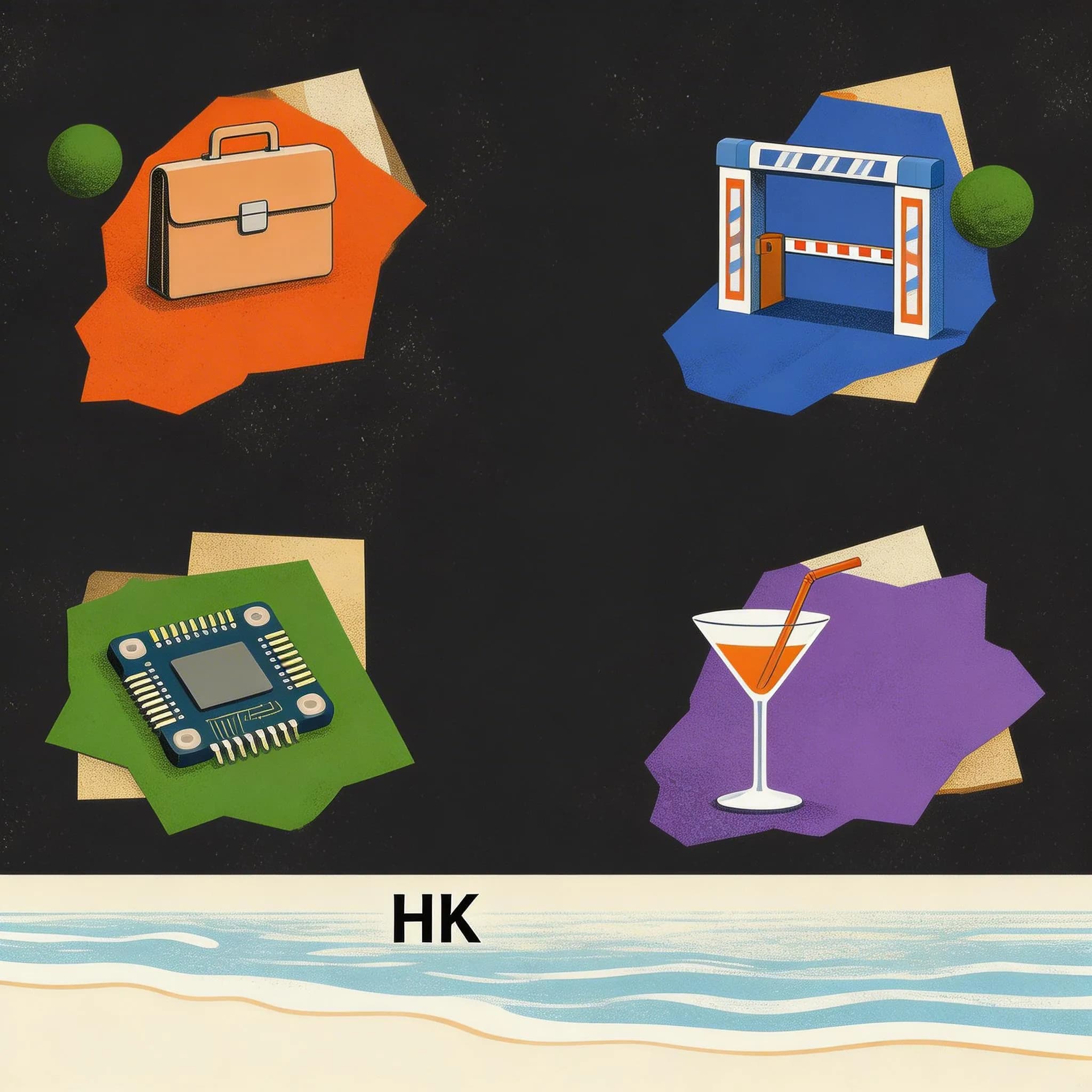
Shenzhen has 10 districts. You only need to care about 4:
| If you are... | Stay in | Why |
|---|---|---|
| First-time visitor, default pick | Futian (Coco Park area) | City center, best metro hub, restaurants, nightlife, Huaqiangbei nearby |
| Arriving through Lo Wu for a short stay | Luohu (near Luohu station) | Start your hotel search on the Shenzhen side of this crossing |
| Tech/business trip | Nanshan (Keyuan / Shenzhen Bay) | Tencent HQ, DJI, most tech offices are here |
| Wanting expat comfort | Shekou (Sea World area) | Western restaurants, bars, international community, ferry to HK |
Coming from Hong Kong? Check the station before booking the hotel. Lo Wu leads to Luohu; Lok Ma Chau leads to the Futian control point. If your high-speed ticket says Futian, start your hotel search in Futian (Shenzhenbei is a separate destination). For a longer stay, let your daily plans decide the district. Use your hotel's actual address with the Hong Kong–Shenzhen crossing guide before booking.
If none of these fit: read the full breakdown below. But honestly, if you pick any hotel near a metro station in Futian, you will be fine. Check the getting around Shenzhen guide before choosing — your district determines your metro line, and that determines how annoying your commute is.
Planning to rent rather than book a hotel? Open the Shenzhen cost of living guide before you fall in love with a district. The monthly rent is only half the first-month problem; the deposit can make signing day cost three months of rent at once.
The districts that matter
Futian (福田) — The default
Futian is where you stay if you have no strong reason to be elsewhere. It is the geographic and transport center of Shenzhen.
Why it works:
- Metro Lines 1, 2, 3, 4, 7, 9, 10, 11 all pass through Futian — you can reach any district in 20-40 minutes
- The Futian border crossing to Hong Kong is here (MTR East Rail → Lok Ma Chau)
- Huaqiangbei electronics market is in Futian
- Coco Park is the main foreigner-friendly nightlife and dining strip
- Convention center (for trade shows and expos) is here
The vibe: Business district by day, surprisingly lively at night around Coco Park. Not charming — it is a CBD — but extremely functional.
Price range: 200-500 RMB/night ($27-68) for mid-range. Budget: 150 RMB. Luxury (Ritz-Carlton, Grand Hyatt): 1000+ RMB.
Best metro stations to book near: Shopping Park (购物公园), Convention & Exhibition Center (会展中心), Huaqiang Road (华强路).
Luohu (罗湖) — The border district
Luohu is old Shenzhen. It was the first commercial district when the city opened up in the 1980s. Its main advantage today: proximity to the Hong Kong border.
Why it works:
- The Luohu/Lo Wu border crossing is literally at Luohu station — walk off the MTR, through immigration, and you are in Shenzhen
- Dongmen (东门) pedestrian street — massive shopping area, cheap clothes, street food, the authentic Shenzhen chaos
- Cheaper hotels than Futian for equivalent quality
- Good if you want to make quick border trips back to Hong Kong
The vibe: Older, rougher, more "real China" than Futian. Dongmen at night is sensory overload in the best way. Not where you go for international comfort, but where you go to feel like you are actually in a Chinese city.
Price range: 150-350 RMB/night ($20-48). Some of the best budget-to-quality ratios in Shenzhen.
Best metro stations: Luohu (罗湖), Grand Theater (大剧院), Dongmen (老街).
Nanshan (南山) — Tech and coast
Nanshan is where Shenzhen's tech industry lives. Tencent, DJI, and hundreds of startups have headquarters here. It also has the city's best coastline.
Why it works:
- Business travelers going to tech companies — this is where your meetings are
- Shenzhen Bay Park — the nicest waterfront walk in the city, sunset views over Hong Kong
- OCT (Overseas Chinese Town) — museums, galleries, creative spaces, the Window of the World theme park
- Shenzhen Bay Port (border crossing to Hong Kong via bus) is here
- Generally newer buildings and better urban planning than Futian or Luohu
The vibe: Modern, clean, spacious, a bit soulless in the residential areas. The tech campus zones feel like silicon valley transplanted to subtropical China. Shekou (see below) is the neighborhood within Nanshan that has actual character.
Price range: 250-600 RMB/night ($34-82). Higher end because of the tech company corporate bookings.
Best metro stations: Keyuan (科苑) for tech campus area, Window of the World (世界之窗) for OCT, Sea World (海上世界) for Shekou.
Shekou (蛇口) — The expat bubble
Shekou is technically a neighborhood within Nanshan, but it deserves its own section. This is where Shenzhen's foreign community has concentrated since the 1990s.
Why it works:
- Sea World plaza — bars, restaurants, coffee shops that feel like they belong in Bangkok or Barcelona
- Ferry terminal to Hong Kong (Shekou Port) and Macau — skip the land border entirely
- International schools nearby (if traveling with family)
- English menus are common (unusual for Shenzhen)
- The most walkable neighborhood in a car-dominated city
The vibe: Comfortable, almost suspiciously easy for foreigners. You can eat, drink, and navigate entirely in English here. Some people love the convenience; others feel it defeats the purpose of being in China. (Both are valid.)
Price range: 300-700 RMB/night ($41-96). Premium for the location and foreigner-friendliness.
The catch: Shekou is at the western edge of Shenzhen. Getting to Futian takes 40 minutes by metro. If your plans involve Huaqiangbei, Luohu, or the eastern districts, you will spend a lot of time commuting.
Each district has its own food personality — see what to eat in Shenzhen for the district-by-district breakdown so you know what you're signing up for.
Districts you probably do not need
Baoan (宝安): Near the airport. Only relevant if you have an early morning flight and want to be close. Otherwise too far from everything.
Longhua (龙华): Affordable, improving infrastructure, but 40+ minute commute to anywhere interesting. Good for long-term residents, not tourists.
Longgang (龙岗): Eastern suburb. Unless you are visiting the Universiade Center or have specific business there, skip it.
Yantian (盐田): Beaches (Dameisha, Xiaomeisha). Worth a day trip but not a base for exploring the city.
Guangming (光明): New science city under construction. Nothing for tourists yet.
How to book a hotel that actually accepts you
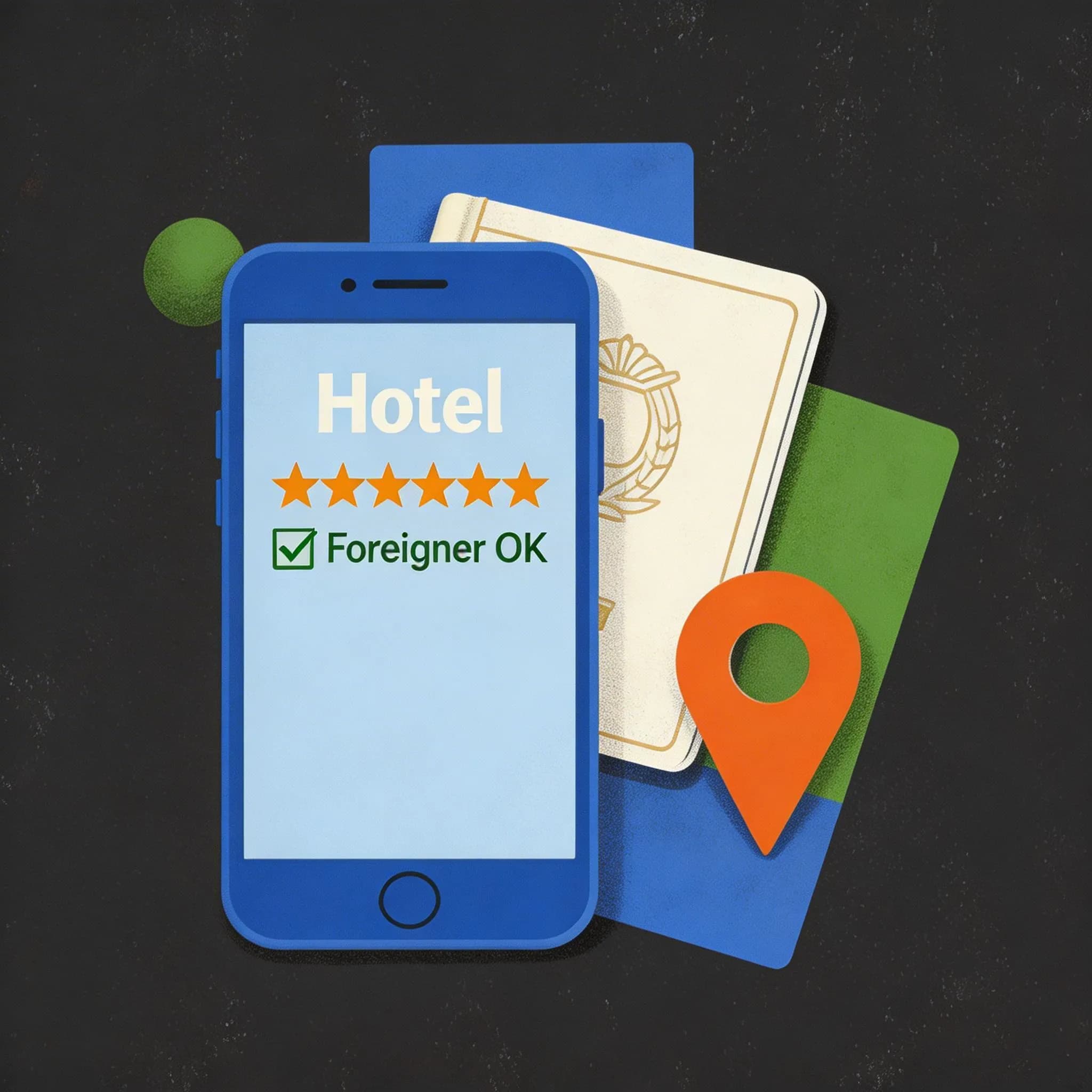
Not every hotel in China can process foreign passports. Here is how to avoid showing up to a "sorry, we cannot accept foreigners" situation:
The booking platform
Use Trip.com (Ctrip's international version). Not Booking.com, not Agoda, not the hotel's own website. Trip.com has the largest selection of China hotels, verified foreigner-acceptance policies, and — critically — a Chinese-speaking customer service team that will call the hotel on your behalf if there is a problem at check-in.
The filters that matter
- Rating: 4.5+ stars (Trip.com uses a 5-point scale, not hotel star classification)
- Reviews: Look specifically for reviews from foreign guests (filter by language if available)
- Location: Pick a hotel within 5 minutes walk of a metro station — this is non-negotiable in a city this large
- Chain preference: International chains (Marriott, Hilton, IHG/Holiday Inn, Accor/Ibis/Novotel) never reject foreigners. Reliable Chinese chains: Atour (亚朵, boutique-style), JI Hotel (全季, clean mid-range), Home Inn (如家, budget), Hanting (汉庭, budget)
What to expect at check-in
- Show passport + booking confirmation
- Hotel scans your passport (this is China's 24-hour hotel registration rule — hotels handle it, but know what it is)
- Receive key card — insert it into the wall slot in your room to activate electricity
- Hotel WiFi password (VPN required for Google, WhatsApp, Instagram — VPN guide)
The whole process takes 5-10 minutes. Minimal English at reception is normal — show your Trip.com booking on your phone and point.
Price expectations (2026)
| Tier | Per Night (RMB) | Per Night (USD) | What You Get |
|---|---|---|---|
| Budget | 120-200 | $16-27 | Clean room, basic amenities, Chinese chains |
| Mid-range | 200-500 | $27-68 | Modern room, good location, Atour/JI/Holiday Inn level |
| Upscale | 500-1000 | $68-137 | International chain, gym, pool, business center |
| Luxury | 1000-2500 | $137-340 | Ritz-Carlton, St. Regis, Grand Hyatt |
Context: A comparable room in Hong Kong costs 40-60% more. If you are doing both cities, staying in Shenzhen and day-tripping to Hong Kong is the budget move.
Should I stay in Shenzhen or Hong Kong?
This comes up constantly. The answer depends on your trip:
Stay in Shenzhen if:
- Your main activities are in Shenzhen (tech visits, Huaqiangbei, dental appointments, business meetings)
- You want to save money on accommodation
- You are staying 3+ days and want to experience the city properly
- You entered China on a visa-free or 240-hour transit and do not want to waste time at the border daily
Stay in Hong Kong if:
- Shenzhen is a day trip from a Hong Kong-based holiday
- You are uncomfortable with the language barrier (Hong Kong is more English-friendly)
- You need reliable access to Western internet without a VPN
- Your flight home departs from Hong Kong airport
The hybrid option: Stay 1-2 nights in Shekou (ferry access to HK), then move to Futian for the rest of your trip. This way you get the border proximity early and the central location later.
What to do next
Hotel sorted. Now handle the operational stack:
- Set up payments — you cannot check in at budget hotels without at least one QR payment method ready
- Install a VPN — hotel WiFi without a VPN means no Google, no WhatsApp, no maps
- Know the registration rule — hotels handle it, but know what is happening
- Open the arrival checklist — the full first-day sequence
Change Log & Review CadenceExpand
Facts reviewed
Apr 10, 2026
Content updated
Sep 8, 2026
First published
Mar 18, 2026
Next review target
Jul 9, 2026