China Visa Free Countries 2026 — Skip the Visa for 30 Days
China visa free countries 2026: 50 passports now get 30 days. China visa free entry adds UK, Canada. Visa free China for Americans means 240-hour transit.
Not sure if your country qualifies? Check our visa tool — it takes 10 seconds →
The short answer
If you hold a passport from the UK, Canada, France, Germany, Australia, Japan, or most of Europe — you do not need a visa for China in 2026. Walk up to the border, show your passport, get stamped in. 30 days, no paperwork.
If you are American — you still need the 240-hour transit trick (which is easier than it sounds, and we will explain it below).
If you are from somewhere else — use the visa checker. It covers 90+ countries and gives you a straight answer in 10 seconds.
The two visa-free policies (and why the difference matters)
China runs two separate visa-free programs. Most articles online conflate them, which is how people end up confused at the border. Here is the real distinction:
Policy 1: 30-day visa-free entry (the easy one)
Who qualifies: Citizens of ~50 unilateral visa-free countries (expanded to 79 total when you add bilateral arrangements). This includes the UK, Canada, most EU passports, Australia, New Zealand, Japan, South Korea, Russia, and several Latin American and Gulf countries. Do not assume "EU passport = yes" — a couple of EU countries are still not on the current NIA unilateral list.
How it works: Fly in, cross the border, show your passport, get stamped. China is your destination. Stay up to 30 days. No onward ticket to a third country required.
What you can do: Tourism, short business trips, visiting family, transit. Paid employment, long-term study, and journalism/media activities still require proper visas.
Valid until: December 31, 2026 (has been extended multiple times — check before booking if traveling late 2026).
| Region | Countries |
|---|---|
| Europe | UK, France, Germany, Italy, Spain, Netherlands, Belgium, Switzerland, Austria, Sweden, Norway, Denmark, Finland, Ireland, Poland, Portugal, Greece, Hungary, Iceland, Romania, Bulgaria, Croatia, Slovakia, Slovenia, Estonia, Latvia, Luxembourg, Malta, Cyprus, Andorra, Monaco, Montenegro, North Macedonia, Liechtenstein, Russia |
| Asia-Pacific | Japan, South Korea, Australia, New Zealand |
| Gulf | Bahrain, Kuwait, Oman, Saudi Arabia |
| Americas | Canada, Argentina, Brazil, Chile, Peru, Uruguay |
Policy 2: 240-hour transit visa-free (the workaround)
Who qualifies: Citizens of 55 countries — everything above PLUS the United States, Mexico, and Indonesia.
The catch: You must be transiting through China to a third country or region. China cannot be your final destination. You need a confirmed onward ticket departing mainland China within 240 hours (10 days).
The trick everyone uses: Hong Kong counts as a "third region." So if you are American and want to visit Shenzhen, you book: Home → Hong Kong → (cross border to Shenzhen, stay up to 10 days) → fly out of any Chinese airport to anywhere. Or even: Hong Kong → Shenzhen → back to Hong Kong. The system only cares that you are going to a different country/region after China.
Where you can go: You are not locked to one city. The 240-hour policy covers 24 provinces. Enter Shenzhen, take the train to Beijing, fly out of Shanghai — all legal within the 240-hour window.
Wait — is it 144 hours or 240 hours? (The confusion explained)
You will see "144-hour visa-free transit" all over the internet, including on some official government pages. Here is why:
Before December 2024, China offered 144-hour (6-day) transit without visa at most ports. A handful of regions offered 72-hour versions. This was the old system.
In late 2024 / early 2025, China expanded the policy to 240 hours (10 days) across 24 provinces and 60+ ports. The 144-hour and 72-hour policies still technically exist in some references, but the 240-hour version has effectively replaced them at all major entry points including Shenzhen, Beijing, Shanghai, and Guangzhou.
What this means for you: If you are entering through any major airport, train station, or port in 2026, you get 240 hours. Ignore articles that still say "144 hours" unless they were published after November 2024 and specifically mention a port that has not been upgraded.
The airline check-in problem: Airline ground staff often do not know the current TWOV (Transit Without Visa) rules. Multiple travelers report 20-30 minute delays at check-in while staff look up whether the 240-hour policy exists. Print a screenshot from the official NIA page showing your country's eligibility. This saves arguments. (The Real China Guide community confirms this is the single most common TWOV friction point — not immigration in China, but airline staff in your departure country.)
Official data sources
The visa rules on this site and in our visa checker tool are sourced from:
- National Immigration Administration (NIA): en.nia.gov.cn — the primary authoritative source for all visa-free and transit policies
- NIA unilateral visa-free list: published November 5, 2025, with UK/Canada additions on February 17, 2026
- NIA 240-hour transit policy explainer: published July 4, 2025
- NIA Guangdong port expansion notice: published November 3, 2025
We cross-reference these with real traveler reports and update monthly. Last verified: June 17, 2026.
If you spot a discrepancy between our data and the official NIA page, let us know — we fix errors within 24 hours.
Which policy should I use? (Decision tree)
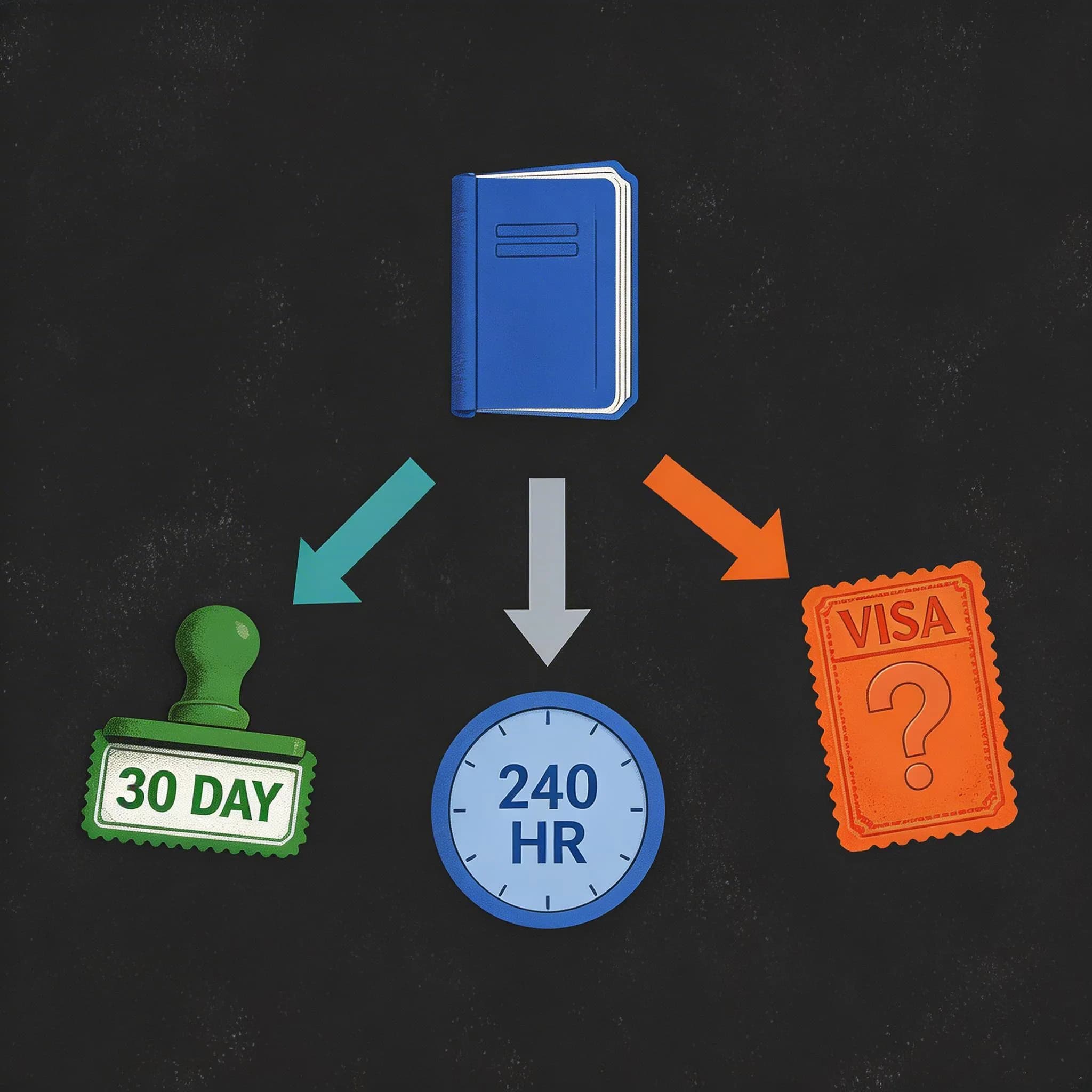
Step 1: Is your country on the 30-day visa-free list? If yes → use 30-day visa-free. It is simpler, has fewer restrictions, and you do not need an onward ticket to a third country.
Step 2: Is your country on the 240-hour transit list but NOT the 30-day list? This mainly applies to Americans, Mexicans, and Indonesians. You qualify for 240 hours, but you need an onward ticket to a third destination. Hong Kong is the easiest "third destination" if you are already in the region.
Step 3: Neither list? You likely need a visa. Some nationalities can get a 5-day visa-on-arrival at specific Shenzhen border crossings when entering from Hong Kong (costs 130 RMB). But this is not guaranteed. Check the visa checker for your specific situation, or contact your nearest Chinese embassy.
How this works for Shenzhen specifically
Most people reading this are crossing from Hong Kong. Here is what matters for a Shenzhen trip:
If you're entering via Hong Kong, the border crossing guide walks through all six crossings with live wait times — which one you pick matters more than you'd think.
If you have 30-day visa-free status
Cross at any border crossing. Futian, Luohu, Shenzhen Bay, Huanggang — all work. Show your passport, get stamped, you are in. No special documents needed beyond your passport.
If you are using the 240-hour transit exemption
This is where people get tripped up.
Entry ports matter. The 240-hour transit policy only works at designated ports. For Shenzhen, the designated ports are:
- Shenzhen Bao'an International Airport
- Shekou Port (ferry from HK/Macau)
- Shenzhen Bay Port (bus/car crossing from HK)
Regular MTR border crossings (Futian, Luohu via Lo Wu) are NOT designated 240-hour transit ports. If you are American and want to use the 240-hour exemption, you cannot just hop on the East Rail Line and walk across at Futian. You need to enter via Shenzhen Bay, Shekou ferry, or the airport.
(In practice, some travelers report being admitted at Futian under the 240-hour policy, but this is not officially guaranteed. If immigration says no, you have no recourse. Use a designated port.)
West Kowloon (high-speed rail) is a designated transit port — if you take the XRL from Hong Kong to Shenzhen or beyond, you clear Chinese immigration inside West Kowloon station.
What you need at the border
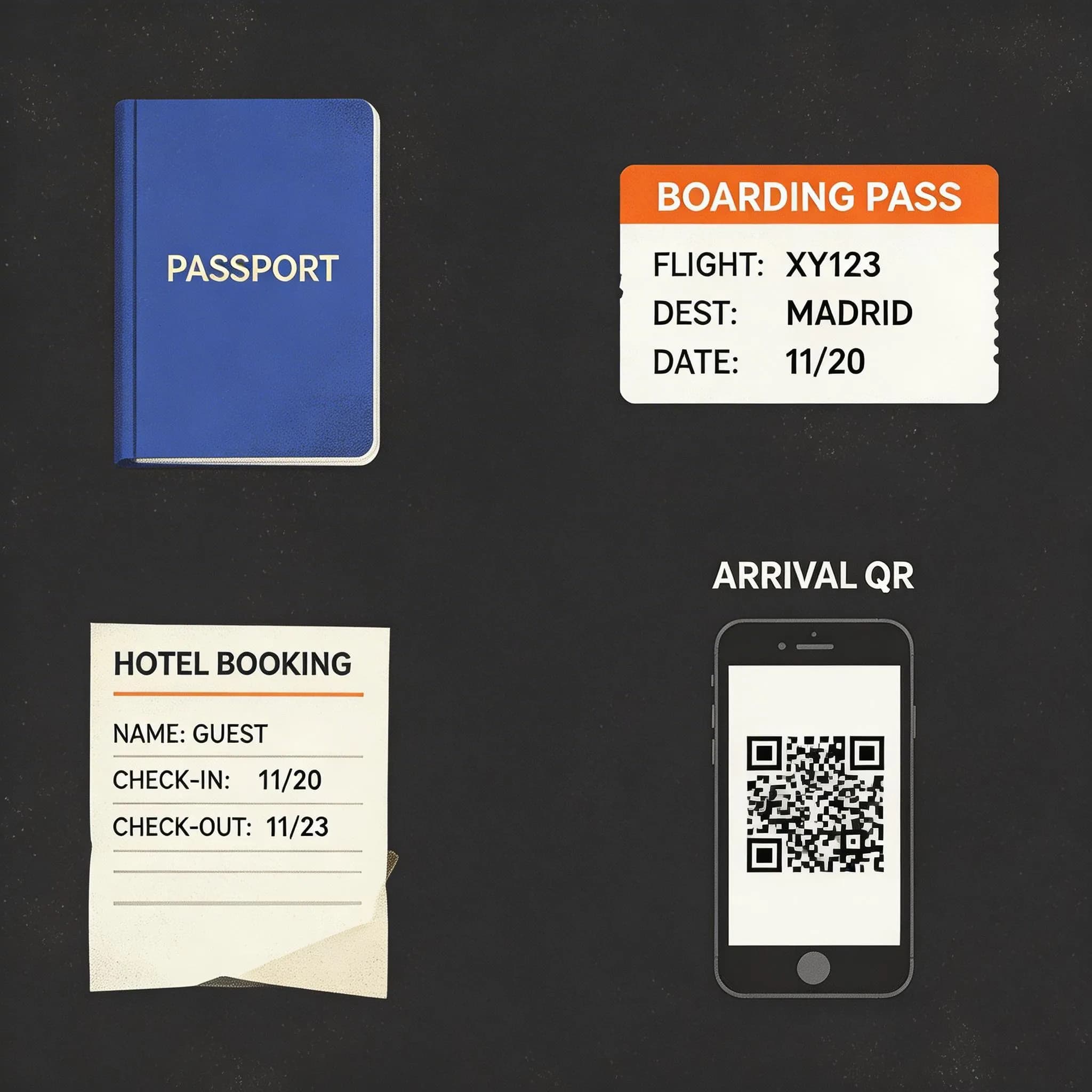
| Document | 30-day visa-free | 240-hour transit |
|---|---|---|
| Valid passport | Yes | Yes |
| Onward ticket to third country | No | Yes — mandatory |
| Hotel booking | Helpful but not checked every time | Same |
| Arrival card | Digital (online before flight) or paper at the airport | Same |
| Return ticket | Not required | Not required (but onward from China is) |
| Chinese phone number | No | No |
The Digital Arrival Card (do this before your flight)
Since November 2025, China has a digital arrival card you can fill out online before you fly. This replaces the paper form you used to get on the plane. You still need to complete it — "visa-free" does not mean "no paperwork at all."
Where to fill it out:
- Online (computer): s.nia.gov.cn/ArrivalCardFillingPC
- Online (phone): s.nia.gov.cn/ArrivalCardFillingPhone
- "NIA 12367" app
- WeChat or Alipay mini-programs (search "NIA" or "arrival card")
What you need: passport details, flight number, first hotel address in China, purpose of visit. Takes about 5 minutes. You get a QR code to show at immigration.
Paper forms are still available at the airport if you forget — but doing it online means one less thing to deal with after a long flight.
For Americans: You use a different policy
Americans are not on the 30-day visa-free list. If you hold a US passport, you qualify for the 240-hour (10-day) transit visa-free policy instead — which is free and works well, but has different rules: you need an onward ticket to a third country, and only designated border crossings work.
We wrote a complete guide specifically for this: China Visa Free for Americans — the full 240-hour transit breakdown. It covers the Hong Kong trick, which Shenzhen crossings accept TWOV, the airline check-in problem, and whether you should just get the 10-year L visa instead.
The short version: TWOV is free and instant for one-off trips. The L visa ($140-150, 10-year validity) is better if you plan to visit more than once.
The gotchas nobody tells you
1. "Valid until December 31, 2026" means check before you book
This policy has been extended multiple times, but it is technically temporary. If you are booking travel for November or December 2026, confirm the extension before buying non-refundable flights. China has extended it every time so far, but the announcement usually comes just weeks before expiration.
2. The 30-day clock starts at entry, not at arrival in your destination city
If you fly into Shanghai on March 1 and take a train to Shenzhen on March 3, your 30 days still started on March 1. Plan accordingly.
3. The 240-hour clock is more generous than you think
The 240 hours starts counting from 00:00 the day after you arrive — not from the moment you clear immigration. So if you land at 6pm on July 1, your clock starts at midnight July 2, and you must depart by 23:59 on July 11. Your actual time in China is closer to 246 hours in this example. Immigration stamps your passport with the departure deadline date.
4. "Visa-free" does not mean "hassle-free"
You still need to register at a local police station within 24 hours of checking into accommodation. Hotels do this automatically. If you stay at an Airbnb or with friends, you technically need to visit the nearest police station with your passport. (Most short-stay tourists skip this and nothing happens, but the rule exists.)
5. Working and journalism are still illegal on visa-free entry
"Business trip" means meetings, negotiations, and site visits. It does not mean paid employment. If your company is sending you to work at a Chinese office for two weeks, you need a proper work visa regardless of your nationality. Journalism and media activities also require a separate J visa — showing up with a camera crew on a tourist exemption will not end well.
6. You cannot extend visa-free stays
Unlike a regular visa, you cannot go to an immigration office and ask for extra days. When your 30 days (or 240 hours) are up, you leave. If you realize mid-trip that you need more time, your only option is to exit China (to Hong Kong, for example) and re-enter for a fresh period.
FAQ: The questions people actually ask
Can I leave and re-enter China to reset the 30-day clock?
Yes. Exit to Hong Kong for a day trip, re-enter China, and your 30-day period starts fresh. There is no official limit on re-entries, but if immigration sees a pattern of repeated short exits and re-entries, they may ask questions.
I am flying Home → China → Home. Does the 240-hour transit apply?
No. You must be transiting to a different country or region. If your flight is London → Shanghai → London, you are not transiting — you are visiting. Use the 30-day visa-free entry instead (if eligible). If your country is not on the 30-day list, you need a visa for this itinerary.
I have a layover in China. Do I need to do anything?
If you stay in the airport transit area and do not pass through immigration, you do not need any visa or transit exemption. This applies regardless of nationality. If you want to leave the airport and explore the city during your layover, you need to clear immigration — and that requires either visa-free eligibility or the 240-hour transit exemption.
My passport expires in 4 months. Is that a problem?
China officially requires a passport valid for at least 6 months beyond your entry date. In practice, the 30-day visa-free policy requires validity for the duration of your stay. But some border officers enforce the 6-month rule. Do not risk it — renew your passport if it expires within 6 months of your trip.
Can I enter via a land border from Vietnam, Laos, or Myanmar?
The 240-hour transit and 30-day visa-free policies only work at designated ports. Most land borders with Southeast Asian countries are not designated ports. Check the specific crossing before you plan an overland route. The Hong Kong crossings and major international airports are the safest bet.
What to do next
You know your visa situation. Here is what to tackle before you cross:
- Set up payments — Alipay and WeChat Pay are how you buy everything
- Install a VPN — do this before you land, not after
- Pick your border crossing — if you are entering from Hong Kong
- Check hotel registration — apartments and tiny hotels can get weird about foreign passports
- Open the arrival checklist — the full first-day sequence
Change Log & Review CadenceExpand
Facts reviewed
Jun 17, 2026
Content updated
Jun 17, 2026
First published
Mar 18, 2026
Next review target
Jul 17, 2026