
最終確認 2026年10月18日 · 約14分で読めます
結論
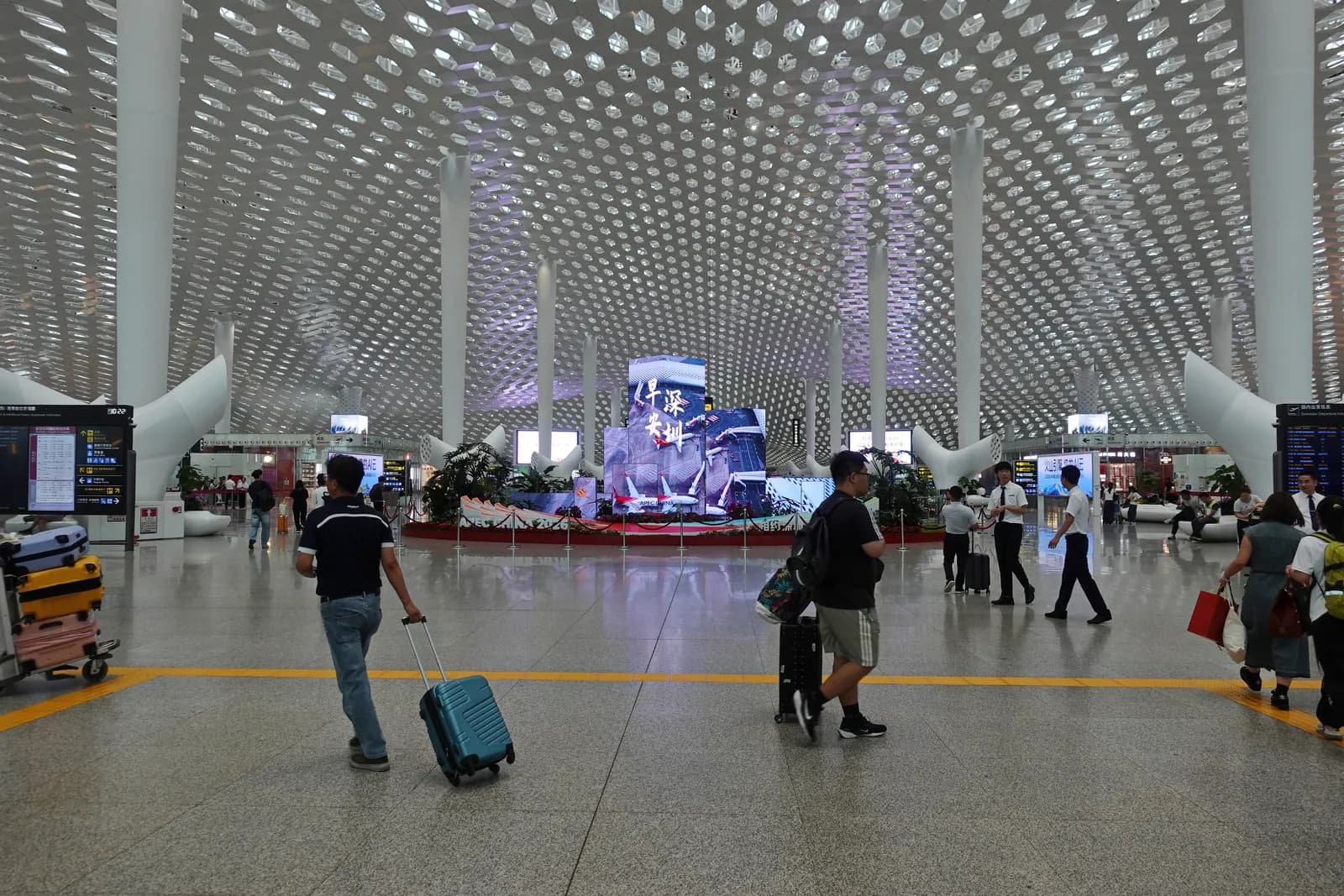
57 passports, the US included, can get up to 10 days in mainland China without a visa. The headline filters are your passport country, a confirmed onward ticket, a next destination different from where you came from, and a designated entry port. For Shenzhen, enter at Bao'an Airport, Shekou Port or Hong Kong West Kowloon Station. Futian, Luohu and Shenzhen Bay are not 240-hour entry ports, though you can leave through them. On the 30-day list too, like the UK, Canada or Australia? Use that instead.
- Who qualifies: Ordinary passports from 57 countries on NIA's list dated 20 August 2026, Vietnam and Kyrgyzstan the newest as of 18 October 2026. The Philippines and India are not on it.
- Time limit: 240 hours (10 days) from 00:00 the day after entry, inside the permitted areas of 24 provinces; for a Shenzhen entry that includes all of Guangdong.
- Shenzhen entry ports: Bao'an Airport, Shekou Port (Passenger) and West Kowloon Station only. Leave through any open Guangdong port, Futian and Luohu included.
- At the counter: Passport valid at least 3 months, a confirmed onward ticket to a third country or region within 240 hours, and the arrival card. You apply to border inspection at the port.
240-hour visa-free transit gives 57 passports, the US among them, up to 10 days in mainland China without a visa. The headline filters are your passport country, a confirmed onward ticket, a next destination different from where you came from, and a designated entry port; the full conditions are below. For Shenzhen the port filter leaves three doors. The obvious one from Hong Kong, Futian, is not among them.
Not sure which rule covers your passport? Run the visa checker first. If you hold a UK, Canadian, Australian, New Zealand, Japanese or South Korean passport, you are probably reading the wrong page: the 30-day visa-free route is simpler: its published conditions include no onward ticket, though China's visa centre recommends carrying tickets and bookings as proof of your trip's purpose, and your airline may still ask for one.
Who can use 240-hour visa-free transit in China?
Ordinary-passport holders from 57 countries (NIA, page dated 20 August 2026):
| Region | Countries |
|---|---|
| Europe (40) | Albania, Austria, Belarus, Belgium, Bosnia and Herzegovina, Bulgaria, Croatia, Cyprus, Czech Republic, Denmark, Estonia, Finland, France, Germany, Greece, Hungary, Iceland, Ireland, Italy, Latvia, Lithuania, Luxembourg, Malta, Monaco, Montenegro, Netherlands, North Macedonia, Norway, Poland, Portugal, Romania, Russia, Serbia, Slovakia, Slovenia, Spain, Sweden, Switzerland, Ukraine, United Kingdom |
| North America (2) | Canada, United States |
| South America (4) | Argentina, Brazil, Chile, Mexico |
| Oceania (2) | Australia, New Zealand |
| Asia (9) | Brunei, Indonesia, Japan, Kyrgyzstan, Qatar, Singapore, South Korea, United Arab Emirates, Vietnam |
Vietnam and Kyrgyzstan are the newest when we checked NIA's notices on 18 October 2026, added on 20 August 2026 (NIA Announcement 2026 No. 4). MTR's own 240-hour page at West Kowloon still said "55 designated countries" when we read it on 17 and 18 October 2026, so don't take a second-hand count as final.
The Philippines and India are not on it. If your passport is missing too, 240-hour transit is not your route; the visa checker covers the other options.
Plenty of countries on this list are also on China's 30-day list: the UK, Canada, Australia, New Zealand, Japan, South Korea and most of Europe (NIA 30-day list, page dated 17 February 2026). NIA says travellers who qualify under a mutual visa-exemption agreement or China's unilateral visa-free policy may follow those rules instead (NIA Announcement 2025 No. 4, item 6). Take the 30-day route if you can: any port open to foreigners unless a law or bilateral arrangement says otherwise, and no onward-ticket condition in the published rules (China's visa centre still recommends carrying tickets and bookings, and airlines may check). The 240-hour rule matters most for passports on this list but not on the 30-day one, such as the US, Mexico, Indonesia and Vietnam.
Do you need a visa to transit in China?
Three different answers, depending on how far you go:
- You transit to a third country or region, staying inside the port's restricted area for up to 24 hours. NIA requires a valid international travel document and an onward international flight, ship or train ticket with a confirmed seat (NIA, section I). If you need to step out, the border officers have to issue a temporary entry permit first.
- You leave the airport for up to 10 days. If your passport is covered by the 30-day policy or a mutual visa-exemption agreement, NIA says you may use those rules instead (NIA Announcement 2025 No. 4, item 6). If not, this is 240-hour transit: one of the 57 passports above, a designated entry port, and a ticket to a third country or region.
- The rest. For passports covered by neither a 240-hour rule, a 30-day policy nor a mutual visa-exemption agreement, a Home → China → Home trip needs a visa unless another route covers you, such as one of NIA's regional group or Hainan schemes (NIA regional policies); the visa checker covers the options we track. Work, study and news reporting need a visa under both the 240-hour and the 30-day rules.
So a UK traveller asking "do I need a visa for a layover in China" has the easy version: the UK is on the 30-day list, which names transit as an allowed purpose (NIA 30-day list).
How does China visa free transit work?
The rules come from NIA's policy page and attachment 1 of NIA Announcement 2025 No. 4:
- Passport: your own ordinary passport, valid for at least 3 months, and you must meet the entry conditions of the place you fly on to (if your next country needs a visa, have it).
- Onward ticket: confirmed date and seat, leaving mainland China within 240 hours, to a third country or region. NIA's wording is "onward ticket or related proof"; a real booking with a seat is what you want in your hand.
- Third country or region: your next stop must differ from where you came from. MTR's example is Canada → Hong Kong → Shenzhen → Thailand (MTR High Speed Rail). It also counts Hong Kong, Macau and Taiwan as onward destinations. Hong Kong → Shenzhen → Hong Kong fails MTR's test.
- The clock: 240 hours from 00:00 the day after entry. Land at 18:00 on 1 July and the clock starts at 00:00 on 2 July, so you leave by 23:59 on 11 July. That is 246 hours on the ground (our arithmetic).
- Where you may go: the permitted areas of 24 provinces. Since 17 December 2024 you can cross between provinces inside them (NIA). For a Shenzhen entry, NIA's port table gives all of Guangdong as the permitted area, and its footer lets you continue into the permitted areas of the other 23 provinces.
- What you may do: tourism, business, visits, family. Work, study and news reporting still need a visa (NIA).
Which Shenzhen ports accept 240-hour entry?
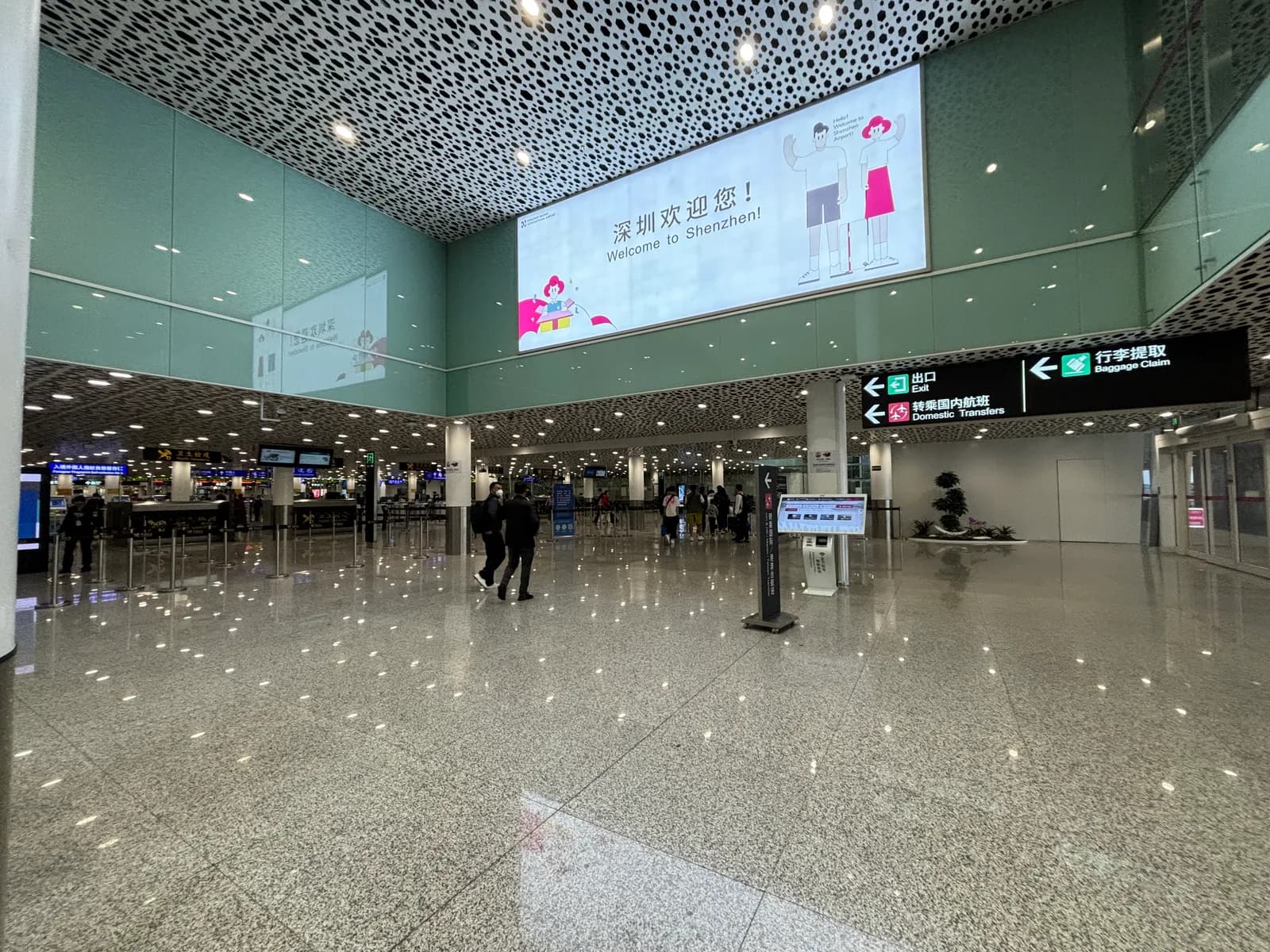
NIA's 65-port table lists 10 Guangdong ports, rows 39 to 48 (NIA port table, English; Chinese). Three of them get you into Shenzhen:
| Port | 240-hour entry | Leaving on 240-hour |
|---|---|---|
| Shenzhen Bao'an International Airport | Yes | Yes |
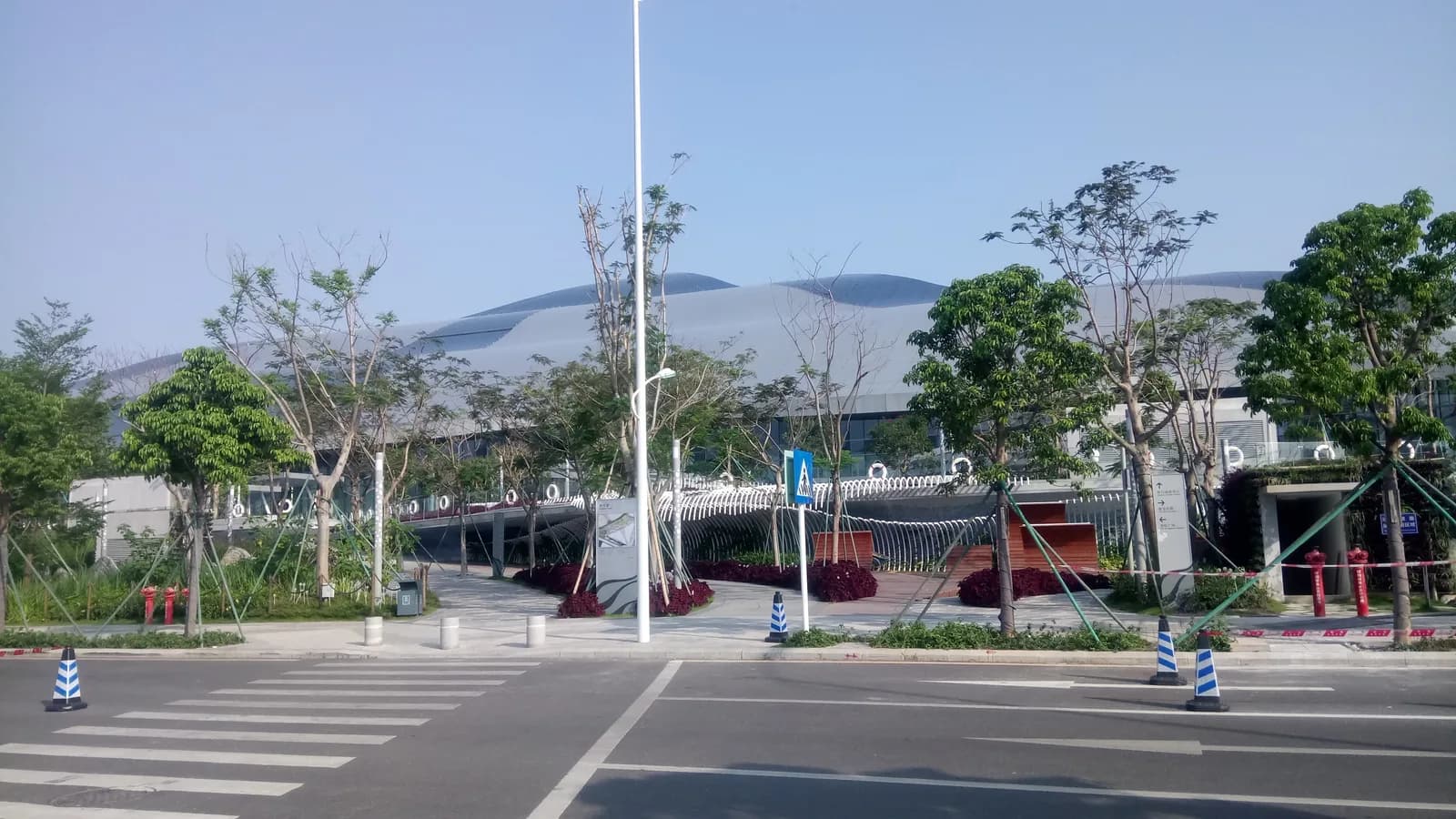
| Shekou Port (Passenger), the Shekou Cruise Homeport | Yes | Yes |
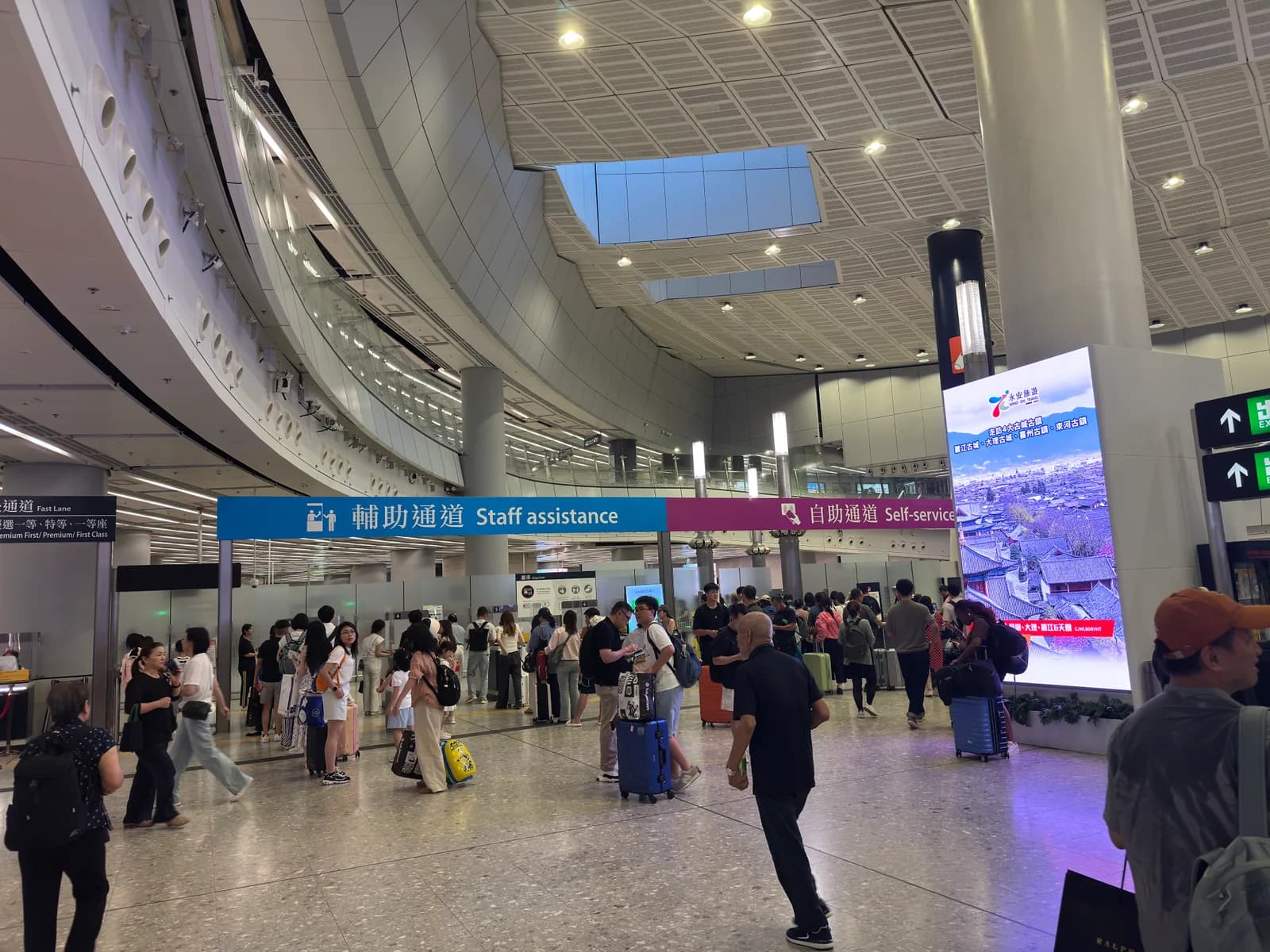
| West Kowloon Station, Hong Kong (high-speed rail) | Yes, since 5 November 2025 | Yes |
| Futian (Lok Ma Chau) | No | Yes |
| Luohu (Lo Wu) | No | Yes |
| Shenzhen Bay | No | Yes |
| Huanggang, Liantang (Heung Yuen Wai), Wenjindu | No | Yes |
The "leaving" column comes from the same table: a Guangdong entrant may exit through any open port in the province. Futian and Luohu are both State Council-approved open ports (Shenzhen Port Office). So you can arrive at Bao'an and walk out to Hong Kong at Futian a week later, as long as Hong Kong isn't where you flew in from (MTR's rule).
West Kowloon became an entry port on 5 November 2025, together with the Hong Kong–Zhuhai–Macao Bridge port, Hengqin, Zhongshan Port and Guangzhou's Pazhou ferry terminal; that took the total from 60 to 65 (NIA Announcement 2025 No. 4, item 6). If you're already in Hong Kong, it's the one I'd use. The mainland clearance area, the departure hall and the platforms all sit inside the station (Hong Kong government co-location arrangement, article 2), and MTR asks you to allow extra time for the on-site approval so you make your train. So approval is handled at West Kowloon before you board, and a refusal should leave you in Hong Kong. That last step is our inference, not a published rule: confirm with MTR or NIA's 12367 hotline.
Shekou took its first 240-hour entrant, a 2-year-old American travelling with family, on 17 December 2024, the first day of the 240-hour rule (Shenzhen government). The same report says Shenzhen border inspection printed a Chinese-English slip for transit visitors showing where they may stay.
The MTR crossings don't work for 240-hour entry. Futian, Luohu, Shenzhen Bay, Huanggang, Liantang and Wenjindu are not in the Guangdong rows. An American who rides the East Rail Line to Lok Ma Chau with a ticket onward to Bangkok is at the wrong door for 240-hour entry. Luohu and Huanggang do appear in the same announcement, but only on a separate list of ports that issue one-time permits to Taiwan residents.
Going to Macau or Zhuhai instead? Hengqin and the Hong Kong–Zhuhai–Macao Bridge port are on the list too, but both land you in Zhuhai, across the Pearl River estuary.
How do you apply for 240-hour transit at the border?
NIA's wording: an eligible traveller may apply to the border inspection officers at one of the 65 ports, who then handle the temporary entry (NIA Announcement 2025 No. 4, attachment 1).
- Fill in the arrival card before you leave. Since 20 November 2025 you can do it online at s.nia.gov.cn/ArrivalCardFillingPC, in the "移民局12367" app, or in the WeChat or Alipay mini-program. If you can't do it online, NIA says you can fill it in at the port by scanning a QR code or using the on-site devices, or fill in a paper card.
- Tell the officer you are on 240-hour transit. Show your passport, the onward booking and the arrival card. NIA's conditions include accepting the officers' inspection and questions.
- Get the temporary entry. If you meet the conditions, NIA says border inspection handles your temporary entry; your clock runs from 00:00 the next day.
| Bring | Required? |
|---|---|
| Ordinary passport, valid at least 3 months | Yes |
| Onward ticket with confirmed date and seat, within 240 hours, to a third country or region | Yes |
| Arrival card (online or paper) | Yes |
| Visa for your onward destination, if it needs one | Yes |
| Hotel booking | Not listed in NIA's conditions; useful if the officer asks about your plans |
NIA's temporary-entry guidance, written for 24-hour transit, lists cases where border inspection will not issue a temporary entry permit, including a passport with less than 3 months left and records of illegal entry, stay or work in China within the past 5 years (NIA).
Carry the rule with you. Print the NIA 240-hour page and your onward booking. If you fly in, ask the airline before departure whether its check-in staff will board you on 240-hour transit.
Is it 144 hours or 240 hours?
240. On 17 December 2024 NIA extended both the 72-hour and the 144-hour transit policies to 240 hours (10 days), raised the number of ports from 39 to 60, and added five provinces for 24 in total (NIA). The five Guangdong ports of 5 November 2025 took it to 65.
So for an individual transit passenger, 72 and 144 hours are now one 240-hour rule. NIA still lists separate six-day rules for tour groups. The one that reaches Shenzhen: foreign tour groups of 2 or more, organised by a Hong Kong or Macau registered travel agency, can enter the nine mainland Greater Bay Area cities and Shantou for up to 6 days, group in and group out (NIA regional policies, 20 August 2026, item 5). It is a tour-group rule with its own conditions, not transit. If a page presents individual transit as 144 hours, compare its rule and port list with the current NIA policy; the separate six-day Hong Kong/Macau tour-group route above has different conditions.
240-hour transit or 30-day visa free: which should you use?
If your passport is on both lists, the 30-day route wins: 30 days instead of 10 (NIA 30-day list), any sea, road or air port open to foreigners unless laws, regulations or bilateral arrangements say otherwise, Futian included, and you may arrive from any country or region (CVASC visa-free FAQ, Q8 and Q9). The China visa free countries guide has the 30-day list with its end dates and compares four entry routes side by side. For 240-hour transit it links here: this page holds the full rule, the Shenzhen ports and the counter application.
If your passport is on the 240-hour list but not covered by the 30-day policy or a mutual visa-exemption agreement, this is the rule to read. For a US passport the full trade-off, including when a regular tourist visa makes more sense, is in our guide to whether Americans need a visa for China.
What if your plans change after you enter?
Sudden illness or force majeure: NIA's temporary-entry guidance (written for 24-hour transit) says to apply for a stay permit at the local public security exit-entry office (NIA); confirm the 240-hour procedure with the 12367 hotline before your time runs out. A cancelled flight is not on that list by name, so rebook inside the 240 hours if you possibly can. The overstay fines are in the visa-free guide's overstay section.
Staying with friends instead of a hotel? NIA says you or your host must register with the local police within 24 hours of check-in (NIA); the hotel registration guide covers how.
What we have not verified
- Your exact itinerary. The "different from where you came from" rule and Hong Kong counting as a region come from MTR, which runs West Kowloon Station; we did not find either on the NIA pages we read. When someone asked NIA in writing whether a Germany → Hong Kong → Germany ticket with 4 days in the mainland qualified, NIA restated the policy and sent them to the 12367 hotline (+86 12367 from abroad) (NIA reply, 5 March 2026). For an unusual route, call before you book.
- What a refusal at West Kowloon looks like. The co-location arrangement places the mainland clearance area inside the station; it does not say what happens to a passenger who is refused. "You stay in Hong Kong" is our reading.
- How long approval takes. None of the sources we read gives a processing time at Bao'an, Shekou or West Kowloon. MTR says only "allow extra time".
- Airline check-in. We have not tested whether airlines flying into Bao'an board 240-hour passengers without questions.
- Port changes after 20 August 2026. NIA's announcement index showed no newer 240-hour notice when we read it on 18 October 2026. Revisit on any NIA announcement that names 240-hour ports or countries.
Sources we read on 17 and 18 October 2026
- NIA visa-free transit policies (English) and 过境免签政策 (Chinese), both dated 20 August 2026: 57 countries, 65 ports, 24 provinces, the 24-hour rule; the port table is an image on both pages.
- NIA Announcement 2025 No. 4, 3 November 2025: item 6 adds five Guangdong ports from 5 November 2025; attachment 1 sets the passport, ticket and clock conditions; item 10 starts the online arrival card on 20 November 2025.
- NIA, 17 December 2024: 72 and 144 hours become 240; 60 ports; cross-province travel.
- NIA Announcement 2026 No. 4, 20 August 2026: Kyrgyzstan and Vietnam added, 57 countries.
- NIA regional policies, 20 August 2026: item 5, the six-day Hong Kong and Macau tour-group rule for the Greater Bay Area and Shantou (read 18 October 2026).
- NIA 30-day list, page dated 17 February 2026, and the CVASC visa-free FAQ: Q6 on documents to carry, Q8 and Q9 on where 30-day entrants may come from and which ports they may use.
- Shenzhen Port Office: Shenzhen's 16 State Council-approved open ports, Futian and Luohu among them (read 18 October 2026).
- NIA, Interpretation of 24-hour Visa-free Transit Policy, 1 April 2021: refusal grounds for a temporary entry permit and stay permits for illness or force majeure. It is written for 24-hour transit; NIA's 240-hour conditions also describe the entry as temporary entry.
- MTR High Speed Rail: on-site applications at West Kowloon, the third-region rule and its example.
- Hong Kong–Mainland co-location arrangement for West Kowloon Station (Transport and Logistics Bureau, English translation): articles 2 and 4 on the Mainland Port Area inside the station (read 18 October 2026).
- Shenzhen government, 18 December 2024: first 240-hour entrants at Bao'an and Shekou.
よくある質問
How do I apply for 240-hour visa-free transit in China?
You apply on arrival, to the border inspection officers at one of the 65 designated entry ports. Show an ordinary passport valid for at least 3 months, a confirmed onward ticket dated within 240 hours to a third country or region, and your arrival card, then answer the officer's questions. If you meet the conditions, NIA says border inspection handles your temporary entry. MTR asks West Kowloon passengers to allow extra time for the approval.
Do you need a visa to transit in China?
Not for transit to a third country or region lasting up to 24 hours inside the port's restricted area. NIA requires a valid international travel document and an onward international flight, ship or train ticket with a confirmed seat. To leave the port for up to 10 days you need a passport from the 57-country 240-hour list, a passport covered by China's 30-day visa-free policy or a mutual visa-exemption agreement, or a visa.
Is China's visa-free transit 144 hours or 240 hours?
240 hours, which is 10 days. On 17 December 2024 China's National Immigration Administration extended both the 72-hour and the 144-hour transit policies to 240 hours. NIA still lists separate six-day rules for tour groups; the one that covers Shenzhen lets foreign tour groups organised by a Hong Kong or Macau registered travel agency visit the nine mainland Greater Bay Area cities and Shantou. That is a group-tour rule, not transit.
Can I enter Shenzhen at Futian or Luohu on 240-hour transit?
No. Futian, Luohu, Shenzhen Bay, Huanggang, Liantang and Wenjindu are not on NIA's list of 240-hour entry ports. For Shenzhen, enter at Bao'an Airport, Shekou Port or Hong Kong West Kowloon Station. You may leave through any open port in Guangdong, Futian and Luohu included.
Does Hong Kong count as a third country for 240-hour transit?
As a region, yes, according to MTR, which runs West Kowloon Station: Hong Kong, Macau and Taiwan count as onward destinations, but your next stop must differ from the place you came from. By MTR's rule, Hong Kong to Shenzhen to Hong Kong does not qualify. Asked in writing about one such itinerary, NIA restated the policy and referred the question to its 12367 hotline.
When does the 240-hour clock start?
At 00:00 the day after you enter, not at the moment you land. Land at 18:00 on 1 July and the clock starts at 00:00 on 2 July, so you must leave mainland China by 23:59 on 11 July.
変更履歴と見直しの予定開く
事実確認
2026年10月18日
内容の更新
2026年10月25日
初回公開
2026年10月17日
次回の見直し予定
2026年11月17日
画像クレジット
- Shenzhen Baoan Airport international arrival lobby with Welcome to Shenzhen and baggage claim signs: MNXANL, Wikimedia Commons, CC BY-SA 4.0.
- Hong Kong West Kowloon Station departure hall with staff assistance and self-service signs, August 2026: LN9267, Wikimedia Commons, CC BY-SA 4.0.
- Shekou Cruise Center in Shenzhen seen from the street, May 2017: WhisperToMe, Wikimedia Commons, CC BY-SA 3.0.


実際にうまくいきましたか?